I would live in a house called Strange Garden given half a chance.
How pretentious is it to name your house? Oh, very, so let’s up the ante and choose a latin name.
The Handyman hails from England where house naming is a thing. Think Primrose Cottage, Two Hoots, Crumbledown, Nudgens, Wits End, Tweedledum, or Creeping Snail.
We have neighbours with house names like Ironpost Guest House, Forgotten Hill and the Grape Escape but they are guest houses with a good reason for a name. Also nearby is Rancho Costa Plenty which has been sale for awhile.
We could have chosen another dead language name like Cave Canem (beware of the dog) but that would have dated us our two pals lived to ripe old ages and are now planted in the garden, or Nessum Dorma (none shall sleep) with the idea of discouraging visitors from overstaying.
A week after our gate and name went up a neighbour pulled his car over to chat and said, “You know, I drive by your gate every day on my way to work and think, seize the day, yup, good idea.”
As hokey as it sounds, it’s become a mantra for our house that is often welcoming visitors with wine, a nap in a tree house and evenings on the deck.
The name of our Village is pretty crazy too when you know its history and it has a lot of letters “a”s … although it doesn’t hold a candle to these English villages of say…
or my personal favourite, so much so that if we decide to leave Canada and return to the Handyman’s homeland this would be the spot…
In 1905 Naramata was originally called East Summerland which was too confusing, I guess and a bit dull making us a candidate for sister villagehood with Little Snoring. The postmaster’s wife, Mrs. Gillespie was a bit of a hippie dippie in her day apparently. She was a medium of the American Spiritualistic church and invited some of her gal pals over for a get-together at which she went into a “spiritualist trance.” The spirit of a great Sioux Indian Chief, Big Moose, came to her and spoke of his dearly loved wife calling her Nar-ra-mah-tah, as she was the Smile of Manitou. All and sundry were struck by Mrs. Gillespie’s revelation, a few extra letters were dropped (which was a darn good thing) and here we are. (I wonder if Big Moose every worried about Narramahtah’s faithfulness…)
The entrancing Anna Gillespie
I also wonder if we should add Please Drive Carefully to our Village sign?
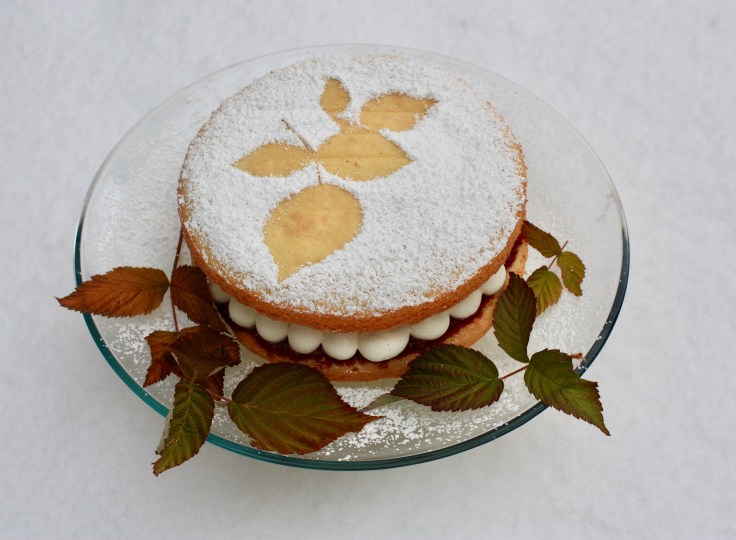
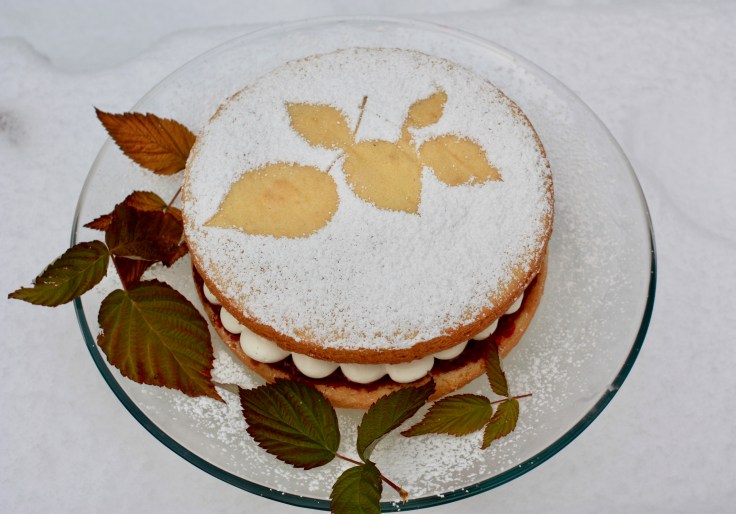
This Naramata take on a classic Victoria sponge is two fluffy sponges lightly flavoured with vanilla and almond with a very special sandwiching layer…Legend Raspberry Jam and a healthy dollop of whipping cream.
Here is a Cole’s Notes version of what went into making that legendary jam:
Grow the raspberries on our farm.
Harvest the raspberries at their peak.
Deliver to Legend Distilling.
Legend makes Slowpoke Farm Berry Vodka with them. (Check out my post about how it’s made minus some secrets.)
Make raspberry jam with some more of our farm fresh raspberries and some of Legend’s Slowpoke Farm Berry Vodka made from our raspberries. It’s like raspberries times three.
A limited supply of this special jam is for sale at Legend Distilling during the Christmas season… You can of course substitute a high-quality raspberry jam but your cake will be slightly less legendary.
Our recent snow fall has put paid to my fresh raspberry supply so it’s time to bring out the jam.
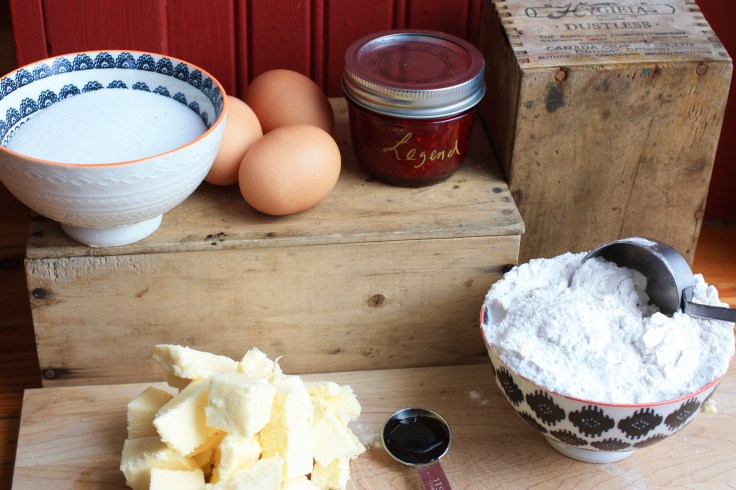
CAKE
3/4 cup unsalted butter (soft)
3/4 cup + 2 tablespoons sugar
3 extra-large or large eggs (room temperature)
1 teaspoon vanilla extract or vanilla bean paste
1/4 teaspoon almond extract
1 1/2 cups unbleached self-rising flour
Directions
Preheat your oven to 350°F. Grease and flour two 8″ round cake pans. Cut a round of parchment and fit in the bottom of your pan and grease and flour.
In a medium-sized mixing bowl, beat together the butter and sugar until well combined and smooth.
Beat in the eggs one at a time, scraping the bottom and sides of the bowl after each addition.
Add the extracts.
Add the flour, beating gently just until well combined.
Divide the stiff batter evenly between the cake pans; there’ll be 11 to 12 ounces of batter in each, depending on the size eggs you used.
Bake the cakes for about 20 minutes, or until they start to pull away from the edges of the pans. Remove them from the oven, cool for a couple of minutes, and turn out of the pans onto a rack to cool completely.
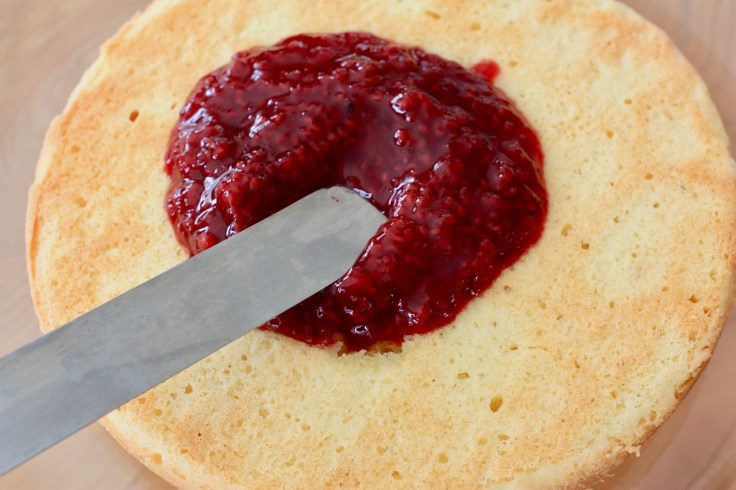
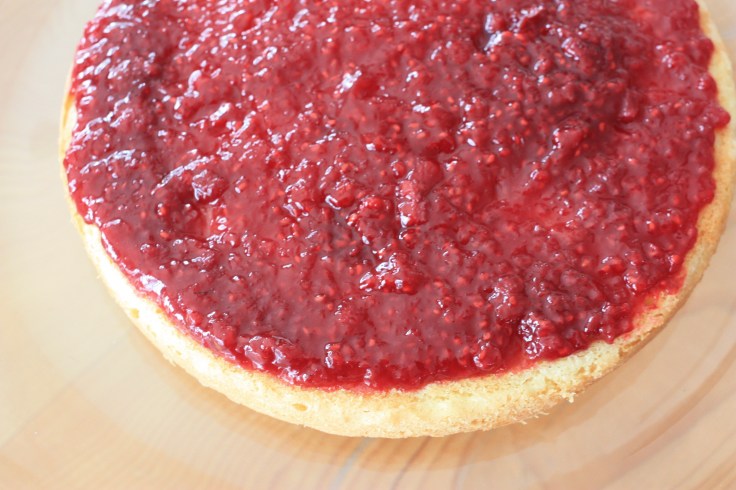
When the cakes are cool, place one layer on a plate. Spread with the Legend jam or a jam of your choice.
Whip the cream — 2/3 cup cream makes a medium-thickness layer of filling; 3/4 cup cream, a thick layer. Sprinkle in 2 tablespoons granulated sugar, or to taste, as you whip the cream until it’s quite stiff. Stir in the vanilla at the end.
Pipe the whipped cream over the jam. You could also spread the whipped cream if you prefer.
Top with the second layer of cake.
Sift icing sugar over the top of your cake.
Refrigerate the cake until you’re ready to serve it. It’ll be at its best within 12 hours; but is still quite good up to 2 or even 3 days later. The difference will be the whipped cream, which will gradually settle/compact. Yield: about 12 servings.
“Congratulations on your English Channel relay last year! ,” says Lynne Cox. That is a tough swim and it must have been fun and challenging to swim the Channel as a team. Your next goal sounds equally challenging.”
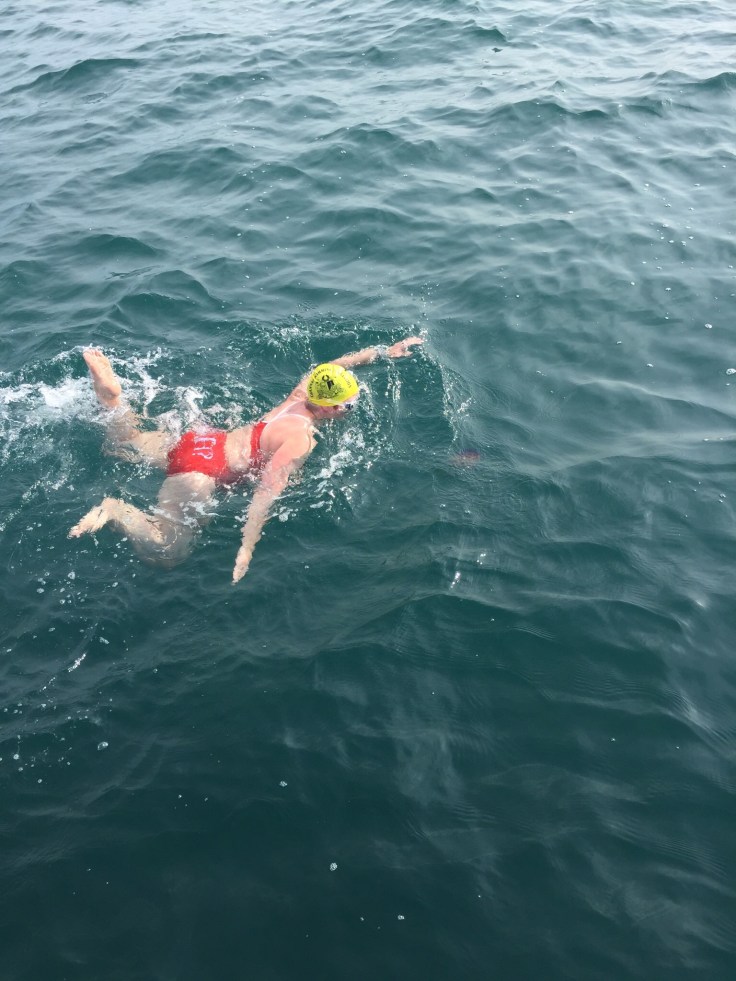
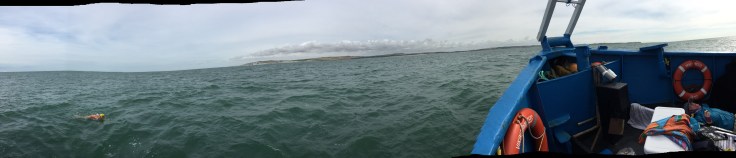
Crazy Canucks are actually a little crazy but Lynne Cox says we can take on our new challenge with confidence. (Jaime was avoiding a jelly fish you can see if you look at about the 1 o’clock position…)Our English Channel swim
Even people outside the rather niche open water swimming world recognize the name Lynne Cox. It’s because she is an elite athlete who broke many world records, among them swimming the English Channel at 15, being the first woman to swim across the Cook Strait and working 10 years to get the permission and then swimming across the Bering Strait from Alaska to Russia during the Cold War.
“When I am swimming I feel like a musician discovering nuances in sound, color, and rhythm. My body is the instrument and the ocean is the symphony. I immerse myself in music and hear and feel the ocean’s movements We create music together. I hear the driving beat of my arms and legs and the song of my breath and bubbles,” Lynne Cox, Swimming in the Sink, An Episode of the Heart.
“The San Pedro Channel – swim from Catalina Island to the California mainland is the place I began my open water swimming career,” she says when I asked her advice on the Crazy Canucks’ next adventure in 2019. “It was as significant as my first kiss. It was where I fell in love with swimming long distances in the open water and the people who make these swims possible.”
That first kiss for Lynne came when she was all of 14 when she made the crossing with three other teenagers. “We felt a small school of fish swimming around us, bumping into our legs and feet. Flying fish the size of mockingbirds were leaping out of the water,” she writes about that historic Catalina swim in her amazing book, Swimming to Antarctica. “They’d emerge from the depths and fly across the air, flapping their fins and sailing across the sky…In the phosphorescent light, they were magically turning iridescent pink, blue, purple, rose and green.”
Lynne Cox in her element.
Lynne says, “You can expect that your Catalina Channel swim will be exciting. If it isn’t, why do it? You will have an incredible journey, learn lots about yourself and your team, and the Pacific ocean.”
Charlie, visibly cold after one of her turns in the English Channel.
“The Catalina Channel will be a bit warmer than the English Channel depending on the weather, time of the year and time of day that you swim it,” says Lynne. (See Charlie, it will be OK!) “Weather conditions are usually more stable than the English Channel, so you will have a good chance at getting good conditions.”
Lynne working hard to stay warm.
Crazy Canucks training fun.
Any advice for us non spring chickens I asked her? “I think you don’t need to be limited in your thinking by your chronological age. People in their 30s can have the bodies and health of 60-year-olds and people in their 60s can have the bodies and health of 30-year-olds. I think it’s great to tackle these swims at any age if you’ve done the preparation and you are in shape.”
It was a thrill to be in touch with Lynne and prompted a re-read of her Swimming to Antarctica book and an intense, couldn’t-put-it-down read of her latest book Swimming in the Sink which had some lyrical descriptions of open water swimming.
In the darkness of early morning, my arm strokes jostle millions of plankton. A chemical reaction occurs in their bodies. They turn the black water sparkling phosphorescent blue. I wonder about life, the universe, and my place it it. I feel the warmth in my body, the cold ocean surrounding me, and I watched fish swimming fathoms below me lighting the depths of the universe. I wonder how the stars can burn so bright without losing their heat the frigid heavens.
I watch the rosy sun rise from the dark blue ocean and see it change color and create waving rivers of crimson, orange, yellow, and white light. The onshore breeze wakes the world like a gentle morning kiss. When I train I think about my life, my passions, and what is in my heart. I list the things I do need to do each day and the things I want to do. But I also dream about what I can do, and that makes life rich and exciting. Lynne Cox
Her books are best read in front of a roaring fire with a hot chocolate. In addition to her mind-blowing swimming firsts she has been the research subject of many scientists trying to make sense of her extraordinary ability to function in water cold enough to actually kill most people.
It was a thrill to read about her English Channel swims as well now knowing what it is like to be in that chilly water myself. How fun was it to read that her boat pilot was our pilot’s dad, Reg Brickell?
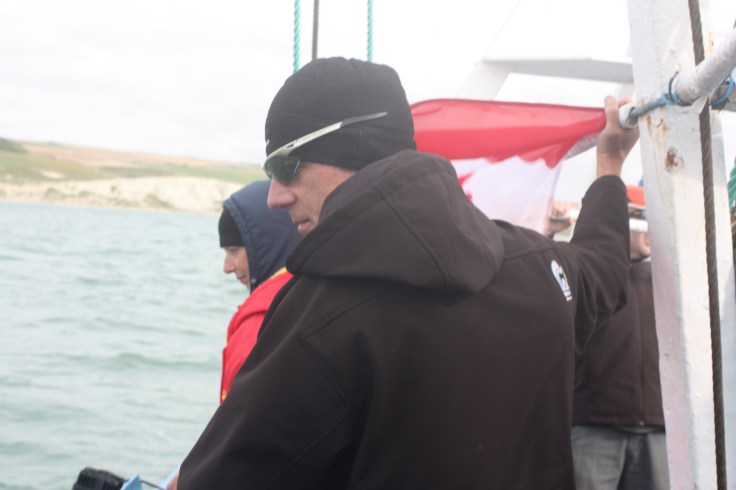
Reg Brickell, Jr., our pilot for the Crazy Canucks English Channel swim was a teenager at the time of Lynne’s English Channel swims. He was actually on his dad’s boat when Lynne made history by making the fastest crossings. (Her first record came when she was only 15.) Lynne wrote about how important her pilot was in her record-breaking crossing with his knowledge of the currents and tides. His son helped us Crazies battle through gale force four winds to accomplish our goal.
Lynne says it will be warmer team! Maybe we will be sunning ourselves on deck when we cross the San Pedro Channel.
When you have a raspberry farm you seek out raspberry recipes. This one is a gem. The thyme and orange flavours add a lovely sharp counterpoint to the rich brown sugar buttermilk cake with raspberry filling. The only downside, it only uses a scant half cup of berries!
Orange thyme syrup
1/2 cup of fresh orange juice…use blood oranges if you can find them
1/2 cup sugar
5 to 8 sprigs fresh thyme
Combine the orange juice and sugar in a saucepan and bring them to a boil over medium-high heat. Reduce to a simmer and add the thyme. Simmer for 8 or 10 minutes. Remove from the heat and let steep until cool. Strain the syrup and discard the thyme. You can make this a day ahead and refrigerate if you are organized.
Brown sugar buttermilk cake
2 1/4 cups cake flour
1 1/2 teaspoons baking powder
1/2 teaspoon salt
1/4 teaspoon baking soda
3/4 cup room temp. unsalted butter
3/4 cup plus 2 tablespoons firmly packed brown sugar
1 1/2 teaspoons finely grated orange zest
1 teaspoon pure vanilla extract or vanilla bean paste
3 large farm-fresh organic eggs
1 large egg yolk
3/4 cup plus 2 tablespoons buttermilk
Preheat oven to 350F and grease and flour three 6-inch cake pans.
Sift together the flour, baking powder, salt and baking soda and set aside.
In the bowl of stand mixer with the paddle attachment, beat the butter until smooth. Add the sugars and orange zest. Turn the mixer to medium-high and mix until the butter is light and fluffy (5 minutes or so). Stop mixer and scrape down the bowl.
Turn the mixer to low and add the flour mixture in three batches, alternating with the buttermilk. Mix on medium for 30 seconds.
Evenly divide the batter in the three prepared pans. Bake for 23 to 25 minutes or until a toothpick inserted into the centre of the cakes comes out clean. Let them cool on wire racks for 15 minutes before removing from pans.
Raspberry Buttercream (Makes a bit over three cups…you will need 2 cups)
1/2 cup large egg whites
1 cup granulated sugar
1 1/2 cups unsalted butter at room temperature cubed
1 1/2 teaspoons vanilla extract
1/2 cup of fresh raspberries from your local farmer
2 teaspoons granulated sugar
Make the buttercream
Place the egg whites and sugar in the bowl of a stand-mixer. Whisk them together by hand to combine. Make a double boiler by filling a medium pot filled with water over medium-high heat. Place the mixer bowl on top of the pot. The bottom of the pot should not touch the water.
Whisk intermittently and heat the egg mixture to 160F (candy thermometer) or until it is hot to the touch. Carefully fit the mixer bowl onto the stand mixer and whip with the wire attachment on high speed for 8 to 10 minutes, until it holds medium-stiff peaks. The bowl should be back to room temperature at this point. Stop the mixer and swap out the whisk attachment for the paddle.
With the mixer on low, add the cubed butter, a few tablespoons at a time then the vanilla. Once incorporated, turn up the mixer speed to medium-high and beat until the buttercream is silky smooth, 3 to 5 minutes.
2. Make the raspberry puree
Blend the raspberries and 2 teaspoons of sugar together in a food processor until combined. Strain to remove seeds through a mesh sieve set up over a bowl. Add a 1/4 cup of this pureed mixture to 2 cups of the buttercream (you will have extra buttercream) until combined.
Some assembly required
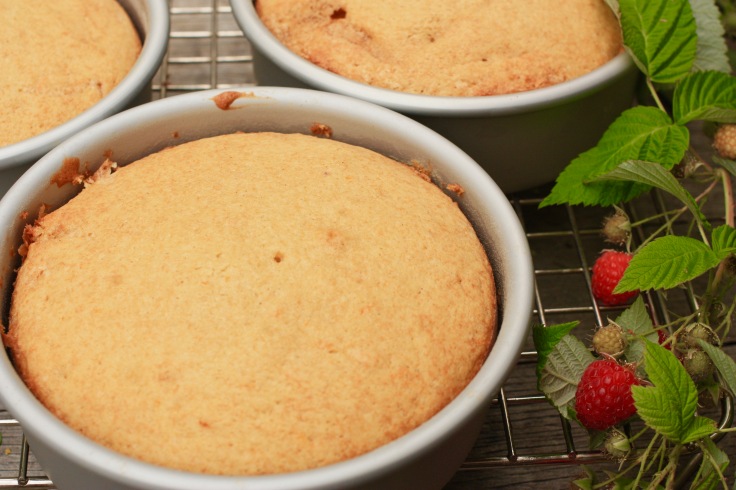
Once the cakes have cooled, level them and choose which one will be at the bottom. Generously brush the cake layers with the orange thyme syrup. Place the bottom layer on a cake plate and spread on 3/4 cup of the raspberry buttercream with an offset spatula. Top with the next layer of cake and repeat with the buttercream, ending with the third layer. Use the remaining buttercream to fill in any gaps between layers and give the cake a rustic coat of icing.
Make the orange glaze
1 1/4 cups confectioner’s sugar sifted
2 tablespoons plus 1 teaspoon fresh orange juice (blood orange juice works well here if you can find it as gives the icing a nice colour)
In a small bowl, whisk the confectioner’s sugar and orange juice together until the sugar has dissolved. Pour the glaze onto the centre of the top of the cake and spread it evenly letting it drip over the edges.
Twenty-six miles, so near yet far I’d swim with just some water-wings and my guitar I could leave the wings But I’ll need the guitar for romance Romance, romance, romance
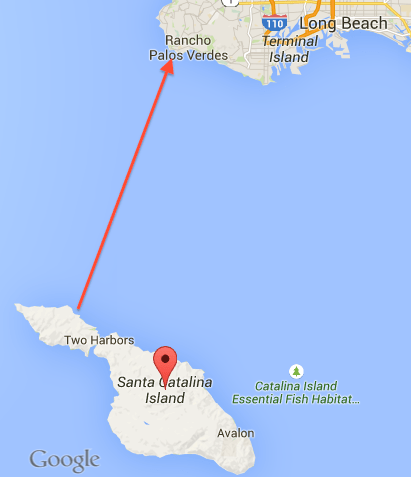
Catalina Island may be the island of romance but a relay attempt from the island to the California shore will be anything but. That’s OK. The Crazy Canucks are gearing up for our next adventure in 2019 after successfully crossing the English Channel in 2016. As the first dude to cross the English Channel (Mathew Webb) says, “Nothing great is easy.”
France can just be spotted. Still gives me shivers…
Less than 300 relay teams have made the 32.5 kilometre crossing which starts at midnight from Catalina Island when winds are calmest. It’s cool that it’s still a relatively small number of crazies that have made the crossing. This open water swim challenge, part of the triple crown of swimming that includes the English Channel and the swim around Manhattan, has some unique elements we will have to wrap our heads around including a lot of night swimming. It’s so dark on a Catalina crossing that some swimmers experience vertigo not knowing which is up or down in the inky black. This channel is also home to a type of fish with a recognizable fin that shall remain very nameless, especially as the team has four members at present and it would be fun to add a full compliment of six.
How hard can it be right? Canadians are a tough lot as we proved to our sceptical English Channel boat pilot Reg. He confessed after our swim, with a pint in front of him, that he wasn’t super confident we would make it as we had done the majority of our training in lakes.
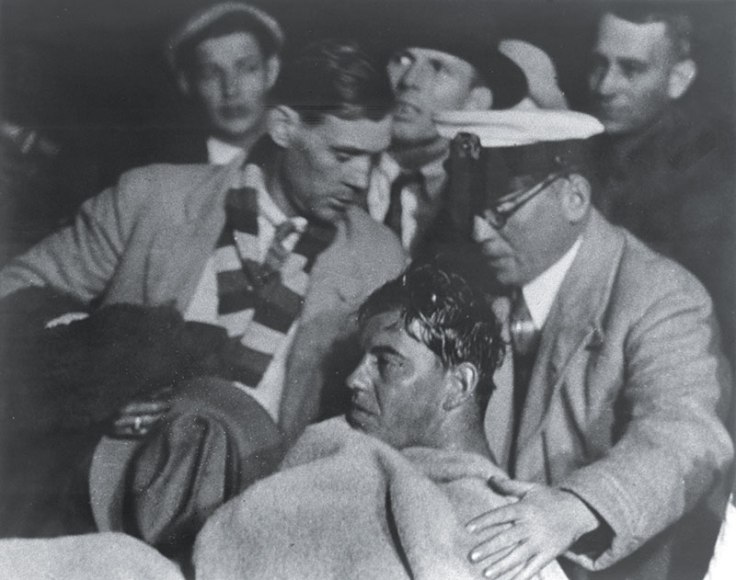
Canadians are so tough that the first to cross the Catalina Channel solo was a 17-year-old from Toronto, George Young. Young was the only one of 101 starters in a race in January of 1927 and he did most of the swim without his swim trunks. We will likely wear suits…
Many of our English Channel team mates suffered sea sickness but we will be better prepared on this go and our pilot boat is more of a cruiser vs. a fishing boat so will be much more comfortable and less rocky… I’m sure of it…
Here is my 10 point case for talking more of my team mates into this new adventure…
1. The Catalina Channel is slightly shorter than the English Channel (32.5 km vs 33.7 km, about 0.8 miles shorter which should take an elite swimmer about 16 minutes)
2. The Catalina Channel is slightly to significantly warmer no matter what month is attempt is made.
3. Tides are much less powerful and less lateral than those in the English Channel.
4. The Catalina Channel winds are significantly less strong than in the English Channel on any given day, especially since most Catalina Channel swimmer begin their traverse at night. (We faced Force 4 winds on the English Channel)
5. The Catalina Channel has jellyfish, but while everything can change on any given day, the jellyfish in the Pacific are generally not in the same volumes as they are strewn across the English Channel. (Two of us got stung.)
6. The Catalina Channel allows kayakers, paddlers and pace swimmers to support the swim from shore-to-shore in any formation or duration as desired.
7. The windows of the Catalina Channel are much longer due to the number of swimmers and fickle weather in the English Channel.
8. Both shores and illumination across the Catalina Channel can generally be seen, even at night, but this psychological advantage is not always available in the English Channel.
9. Dolphins, a sign of good luck and protection among channel swimmers, are in significantly greater numbers in the Catalina Channel. (How cool would that be)
10. Boat traffic is significantly less in the Catalina Channel than in the English Channel.
A couple of additional “selling” features of the Catalina adventure are the name of the boat that we will charter to guide us, our kayak paddlers and the pipes that will mark our successful completion. The Bottom Scratcher (yup…that’s the name) and its captain and piper Greg Elliot will pilot, our paddlers will include my brother Dean and fellow team member John’s wife Izzie.
Crazy Canucks Catalina Channel Relay 2019 here we come!
Take just picked raspberries from our Naramata berry farm and a craft-distilled slowly infused Farm Berry Vodka from our neighbour Legend Distilling and bottle it. Think toast on a cold January morning in front of a fire slathered with the colours and aromas of a hot summer day – elegant and not oversweet.
This easy jam recipe can be adapted for ingredients you have easy access to if you don’t happen to own a berry farm or live near a distillery. There is no substitute for the Wine Glass Writer pens I used to mark the jars with, however. They are invaluable for canning, as I like to re-use jars and scrubbing sticky labels off is an unnecessary and annoying step. The writers are fun to use and lets you be creative, jazzing up and customizing your jars.
Adding a soupçon of a summer wine like rosé or a fruit-infused spirit like Legend’s Slowpoke Farm Berry Vodka plays well with the beautifully ripe fruit. Legend’s limited release handmade vodka – slowly infused with the best local fruits, is the distillery’s tribute to those who value the slow and steady – acknowledging that all great things come to those who wait.
The berries in Legend’s Slowpoke come from our farm, which is a cool fact I brag about a lot. I think this makes the jam especially nice. Our berries are hand picked in the mornings and delivered to the distillery that same afternoon. Distiller Doug Lennie does his magic and now I’m adding this infusion into more fresh picked berries with some sugar and a dash of lemon juice. It’s like raspberry essence distilled, given a kick and married with yet more raspberries.
I like using a touch of alcohol in sweet preserves to give them a certain je ne sais quoi. It elevates a nice jam to an extraordinary one. A half cup for the jam, a small glass for me…
Like all cooking and baking, the end results are always, always about using the best quality ingredients you can source. Pick your own raspberries, buy them from a local farmer at the market, buy organic ones from the supermarket or as a last resort, use top quality frozen berries. Choose a hand-crafted spirit or a nice bottle of rosé.
Legend Raspberry Jam Recipe
Makes about 12 small jars (125 ml) of jam or six to eight larger jars.
Ingredients
16 cups raspberries
4 cups sugar
Juice from ½ lemon
½ cup Legend Slowpoke Farm Berry Vodka (or another berry-infused spirit, Kirsch or a nice dry rosé)
Directions
1. In a large mixing bowl, combine all ingredients. Using your hands, crush the raspberries until completely broken down.
2. Transfer the raspberry mixture to a large saucepan and bring it to a boil over high heat, stirring often with a wooden spoon. Reduce the heat to medium-high and continue to stir until the jam has thickened, about 12 minutes. During this 12 minutes, I like to ladle about the half the jam mixture through a sieve placed over the boiling jam to remove some of the raspberry seeds.
3. Transfer the jam to a sterile airtight container and let it cool to room temperature. Store in the refrigerator and use within a month.
4. If you wish to store the jam for up to a year as I do, follow these canning instructions.
Tip
To check if the jam has set, place a teaspoon of jam onto a chilled plate and place in the freezer for a few minutes. Using your finger, push through the jam. If it wrinkles, it has set; if not, cook the jam for an additional minute or two.
Canning directions
Fill a canner or stockpot half full with water. Place lid on canner. Heat to a simmer. Keep canning rack to the side until ready to use.
Wash jars, lids and bands in hot, soapy water. Rinse well.
Keep jars warm until ready to use, in order to minimize risk of breakage when filling with hot jam or jelly. Set the jars on a cookie sheet in a 250F degree oven.
Boil some water in a kettle and pour over the lids placed in a heat-proof bowl. Set the bands aside in your work area. Use a canning magnet to easily remove the lids from the hot water with out touching them.
Fill your jars
Ladle hot jam into hot jars, one at a time, leaving 1/4 inch headspace. Wipe any jam or jelly from the rims of the jars. Center lids on jars. Twist on the bands until fingertip tight.
Place six filled jars in the canning rack inside the canner, ensuring jars are covered by 1-2 inches of water. Place lid on canner. Bring water to gentle, steady boil. Repeat until all your jars have been boiled.
Process jars in boiling water for 10 minutes. Remove jars and cool. Check lids for seal after 12 to 24 hours by pressing on centre of cooled lid. If the jar is sealed it will not flex up or down. Store any un-sealed jars in the fridge and use within a month.
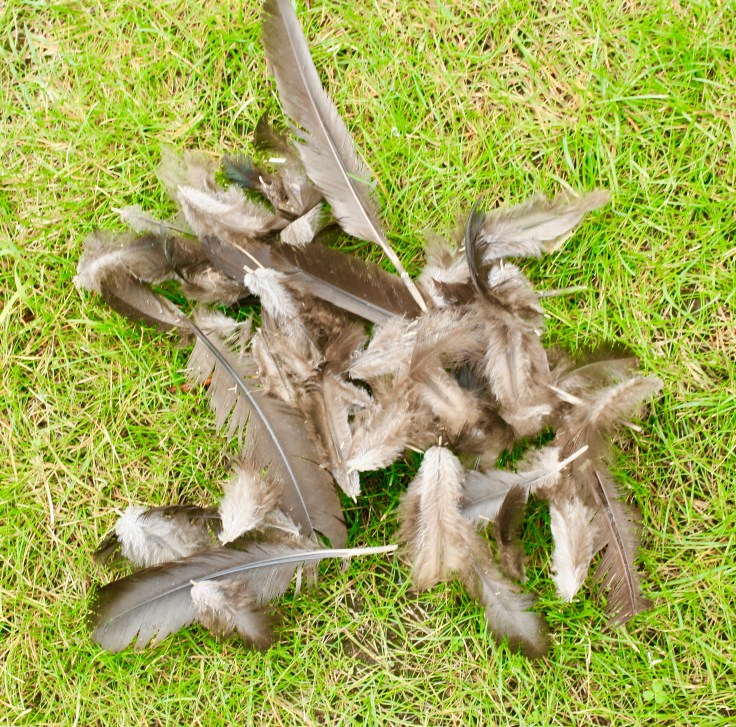
The Baroness is Resting in Peace all right. She is resting…not having any eggs…trying to re-grow some feathers. Having gone through 21 one days of broodiness, with not a nice warm brown egg in sight, she is now post-Henopasual and has decided to go bald…otherwise known as molting vs. melting.
The chicken keeper is the one melting down. During the molt lots of nasty stuff can go down, including and pretty importantly, still no eggs for cakes.
Just when I thought I was out of the woods…The Baroness takes herself off her imaginary eggs after a normal hatching period of 21 days and decides to give up her broody nasty ways. All my folk remedies including frozen peas and ice cubes under her ass…had no effect. Times up. She takes herself out of solitary and begins hanging with her pal Maria doing happy chicken things like scratching around for bugs, chatting with friend, and chilling. Yippeee! Problem solved. Time to start laying eggs again which usually takes three days after the broodiness ends. Not. Feathers, feathers everywhere!So many feathers that I feared a predator had snuck in the coop and ended it all…Still here…just super itchy.
Looking bedraggled
Putting myself in her claws life sucks right now. She has just spent three weeks alone, hardly eating or drinking, fighting with me when I try to remove her from her fake children and now she is loosing her crowning glory, one feather at a time. It’s so much worse when hens loose their hair. Bald is in for men and they boldly own it. Not so much for women…
Molting can also cause bullying. It’s even more sinister than you think. The bullying is not about picking on the hen because she is not looking her best. The bullying is related to cannibalism! New pin feathers growing in have visible blood showing which brings on some survival base instincts. Other chickens want to eat their molting friend and peck them mercilessly.
So far Maria is empathetic and is not shaming or trying to eat The Baroness.
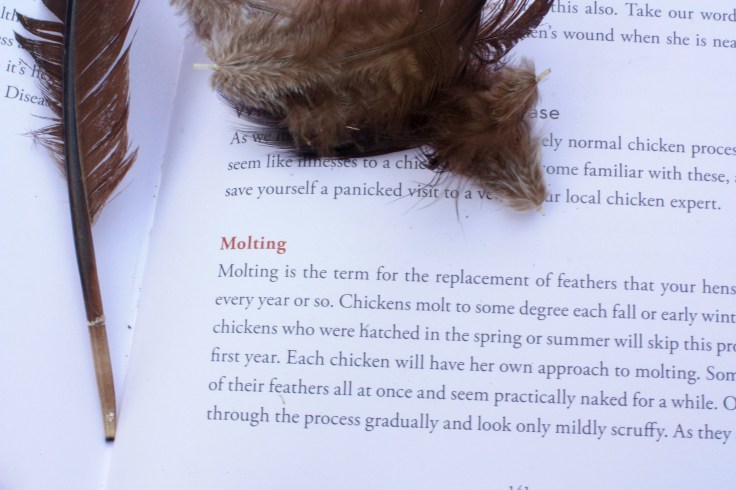
So, my chicken research says molting is pretty common after a broody hen hatches her chicks. The Baroness bought into this whole hatching thing despite no fertile eggs to sit on or any eggs at all…big time… so it’s not surprising that her changing hormones triggered a molt. It’s also a pretty common time of the year for molting as well. The molt happens not only for aesthetic reasons but also for health reasons. Brand new feathers help trap warm air during the cold winter months better than old feathers.
Now she needs my help in the form of extra protein. One book offers a helpful recipe for Molt Muffins which include oats, sunflower seeds, raisins, coconut milk, peanut butter and…. mealworms. Don’t think I’ll be baking those anytime soon but I will offer her some of the ingredients.
How do you solve a problem like Maria? You don’t have to. She lays her egg, every single day, without fail or fuss. The Baroness is the high maintenance one….
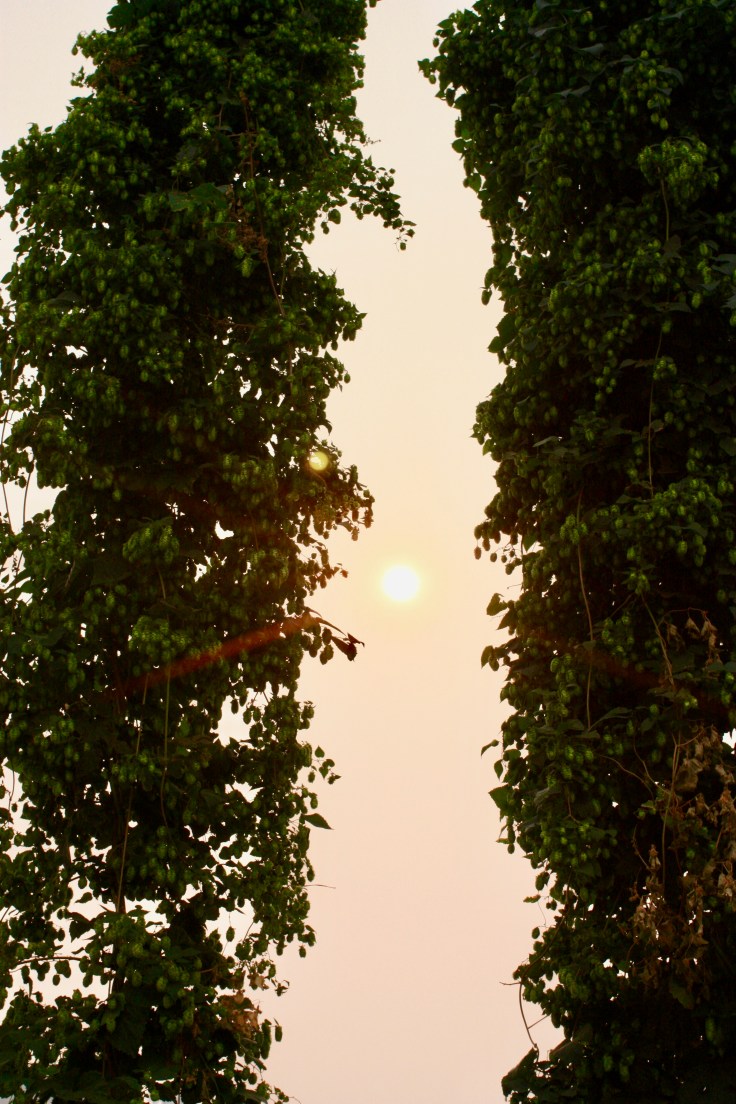
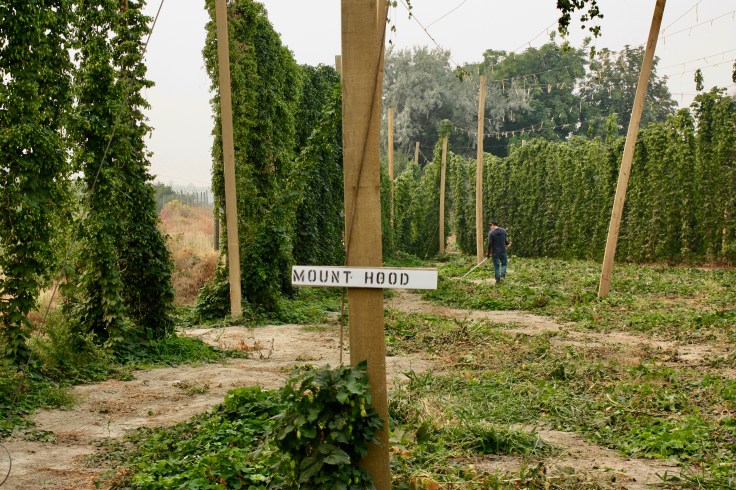
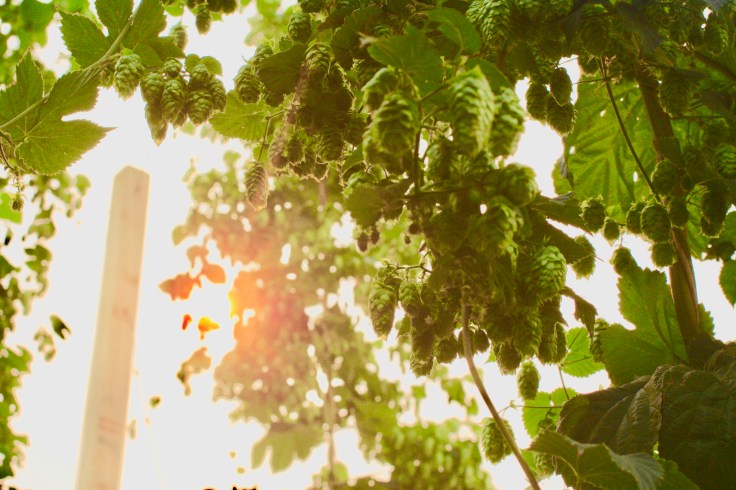
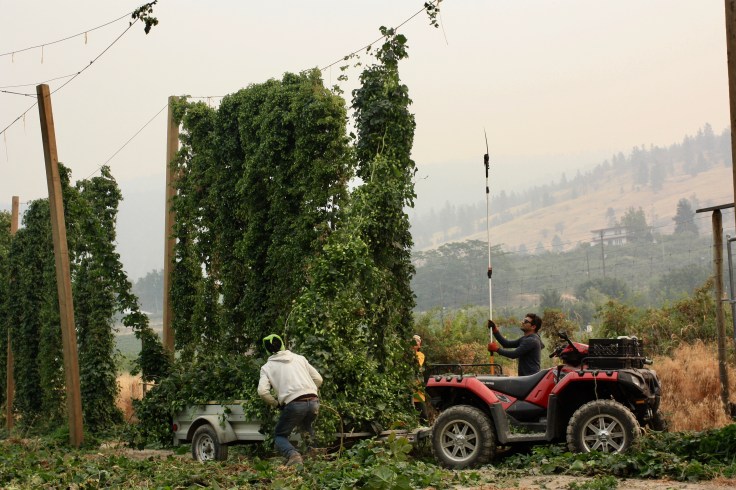
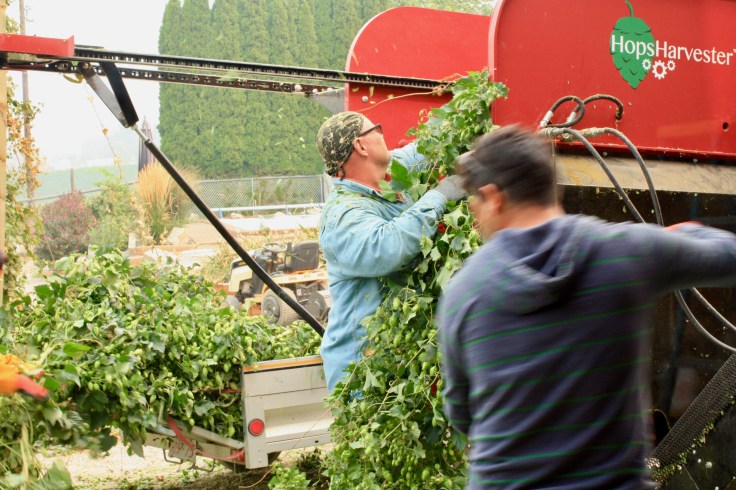
It’s harvest time on the Naramata Bench and Square One Hops is an anomaly where it’s vines, pears and apples being harvested. The only hopyard on The Bench makes an interesting photo essay subject.
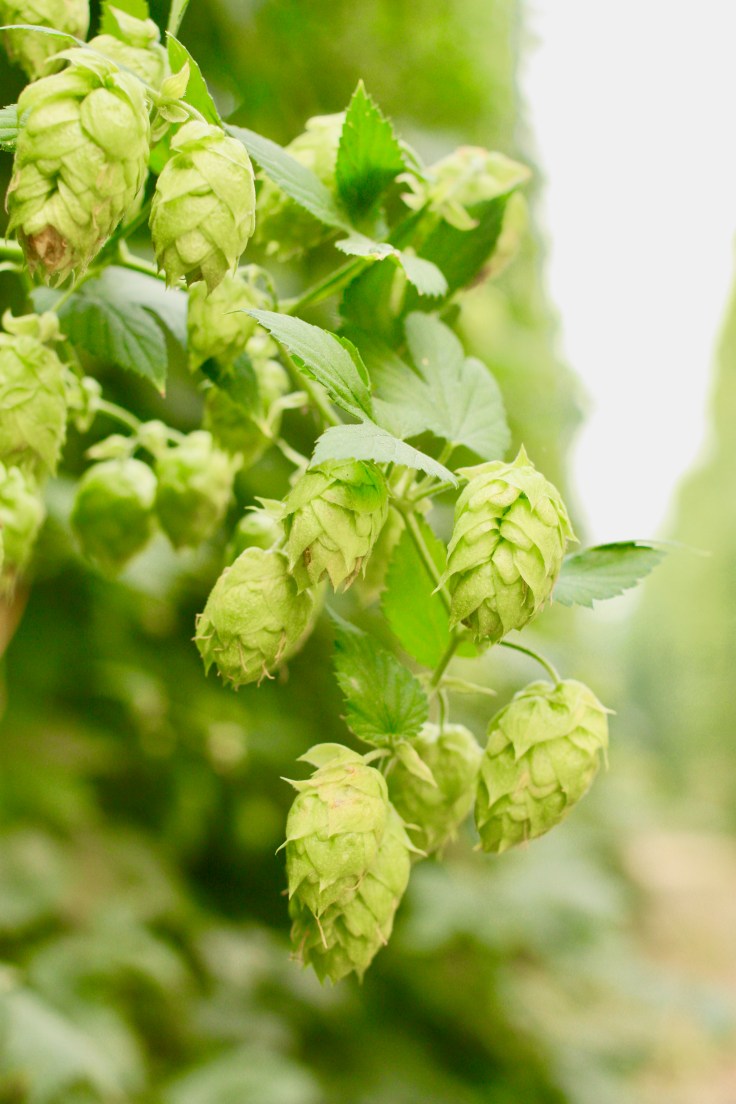
The bines are cut from the trellising and a tug-of-war ensues.The bines grow to a Jack-and-the-beanstalk towering height before harvest.The aromas in the hopyard are a wonderful mixture of citrus, herbal, piney, spicy, garlic, onion, grassy and tobacco. Each step I take on left-behind hops and bines releases these subtle yet heady IPA scents.A season’s worth of growth is astounding.Part of the crew cutting the bases of the bines. This perennial plant will tower again next year.It’s a science to determine when the hops are at their hoppy best.
Smoke from area wildfires makes for some moody photographs.
Feeding the beast. The hops harvester is a beautiful thing as many small operators pick the hops off the bines by hand.Brian Tarasoff, who along with wife Kari, own and operate the two-acre Square One Hops operation in Penticton, is in his element and covered in hops.
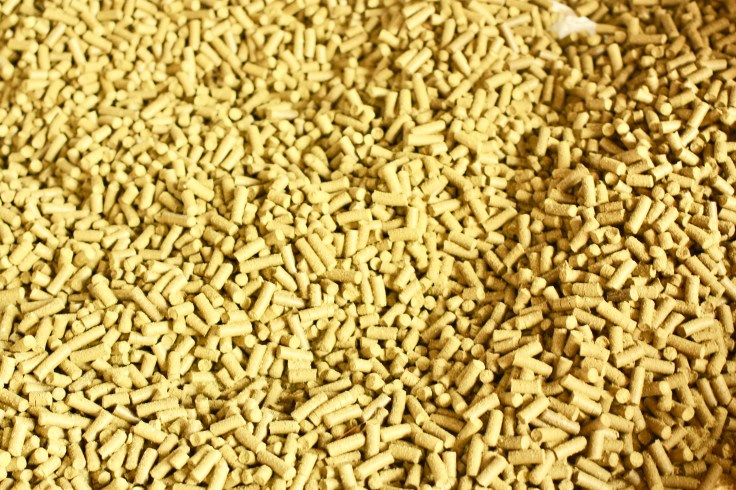
The hops will then be dried and most pelletized.
Hops pellets are preferred for use by many brewers.Perfectly ripe hops awaiting the crew and ultimately the brewmaster.
Garagiste North brought together 28 small producers and a highly appreciative group of wine lovers in Penticton on Sunday to offer a sampling of why small is better — Carpe Vinum indeed. The first of its kind in Canada, in it’s fourth year and sixth festival, Garagiste North, The Small Producers Wine Festival, celebrates the artisan winemaker creating commercially produced small case lot wines (under 2000 cases). The term Garagiste (gar-ah-jeest) comes from a group of winemakers in the Bordeaux region of France, producing “vins de garage” or “garage wine.” They were small-lot winemakers, sometimes working in their garage, who refused to follow industry laws and protocol.
The event took place in Penticton under hot and sunny skies
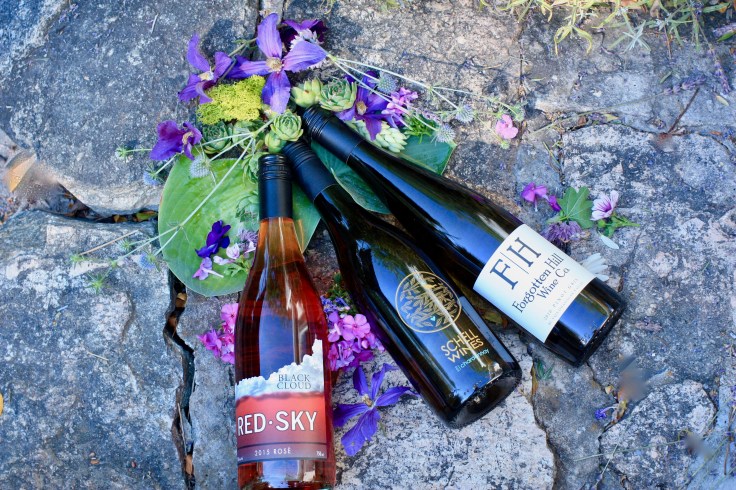
The Garagiste pop-up wine store was on site and I chose three of my favourites to take home: Black Cloud‘s Red Sky (Bradley Cooper & Audralee Daum), Schell Wines inaugural Chardonnay produced by the event’s co-founder and author Jennifer Schell (The Wine Party) and her brothers Jonathan and Jaime and a Forgotten Hill Wine Co. Pinot Gris (Ben and Maya Gauthier).
My take-home treasures to be savoured in a more leisurely fashion.
Partial proceeds from the event will benefit the Garagiste North Wine Study Scholarship at Okanagan College, which is great.
Maya Gauthier and her amazing Pinot Gris
“Being a small producer means giving everything you’ve got,” says Forgotten Hill Wine Co.’s Maya Gauthier. “You’re not starting with big money and you have to love what you do to make it happen. The learning curve is incredibly steep and the workload is so high that only those with a major passion for wine are willing to take it on.”
Forgotten Hill Winemaker Ben Gauthier says, “The result of that is that these small winemakers are putting their heart and soul into the bottle and it really, really shows in the finished product. Every wine has a different, individual story to tell. At the same time, we have the advantage of not being bound by any (or not many) rules: no one is telling us what to do!”
The Forgotten Hill’s Vineyard is a four acre plot on their property, planted in 3/4 Pinot Gris and 1/4 Pinot Noir. “Ours is the highest vineyard on the Naramata Bench, sitting at over 2100 feet,” says Maya. “We balance out our high elevation by having an enormous rock face behind the vineyard, which reflects heat during the day, and radiates heat into the evening. Our soil is predominantly gravel and sand, which allows us to control the vigour and produce small grapes, and low yields, with intensely concentrated flavours. We also make use of deficit irrigation, meaning that we water very sparingly, which helps to enhance the varietal characteristics of our grapes.”
Ben’s style is “meticulous minimalism” with the goal of showcasing the varietal and the terroir, without any interference. “We want the winemaking to be true to what the vineyard delivers, to the season and to the soil. All we want to do is coax things in the right direction. ”
The Gauthiers planted the vineyard in 2008, with a winery in mind as a long-term goal. Since planting the vineyard they have built a home, a bed & breakfast, and had two daughters, and now, finally, the winery has come to be. They opened in June and have a lineup that features Pinot Gris, Rosé and Pinot Noir. A Syrah and another Pinot Noir will be released in Spring 2018.
“We really enjoyed the event, and loved having the chance to interact with likeminded wine peeps,” says Maya. “We are able to swap stories, build a personal connection with each other and with the customers, and strenghten the ties in our community of small producers. Vive les Garagistes!”
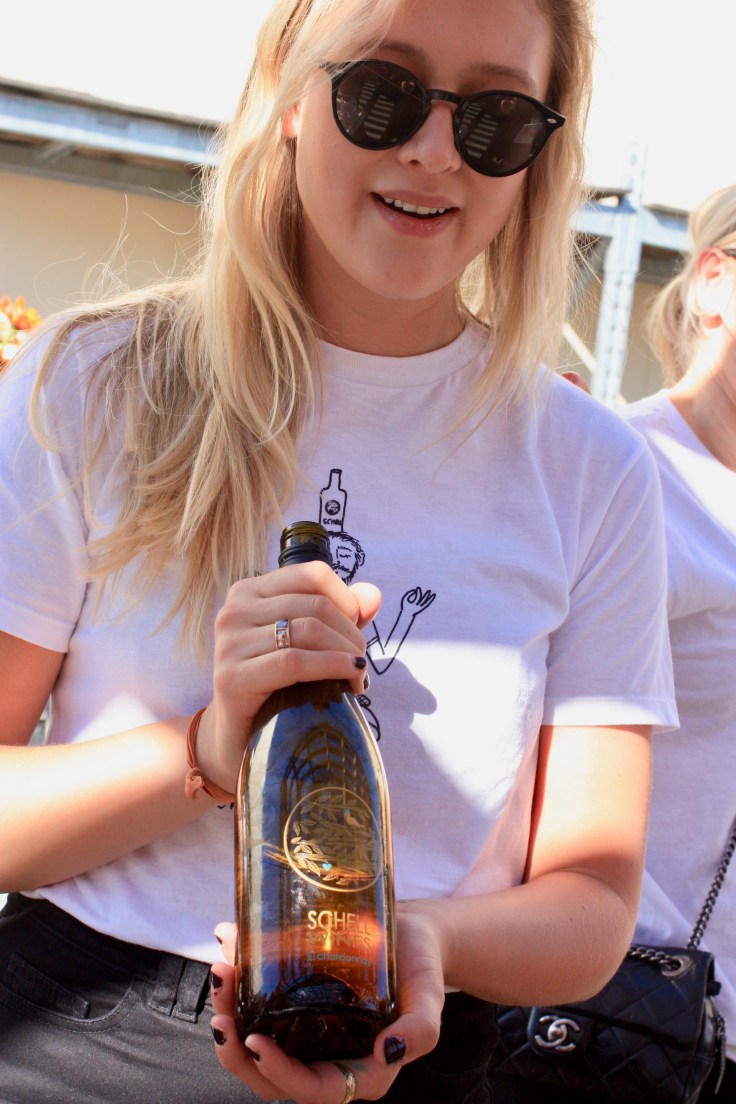
Schell Wine’s t-shirts were a hit. They were designed by Jennifer Schell’s niece, Hillary Schell, a doodle artist.
“It is a really is a unique community – and a super passionate one,” says Jennifer Schell of the Garagiste. “This is what makes our festival so different and why we attract the real wine lovers to the tasting. The name Garagiste (going back to its origins from Bordeaux) represents the renegade winemaker and those who experiment with new blends and varietals. The is what is also happening here and what defines our group, our Garagiste Guild as we are calling it.”
Jennifer says plans are in the works for the first Garagiste Symposium and trade show this January focussing on the needs and culture of the small producer. The event will be taking place at Okanagan College in Penticton who are the event venue sponsors. She is also signing a new book deal — Garagistes of British Columbia.
“We also enjoyed the first event yesterday with our Riedel sponsor on board. So fabulous having our high quality wines tasted in the highest quality crystal glassware. Our focus is also to educate wine lovers about the entire process of winemaking from vine to bottle by allowing them the opportunity to talk directly to the growers and winemakers behind the label.”
“As for Schell Wines … after working with the Garagistes and putting these festivals together for the last few years with my event partner Terry (Meyer-Stone), I wanted to become a Garagiste,” says Jennifer. ” I called my two brothers to ask if they wanted to start this new adventure together and they were in. I love that we have this family project together – gives me more time with them in a very busy world. I signed up Rob Westbury at Nagging Doubt Winery as our winemaker – he is a Garagiste and also my brother’s neighbour. So this made the perfect match for us.
“We purchased the Chardonnay grapes from Kitsch Wines that is on East Kelowna Road- just 2 minutes from my parents’ farm and where my brothers and I grew up. So, this felt right with fruit from our neighbourhood representing our unique East Kelowna terroir and what wine from grapes grown on our family farm would actually taste like.
“I am also known for being a huge fan of Chardonnay – so this first wine had to be a Chard. My niece designed our logo and also the ‘doods’ for our Chardonnayism and Chardonnayist t-shirts.”
Artist Hillary Schell and the label she designed.Audralee talking Black Cloud.
“We find the Garagiste events to be the most ‘real’ interfaces with the wine consuming public,” says Black Cloud’s Bradley Cooper. “There’s none of the that ‘we’re here to get a buzz and catch up on gossip’ at the other big shows. The average Garagiste attender is engaged, curious and aware. They’re ready to try and discover. Since we’re still unknown to many people despite starting up in 2008, we value the kind of exposure Garagiste affords.
“Small producers can sometimes innovate in ways larger operations may find difficult. There’s a certain agility with being small production,” he says.
Bradley’s winemaking philosophy is “…start with the finest grapes you can afford which will solve or eliminate many issues down the road. After that, intervene only when you must, but if you must, don’t hesitate or waffle. Wine doesn’t favour procrastinators in its formative months.”
Black Cloud’s Red Sky is pretty special. Wine people in BC and beyond will be talking about 2015 for decades to come. As Brad says, “Was it the first of many warmer vintages or was it an anomaly, a gift from southern climates? What we know at this time is that it was warmer and earlier than just about any growing season in the modern era (post 1988). Which resulted in some unusual circumstances.”
“The 2015 RED SKY started out as juice bursting with flavour and plenty of Brix, or sugar in solution. Unusually, it was also a little higher in the pH department. To avoid having a flabby rosé (who likes a flabby rosé?), we cold fermented at about 12C and boosted the natural acidity by about half a gram per liter. Cold fermenting helps lock in the fruit flavours. Yeast selection was initially feral but to ensure a strong finish at the end of the race we added our old pal Romanée Conti 212 when about 1/2 half the sugar had been depleted. The result of the yeast family feud is the complexity and savoury nature of this rosé.”
Brad describes The 2015 RED SKY as strawberry, cherry, rhubarb in the nose and in the palate. And enough tannin to stand up to just about any casual food pairing from pizza to picnics to pastrami. “Unusually, the alcohol is on the high side but the big, round body of the wine manages that with considerable aplomb.”
Organizer Jennifer keeping her cool on a scorching hot day
Here are some other highlights of my tasting day…
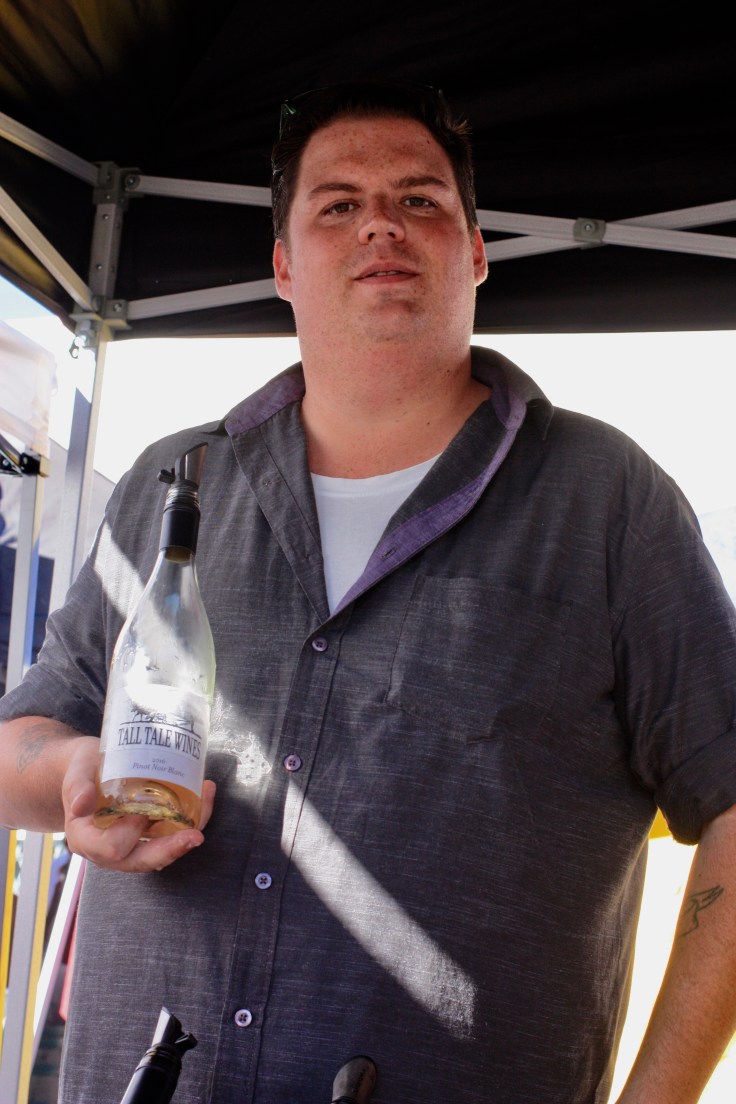
Tall Kyle Lyons of Tall Tale Wines from Okanagan Falls. They produced 290 cases of Pinot Noir Blanc and Syrah Nouveau with an interesting fermentation method hailing from the South of France. The red is best served chilled and has a fresh, fruit forward taste.Love, love, love their labels. How Canadian is this or what?
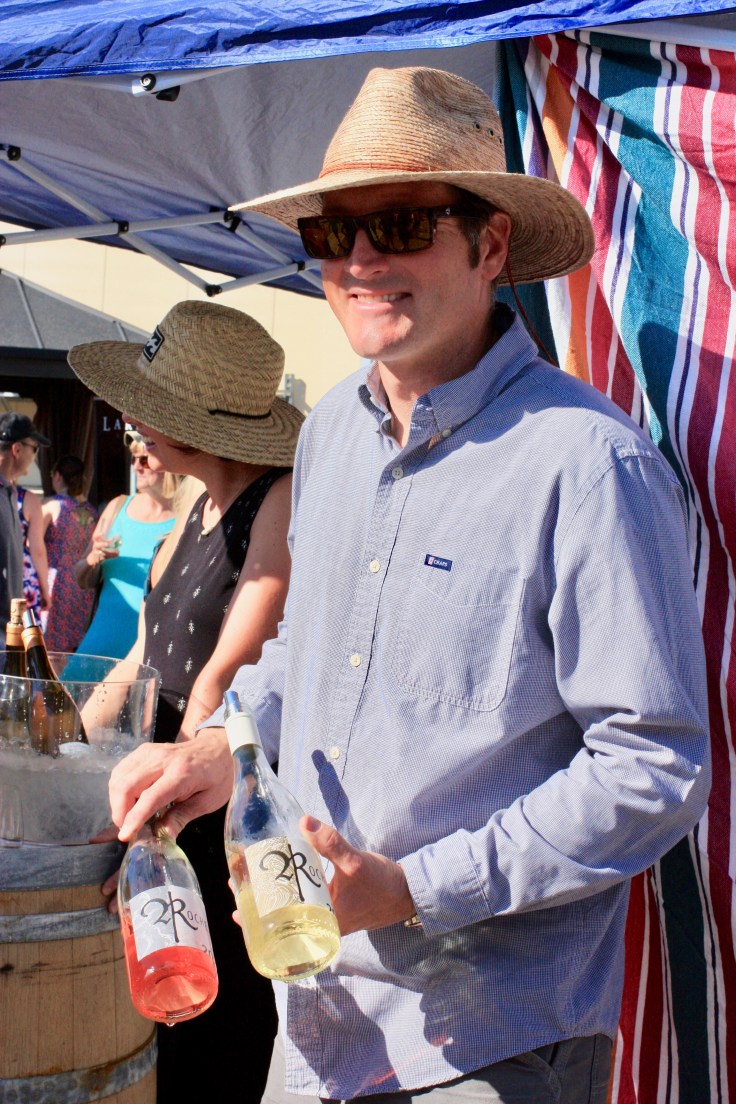
Wendy Coulombe of vin Amite Cellars Inc of south of Oliver pouring Compass, a Merlot, Cab Sauv, Cab Franc and Malbec blend that generated a lot of buzz at the festival.Kristine Witkowski talks with Naramatian Pam about their Bottega Wine Studio‘s Seven Directions and Bottega. The wines are made in the North Okanagan. Seven Directions is Rosé exclusive and Bottega’s winemaker Daniel Bontorin crafts small lot red and white wines from grapes from the Okanagan that he feels display the highest potential for great Merlot, Cab Franc and Viognier.Anthony Buchanan Wines produces 300 cases in Penticton from grapes northwest of Oliver. Anthony specializes in single vineyard, site specific wine. Amazing.Andrew Stone of Anarchist Mountain Vineyard produces 400 cases of unbelievably good Chardonnay, Pinot Noir and a red blend called Mayhem in Osoyoos.Nighthawk Vineyards, five years in the making, from Okanagan Falls has awesome labels by Kelowna artist Alex Fong. “The Chardonnay has a beautiful nose,” says festival guest Chris from Kelowna. “This is the kind of wine that I immediately begin meal planning with. I would love this with a pasta in a beautiful cream sauce.”Roche Wines Dylan Roche showing off two beautiful bottles, a 2016 Rosé and a 2015 Pinot Gris. Their gorgeous winery on Upper Bench near Naramata opened just recently and is an instant hit.









 Pipe the whipped cream over the jam. You could also spread the whipped cream if you prefer.
 Top with the second layer of cake.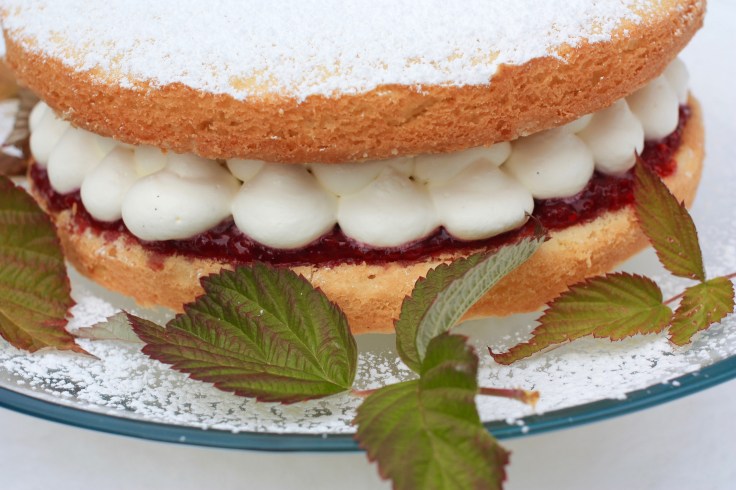



 When you have a raspberry farm you seek out raspberry recipes. This one is a gem. The thyme and orange flavours add a lovely sharp counterpoint to the rich brown sugar buttermilk cake with raspberry filling. The only downside, it only uses a scant half cup of berries!
 Some assembly required









 So, my chicken research says molting is pretty common after a broody hen hatches her chicks. The Baroness bought into this whole hatching thing despite no fertile eggs to sit on or any eggs at all…big time… so it’s not surprising that her changing hormones triggered a molt. It’s also a pretty common time of the year for molting as well. The molt happens not only for aesthetic reasons but also for health reasons. Brand new feathers help trap warm air during the cold winter months better than old feathers.









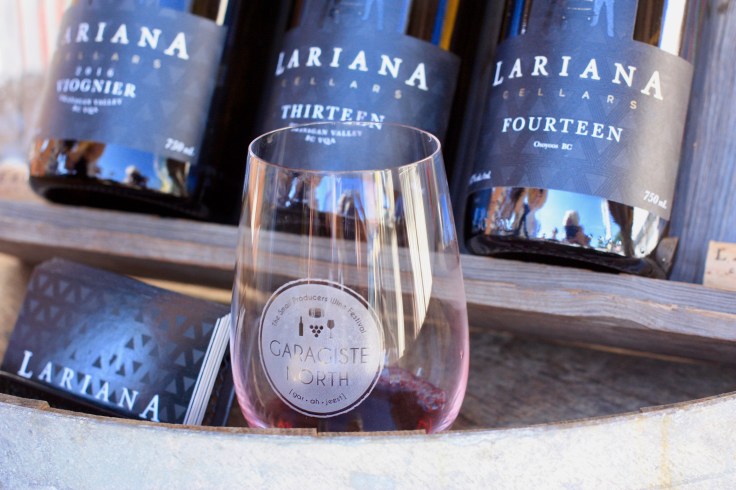 Garagiste North brought together 28 small producers and a highly appreciative group of wine lovers in Penticton on Sunday to offer a sampling of why small is better — Carpe Vinum indeed. The first of its kind in Canada, in it’s fourth year and sixth festival, Garagiste North, The Small Producers Wine Festival, celebrates the artisan winemaker creating commercially produced small case lot wines (under 2000 cases). The term Garagiste (gar-ah-jeest) comes from a group of winemakers in the Bordeaux region of France, producing “vins de garage” or “garage wine.” They were small-lot winemakers, sometimes working in their garage, who refused to follow industry laws and protocol.








 naramata-blend