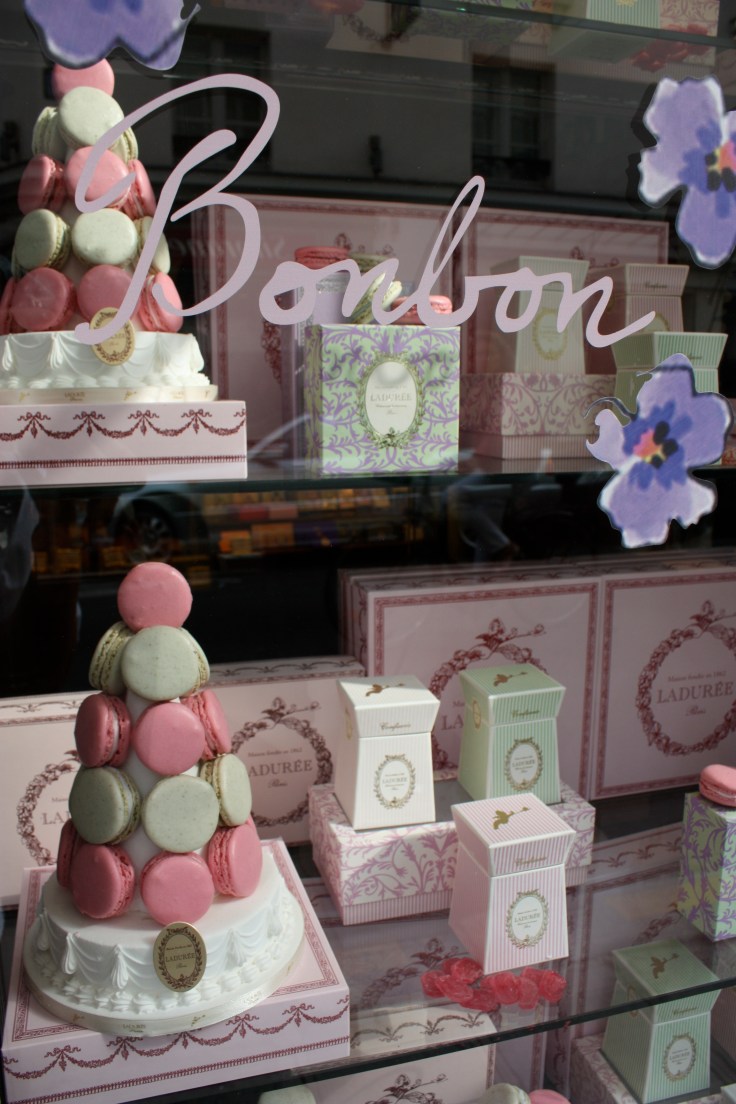
With the idea that I’d rather spend my travel bucks on chocolate than a tour guide, which I’m not great at tolerating in any case, we found an online self-guided walking tour through Saint-Germain-des-Prés’ (6th arr.) most famous chocolate and pastry shops.
Stop one was Ladurée (21, rue Bonaparte). Get this…they invented the double-sided macaron — two almond meringue biscuits joined with various smooth ganache fillings. (This location on Bonaparte now houses their Secrets and Beauty store. Ladurée’s chocolate is now at 14, rue de Castiglione (1st. are.)). They have been in business since 1862.

In case you’ve never tried a macaron, which kind of puts you in the category of never having heard of the Eiffel Tower, they come in an amazing array of melt-in-your-mouth flavours, including bitter chocolate, orange blossom, coffee, rose and my favourite, carmel with salted butter. After purchasing a beautifully boxed selection at Arnaud Larher, next up was Debauve & Gallais.

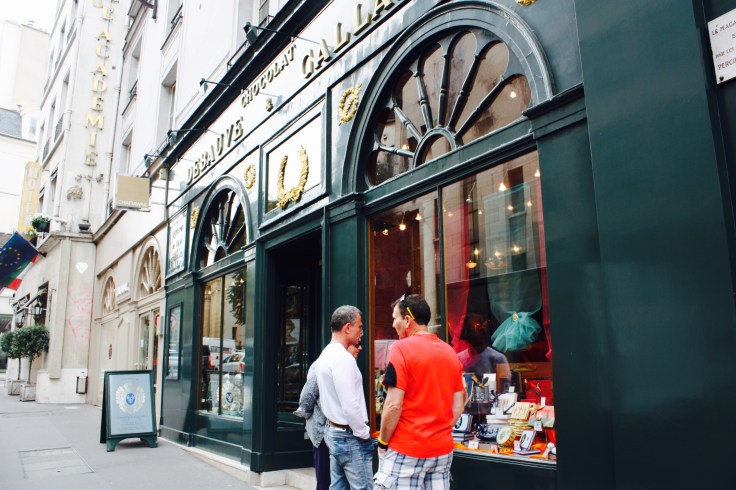
In operation at the same location (30, rue des Saints Pères) for more than 200 years, the boutique’s wood-panelled interior and semicircular chocolate counter momentarily distracted us from the chocolates. How chocolatey does this chocolate shop smell? Who says scent memory is strong?

How ironic. Debauve & Gallais started out as an 1800s health food store. The chocolate was used to make bitter medicines taste better and the chocolate was marketed as promoting vigour and health. Ok.
We also stopped in at Pierre Hermé at 72, rue Bonaparte, but by this time my camera was sticky with chocolate I had to focus solely on the pastries made by a fourth-generation pastry chef.


After our four stops we got distracted by the street life and shopping and will have to go back to visit Gerard Mulot, Pierre Marcolini, and Chocolate de Neuville another time.
Lucky us, Ladurée has opened its first Canadian location on Robson Street in Vancouver. We are heading there in three weeks to run the marathon (Handyman) and the half (me) and plan to get a macaron fix after our run.
If you can’t make it to Paris or Vancouver, here is Ladurée’s recipe for Cake au Citron (lemon cake) which is flavoured with lemon…four ways…and a tiny bit of rum. It’s easy to make despite its fancy French heritage although be sure to poach your lemon slices the night before so they can soften nicely.

Poached lemon slices:
- 3 lemons
- 1 cup water
- 1/2 cup + 2 tbsp granulated sugar
Lemon cake batter:
- 5 tbsp + 1 tbsp unsalted butter
- 1 2/3 cups + 1 tbsp all-purpose flour
- 1 tsp active dry yeast
- 1 lemon
- 1 1/4 cups granulated sugar
- 3 eggs
- 1/2 cup minus 1 tbsp cream
- 1 pinch coarse sea salt
- 1 2/3 tbsp rum
Lemon syrup:
- 1/2 cup water
- 1/2 cup + 2tbsp granulated sugar
- 1/4 cup real lemon juice
Lemon glaze:
- 2 oz. lemon jelly (or apricot jelly if you can’t find lemon)
- 1 tbsp water
The night before baking, cut lemons into thin (2 mm) slices. Bring water and sugar to a simmer and add the slices. Poach over very low heat for 20 minutes. Don’t boil. Cool and then refrigerate for at least 12 hours.
Set aside six of the poached lemon slices for decoration. Drain the remaining slices and measure a 1/2 cup and cut each slice in half.
Butter a loaf pan, dust with flour and line with a rectangle of parchment paper to make the unmoulding easier.
Place the 5 tbsp of butter in a saucepan and melt over low heat.
Sift the flour and yeast into a small bowl. Grate the zest from the lemon and toss with the sugar in a large bowl. Add the eggs one at a time, while whisking. Continue to whisk and add the cream, salt and rum. Fold in the flour and yeast mixture, halved lemon slices and lukewarm melted butter.
Preheat oven to 410F. Fill the loaf pan with the batter to 2 cm below the rim. Place in the oven and bake for 10 minutes. Remove from the oven, and using a knife, make a slit lengthwise in the crust that has formed on top. You will use this slit to soak the cake in the lemon syrup later. Return the cake to the oven and then lower the oven temperature to 350F an bake for 45 minutes. When ready, a knife inserted in the cake should come out clean, dry and free of crumbs.
While the cake is baking, make the lemon syrup by bringing the water, sugar and lemon juice to a boil. Remove from heat.
Placing a cooling rack on a rimmed baking sheet. When the cake is done, remove from the mould and place on the rack. Bring the syrup to a simmer. Using a ladle, pour syrup over the cake and allow to soak in. Gather syrup from baking sheet and pour over cake. Repeat twice. Cool and then decorate with the reserved poached lemon slices.
To make the lemon glaze, stir together jelly and water. Lightly heat without boiling until the mixture is thick enough to coat the back of a spoon. Coat cake with glaze.


 “Forgiveness is the smell that lavender gives out when you tread on it.” Mark Twain.
 1. Using secateurs, a sharp knife, or scissors, snip off a piece of lavender from the parent plant just below a leaf node (place along the stem where the joints of the leaves grow out of).
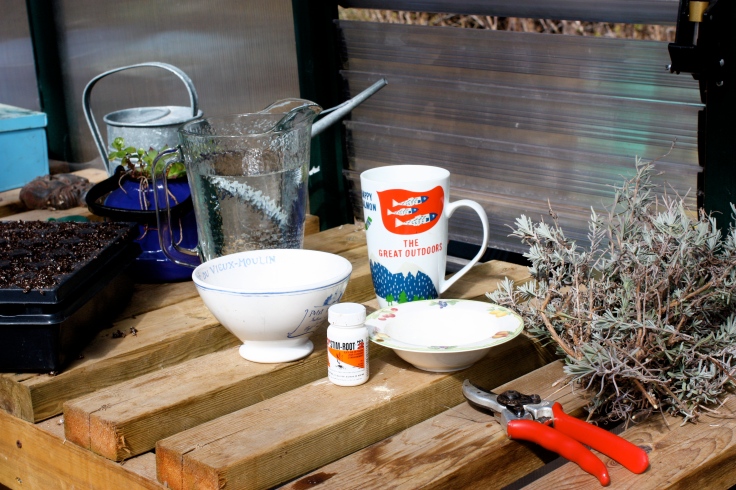 2. Prepare your pot, or seed tray with free-draining compost.
 4. I stripped the lower leaves off each of my cuttings and nipped some of the top growth off with my fingers. The leaves will use a lot of the water in your potting soil better used for the new root production and will likely die off anyway. I inserted a pen (you could use any appropriate object) to poke a hole in the planting medium. You don’t want to use just insert the cutting without making a hole first as all your honey or rooting hormone powder will come off the tip.
 5. Scrape the bottom of your cutting with your thumb on an angle to expose more of the rooting area.

 7. Plant up your tray or pots with the prepared cuttings.
 8. Add a dome or plastic bag. Make sure to keep moist but not waterlogged and clean the condensation off the dome or bag periodically. Lavender doesn’t like it to be too wet. I placed mine on a heat mat but a greenhouse or window sill will work. Rooting will take place over the next two weeks to a month after which the plants can be potted up in larger pots or hardened off and planted directly into the garden. Only about half of the cuttings will produce roots. Check for new growth or wiggle the plant around a bit to feel for rooting. Look for mouldy or obviously dead plants and remove from your tray.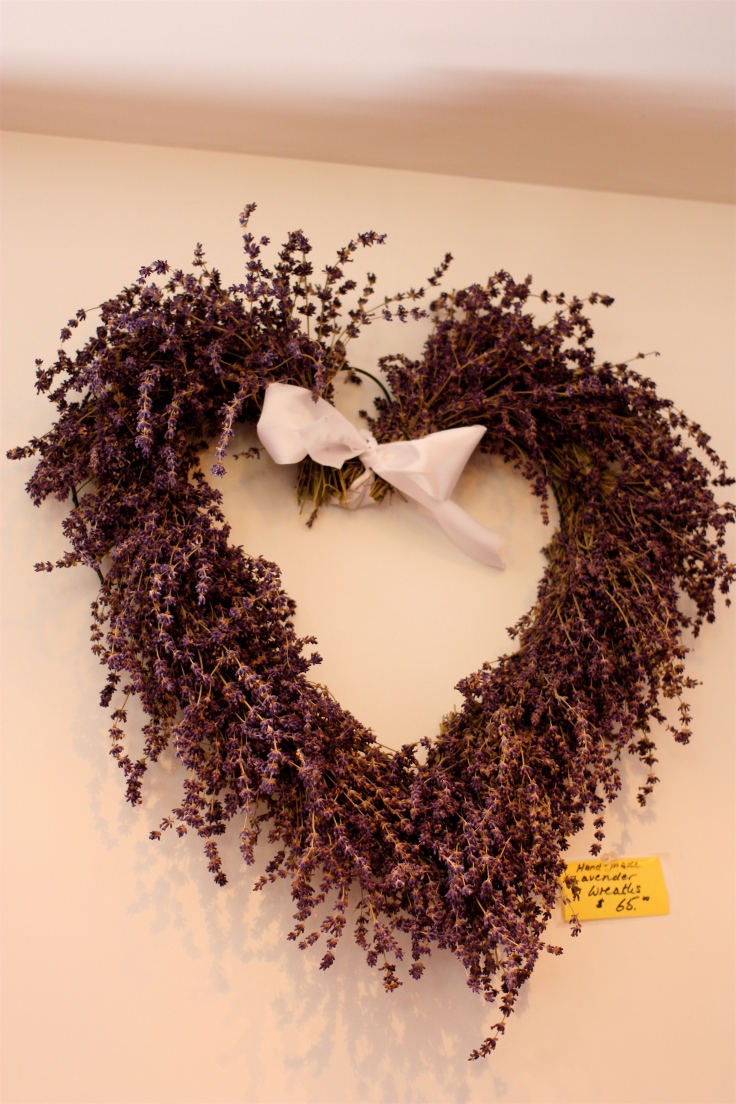
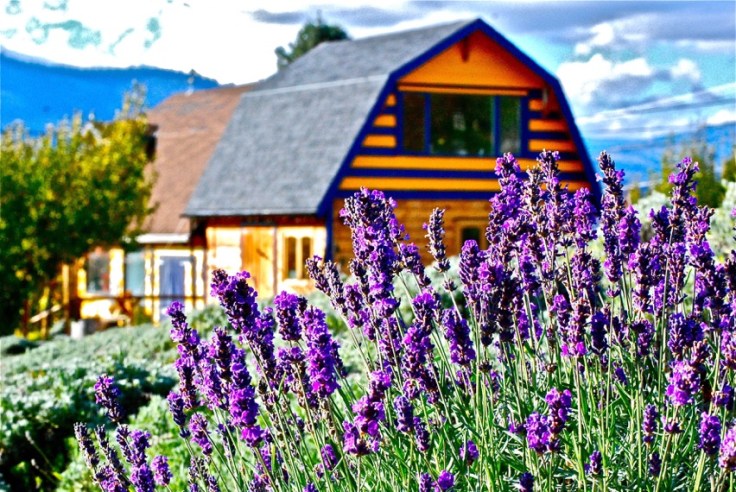

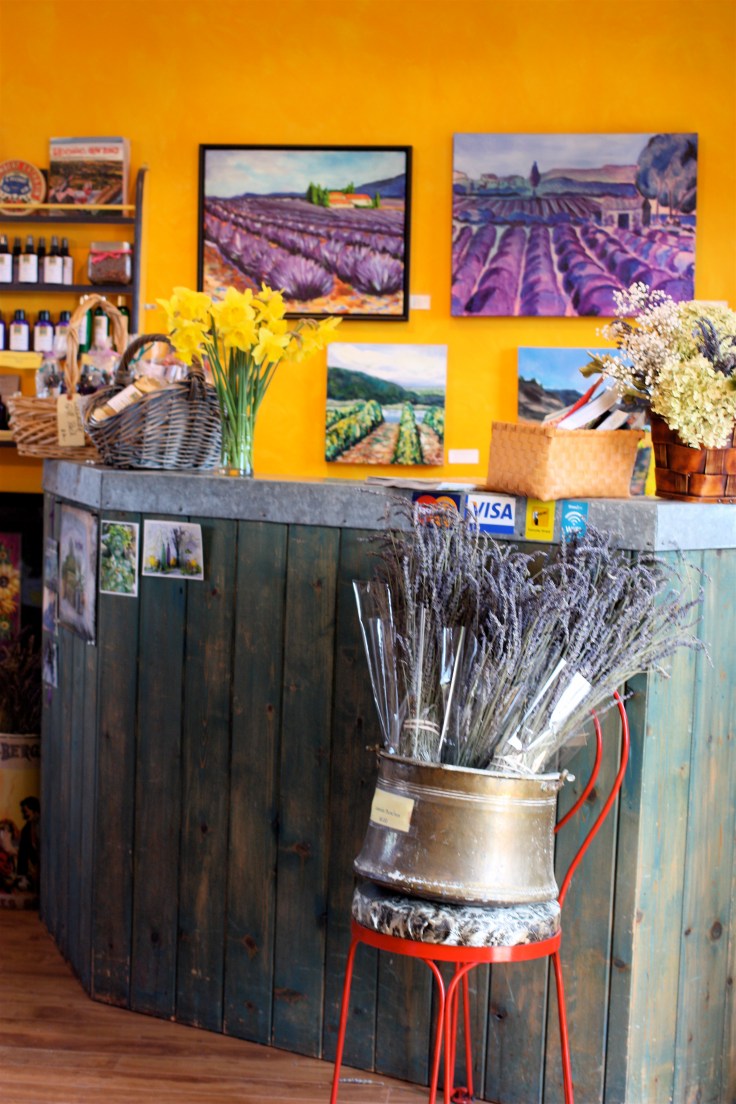


 Naramatian Doug and and Swiss-born Karolina are masters of all things lavender and volley rapid-fire interesting lavender facts as we bask in the sun on a bench overlooking the lavender with the farm’s pear trees in the distance.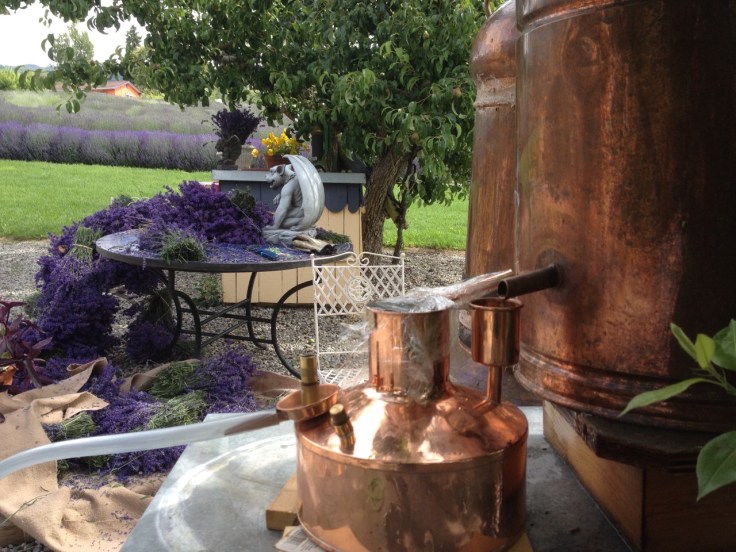














 Breakfast at Willie’s followed by some shoe shopping.
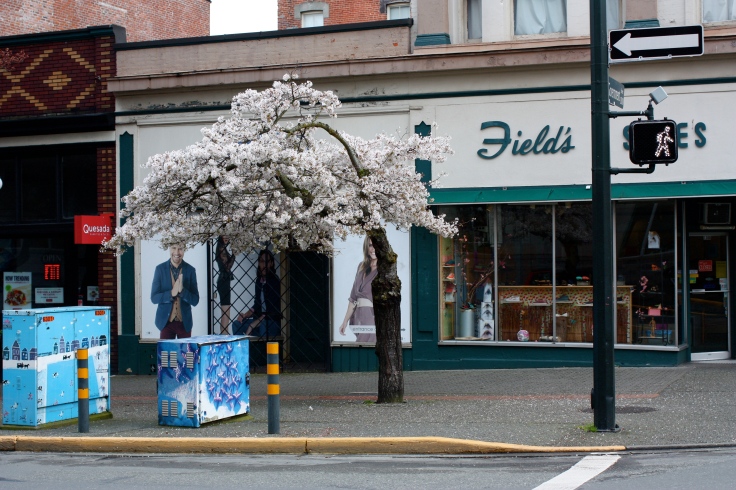 A general wander about.
 Some antique’s shopping and the purchase of a new hat for the collection.
 Dinner at Pagliacci’s followed by a movie at the Vic Theatre.
 And then home the next day via another favourite experience — the ferry ride back to Vancouver where I happily brave almost any weather to spend the hour and half trip out on the sun deck as we pass through the Gulf Islands. Regular commuters spend the time inside on laptops or reading the paper but I come prepared for the wind with extra layers.
 I look at houses as we pass through the narrow passages between islands and wonder what our life would have been like had we bought the property on Mayne Island 10 years ago instead of choosing Naramata.
 Probably would have been pretty great living there too. Home and all springed-up. There is more colour here too even in the few days we’ve been gone.
 Yup, taking that home. Who wouldn’t want a plate with a boy riding on turkey on it? Little did I know that a week later I would mail it away to a relative of the owners of the Patten Mercantile Co., postal box: Ghost Town, Amy, Kansas.
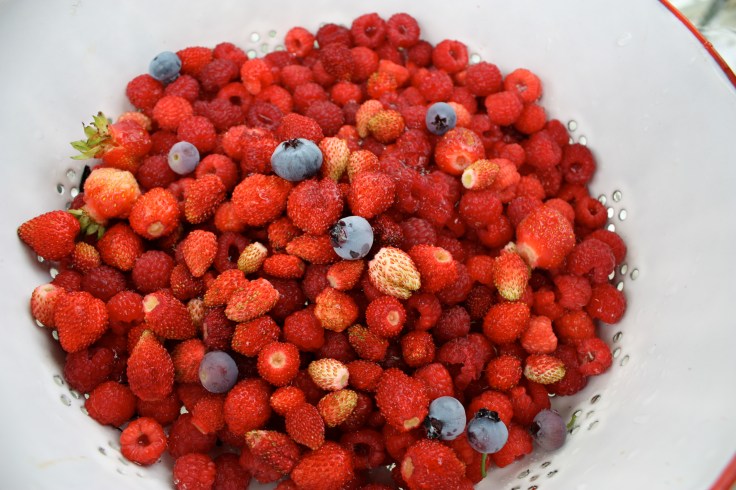 Undaunted by our
 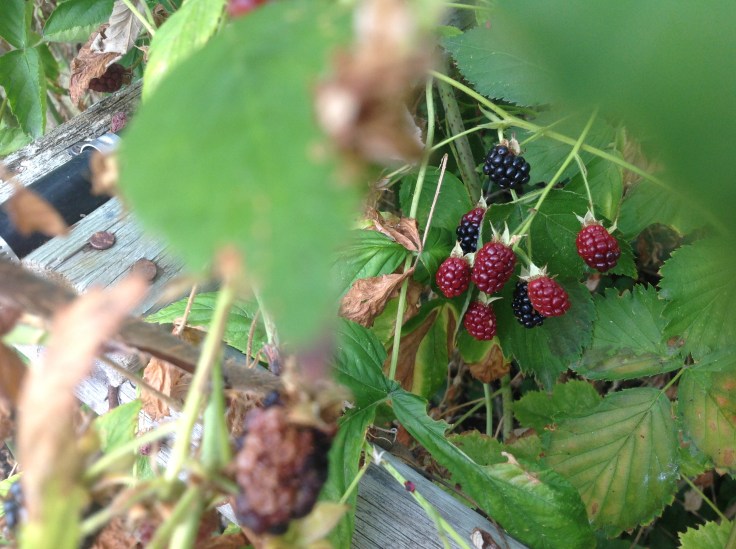 What could go wrong?
 The included 2016 raspberry calendar seemed at first glance to be a handy planting, care and maintenance guide. It in fact detailed what pesticide or herbicide to apply when for what. Malathion, Capture 240EC, Black Label Zn, Ignite OR, Dipel WP… were to help me with hard to control weeds, crown borer, bacterial blight, weevils, caterpillars, leaf rollers, two-spotted mites, botrytis, rust, root rot, fruit worm, spur blight and the new scourge of spotted wing Drosophilia. The chart includes this warning (among others): “Some chemicals are toxic to bees.” Nope. My plan is grow my berries organically and herein lies the challenge.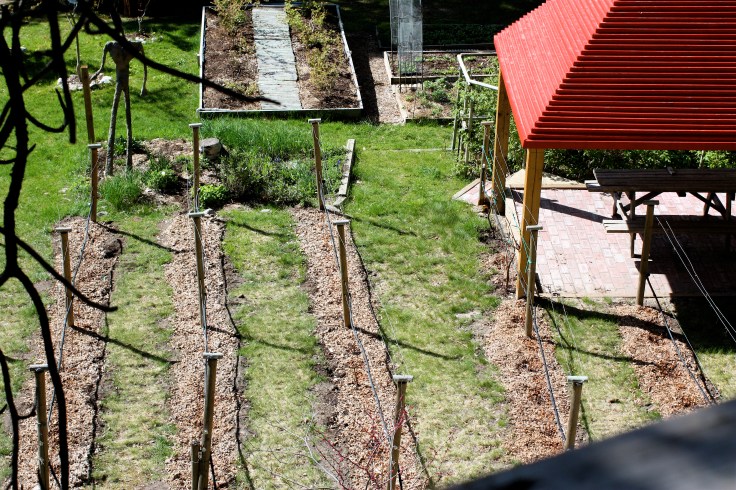

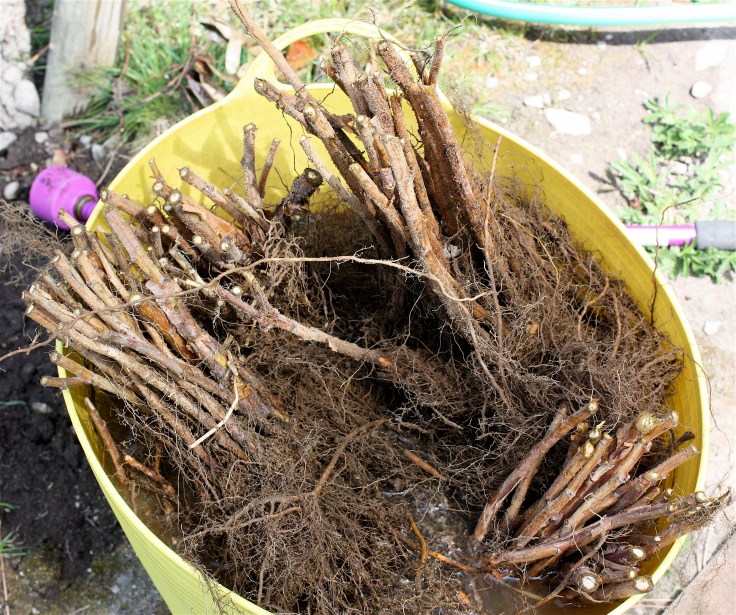 After carefully preparing the rows by digging in lots of compost, we planted these “dead sticks”, watered them in well, turned on the irrigation, mulched the rows and waited. In about two weeks we were rewarded with new growth and happily counted the live ones every day until all 100 showed leaves.

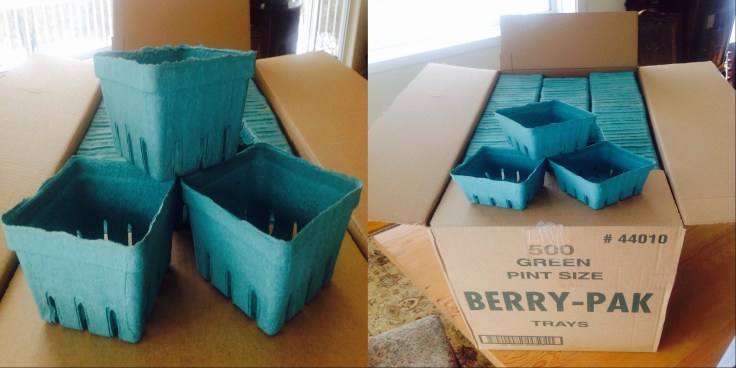 In a ballsy move, I’ve bought a case of berry trays.
