Search

naramata-blend

Life in a slow place that quickly steals your heart.

Category

Naramata life

Naramata’s Bella sparkles in the Canadian wine scene

IMG_3103.jpg

British Columbia’s only winery exclusively dedicated to bubbles and one of a very few in Canada, Bella Sparkling Wines focuses on single vineyard expressions of classic Champagne grape Chardonnay and Gamay Noir, an underdog BC grape that won’t be for long. Bella is special too as the exceptional sparkling wines are made using traditional and ancestral methods.

Newsflash: Making wine, as everyone in the Okanagan Valley knows, is hard work. It’s dependent on the weather and growing conditions that change from year-to-year. It’s about hard physical, unglamorous, labour. It’s about finicky science with art, research, education, knowledge and risk thrown in. Making sparkling wine? Double, triple, quadruple the work. Making traditional and ancestral (natural) sparkling and the work goes off the scale.
 

IMG_3082.jpg
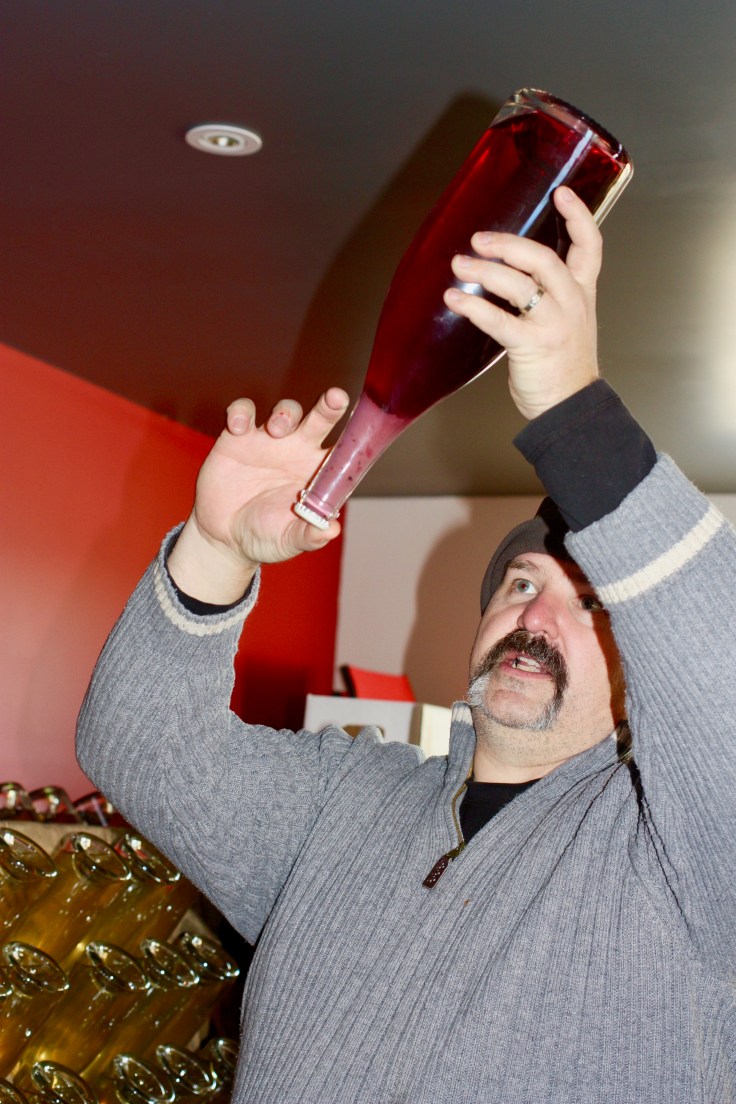
Bella Wine Maker/Owner Jay Drysdale showing me how his painstaking work riddling has dislodged particles allowing them to settle out at the mouth of the bottle making it possible to remove the sediment during the discorging step

Found a niche

“I love what I do,” says Bella wine maker/owner Jay Drysdale. “It’s hard to get a true sense of the fruit with so much makeup,” says Jay. “I love to see what the ground gives us with nothing added to hide the flavours or strip the colours.

“It may be hard but we have also found a niche.” After a thoughtful pause, Jay says, “I don’t know how to put this properly but it is amazing to share my science experiments, work at making the wine better and better and share my passion with others.”

Mission accomplished. Bella, now five years in, is selling out of all they produce and is garnering a loyal and effervescent following.
 

IMG_3095.jpg
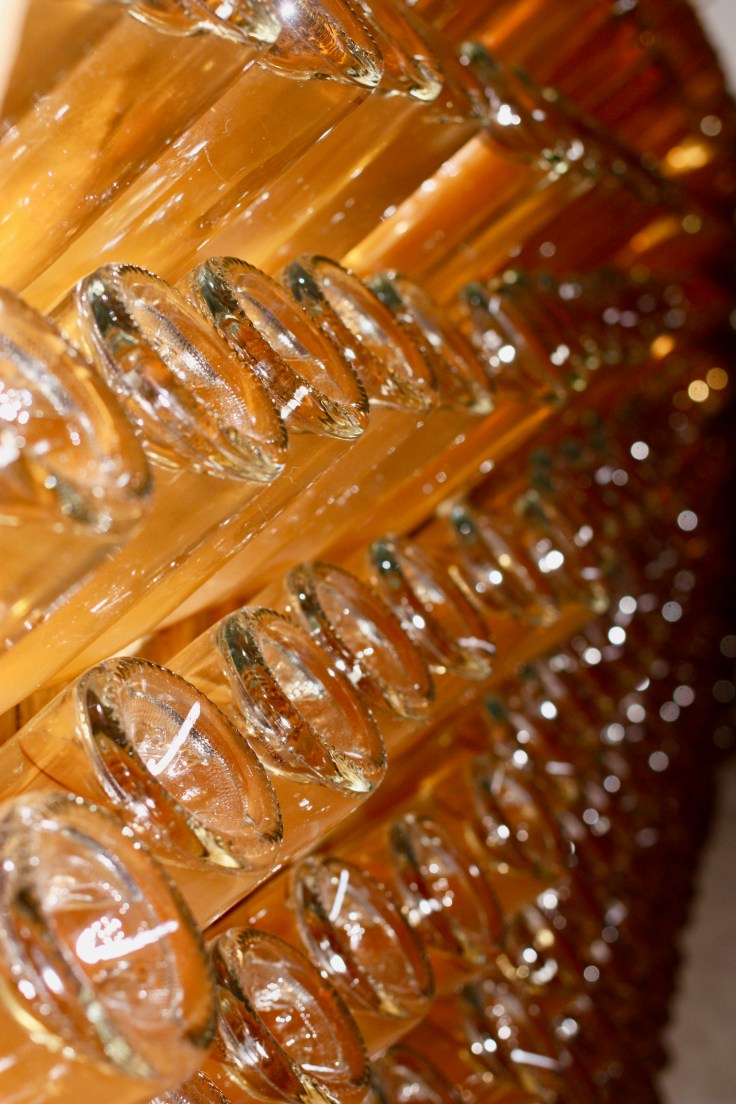
Sur lie aging happening here.

Riddle me this?

How many times does Jay touch a bottle to do a process such as hand riddling  and hand discorging before it’s sold? “About 85 times,” says Jay. “All we do has become the norm and we don’t really think about it anymore but the 2,000 cases we produce is a lot to do by hand.”

IMG_3123.jpg

Jay says Bella is about using traditional techniques that are a dying art. Jay likens what he does to the pushback in what’s happening with our food. “Our grandparents used real butter in their food. Our generation went to using margarine and all the stuff that’s put into that. Now we are seeing why our grandparents’ generation were healthier and enjoyed better tasting food.”

Of Bella’s 2,000 cases, 500 of them are natural wine made with ancestral methods. When wine was first made 8,000 years ago, it was not made using packets of yeast, vitamins, enzymes, reverse osmosis, cryoextraction, powdered tannins…among other additives and processed used in winemaking worldwide. Wines were made from crushed grapes that fermented into wine. Full stop.

IMG_3117.jpg
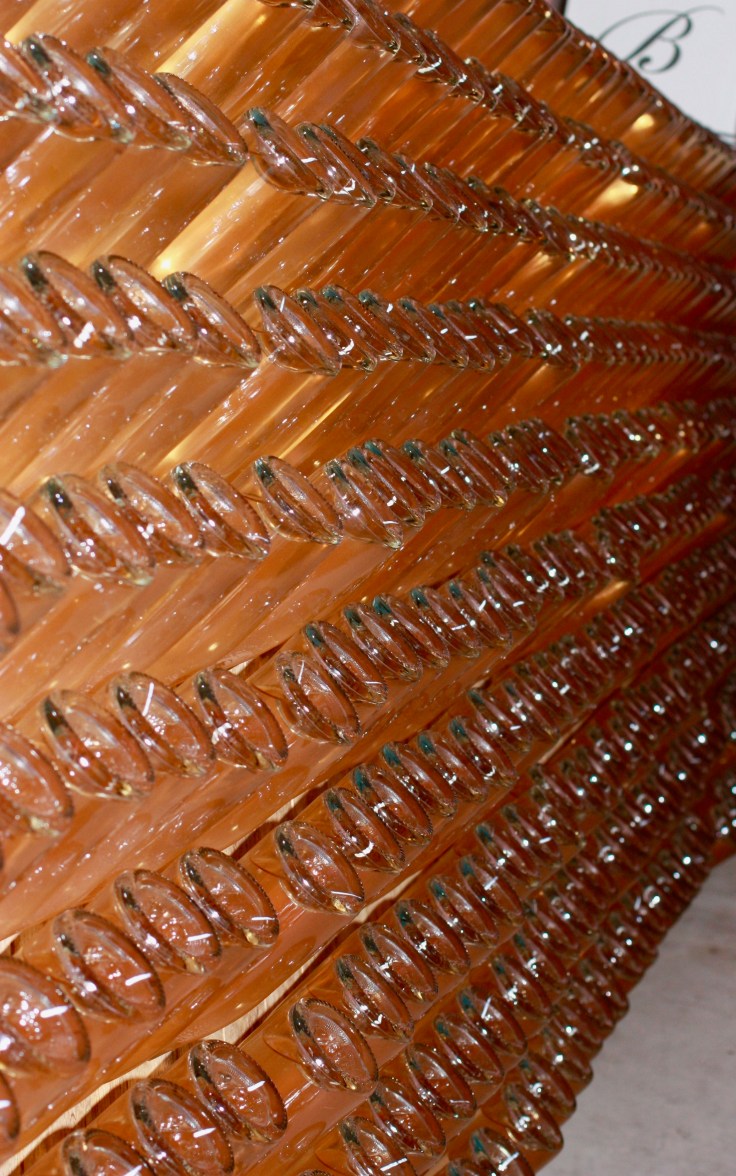
Wines getting their sparkle on in riddling racks are a beautiful thing.

Traditional and ancestral methods

Jay explains that his wines made with the traditional method involve a first ferment in a tank. The clear wine on top is then racked or siphoned off the murky lees and sometimes aged in oak barrels during or after this clarification and racking. The second step involves bottling with the addition of yeast and sugar for the second ferment. This is where the riddling comes in. Jay grabs each bottle, giving it a small shake, an abrupt back and forth twist, every day over a period of one to four weeks. The shaking and the twist dislodges particles that have clung to the glass and prevents sediments from caking in one spot. (A Gyropalette is on Jay’s wish list…a computer-automated machine that would reduce his workload enormously.) The final step is discouraging where a small amount of wine is released along with the sediment plug.

Natural wine has only one ferment involved and no added yeast, sugar or sulphur.
IMG_3101.jpg
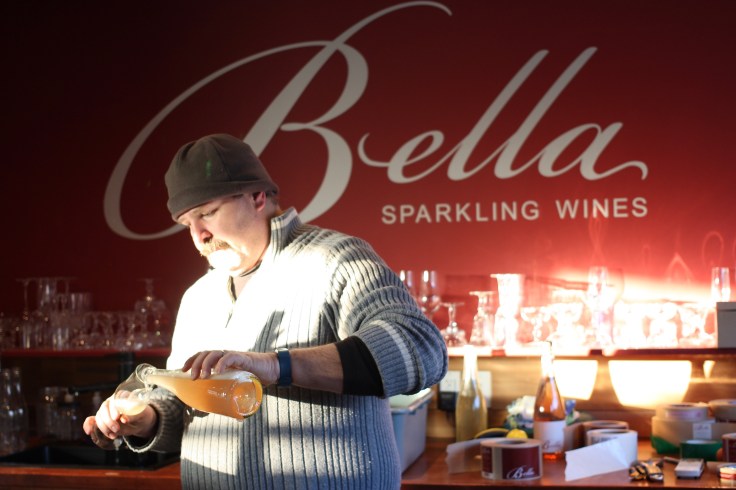
Jay pouring me a flute of Orchard House Gamay, a natural wine made with ancestral methods so I could compare it to a glass of traditional Champagne-style sparkling made with Chardonnay.

We compared Bella’s first vintage of Orchard House Gamay with a glass of their traditional Champagne-style sparkling, B2 (Buddhas Blend), 100 per cent Chardonnay from two vineyards, one in Oliver and one in Kamloops to blend two levels of acidity. (Editor’s note – I love my job.) The traditional style was lovely. To quote Dom Perignon, “I am drinking the stars!” Fresh, dry, citrus notes.

Bella’s Orchard House Gamay, with grapes from a small holding on the Naramata Bench was more flavourful with sherry, apricot and peach notes and it was a lovely pale pink. Made with traditional methods, the sparkling wonderfulness was made with Gamay Noir that remained on the lees for a year in a tank. The lees act as a natural preservative and as long as it stays smelling clean no sulphur is required. As Jay says, each sip tasted a little differently. (Editor’s note – for better or worse re the writing quality – I’m sipping a glass as I write this. Worth a typo or two…)

The lucky students at my Naramata-Blend valentine baking class will be among the first to sample Orchard House Gamay, this special sparkling of only 40 cases that will be released for Valentine’s. There are a few tickets left if you want to learn to bake fancy French pastries with Chef Amanda Perez of The White Apron Co.

IMG_3153.jpg
Orchard House Gamay will be a treat for students at the next Naramata-Blend baking class just in time for Valentine’s Day.

Champagne love story

For their first date Jay took Wendy Rose and his dog (Bella) truffle hunting just outside of Portland, Oregon. They had a lot in common including a shared rich culinary background. Jay was a retired chef, currently working in the wine industry and Wendy grew up in a household where her mom was a chef and her dad’s only hobby was wine. Long story short, the couple has been celebrating ever since. Wendy and Jay founded Bella in 2011 on a four-acre Naramata homestead that incorporates vineyard, pigs, chickens, bees, organic gardens and heritage fruit.

IMG_3126.jpg
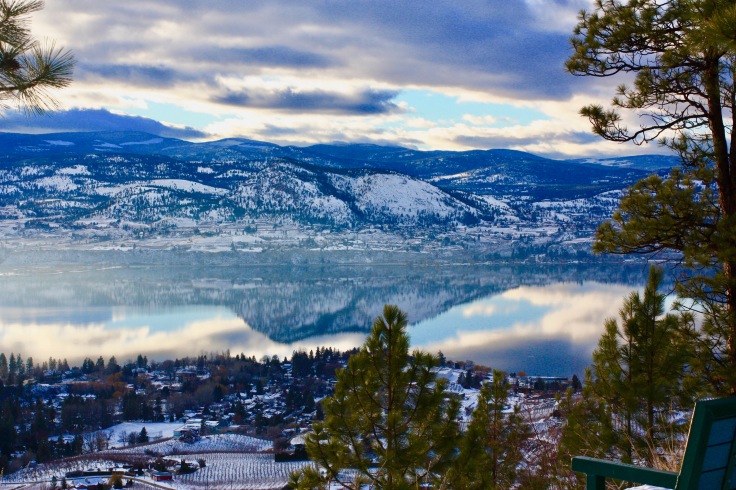
I left Bella with a bottle of sparkling and two dozens freshly laid eggs. I love Naramatians –shirt off their back = wine from their cellar. Their view…winter or summer…is stunning.
IMG_3131.jpg
The ultimate oxymoron…Beautiful Bella is located on Gulch Road in Naramata which always brings to mind The Wizard of Oz’s Miss Gulch whose alter-ego was the Wicked Witch.
IMG_3098.jpg
Got carried away with photos of the bubbly on the riddling racks. Just so cool after all my visits to traditional Okanagan wineries.

A lullaby to sleeping vines

IMG_3020.jpg
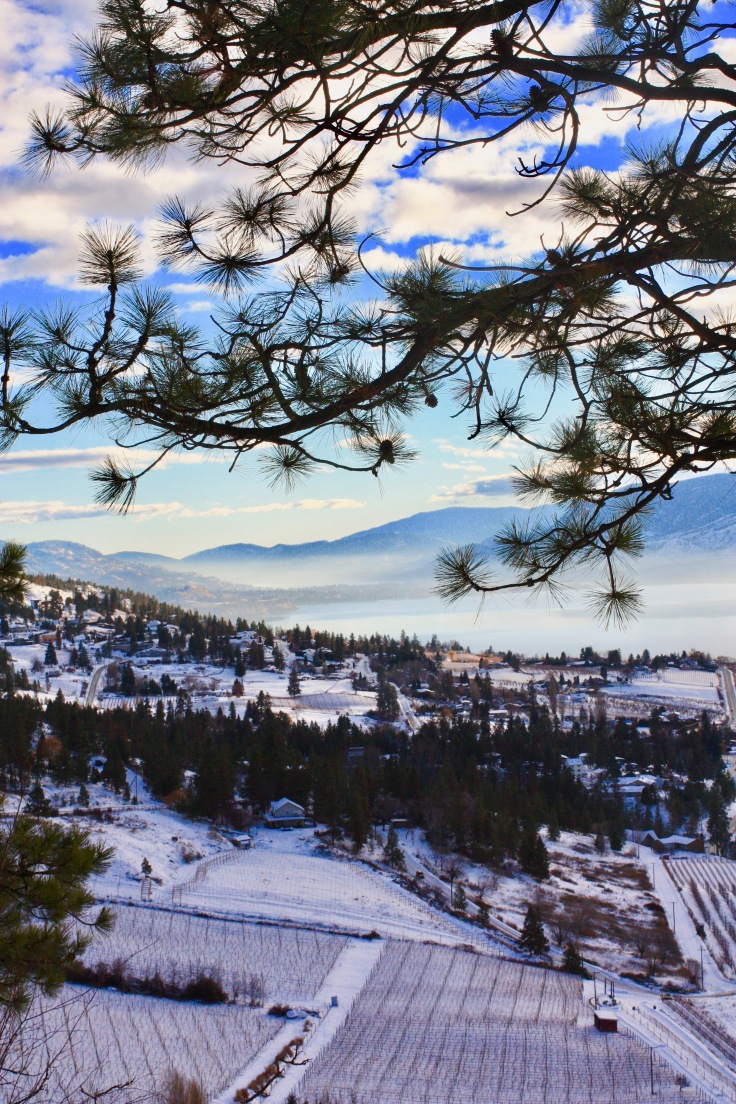
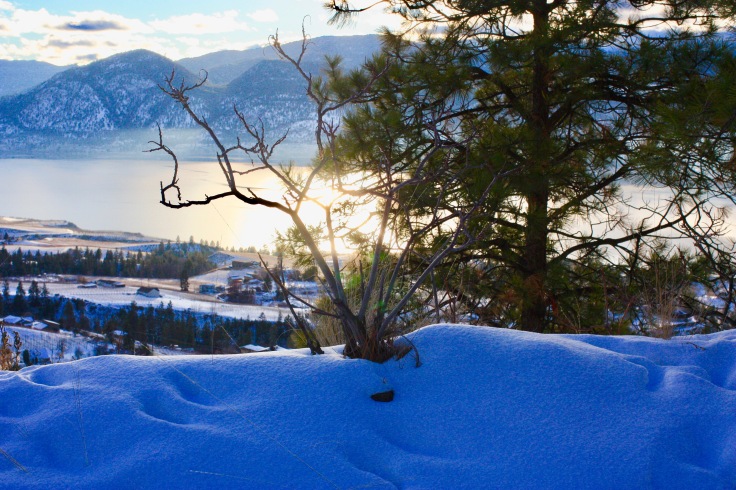
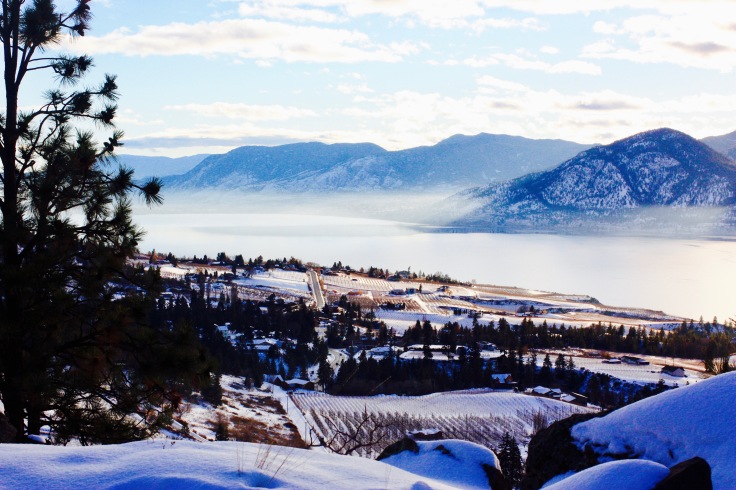
Naramata Bench vines lie sleeping under a blanket of snow
img_3038
Vineyard workers rest along with the vines
IMG_3017.jpg
Insulating snow helps protect the dormant vines
IMG_3046.jpg
Bud break is a few months away
IMG_3051.jpg
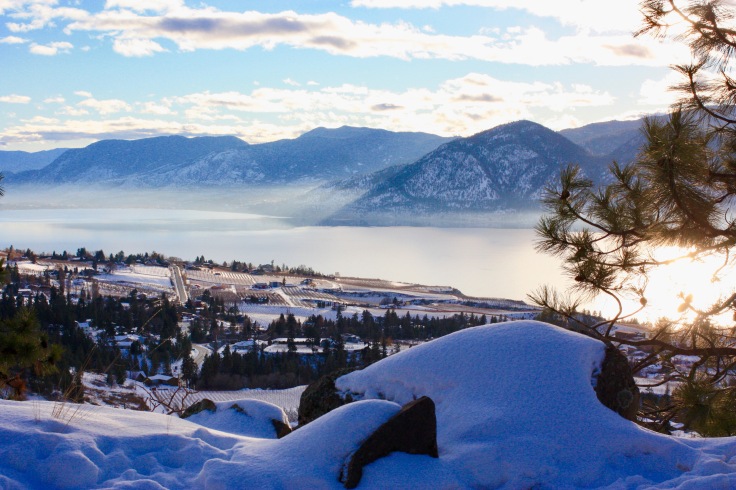
Rare sunny day in winter in the Valley
img_3054
Short days as the sun starts to set in the late afternoon over Okanagan Lake

A Calgary Highlander plays a mournful lullaby at Legend Distilling on the Naramata Bench.

How do you solve a problem like Maria?

FullSizeRender 6 2.jpg
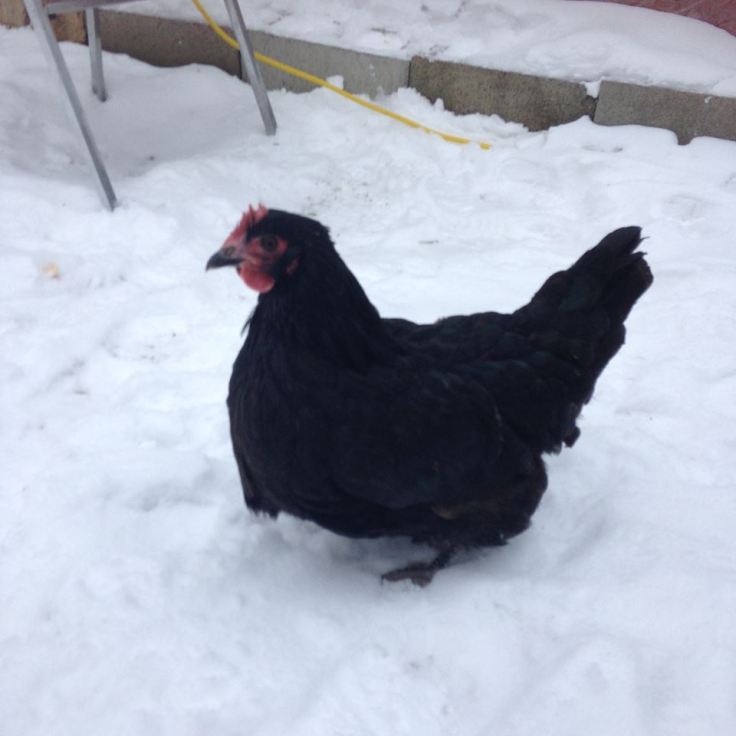
My Rent The Chicken, named Maria, is a rare Partridge Chantecler.

This year’s Christmas present is a pair of laying hens from Marie and Ron McGivern’s farm  in Kamloops, a coop, feed and some help getting up and running. My RentTheChicken.com pals will be delivered in May and picked up again in October, unless I get so attached I will need to give them a forever home…

Marie has indulgently agreed to let me choose my hens now and says she will band them and help them get used to their new names… Maria and The Baroness. They are such smart feather-brains that they will come when called or when called and a bowl of feed shaken…same, same.

FullSizeRender 7.jpg
The Baroness is Black Sex-Link, so called because the hens and roosters are different colours as chicks so easy to tell apart.

 I can’t seem to stop singing wherever I am. And what’s worse, I can’t seem to stop saying things — anything and everything I think and feel.

It will be interesting to see how the two ladies will get along. They will get a trial run paired up together before being delivered Marie says as, “hen pecked and pecking order” are real things. I may be dooming them from the start with their names but without Rooster Georg in the mix they may be OK with some brown paper packages tied up with string, whiskers on kittens, snowflakes that stay on my nose and my lashes…

15644292_1264065160306295_1151813826_n.jpg
Marie kindly sent me a photo of Maria who is a pretty special Canadian.

Somewhere out there is a lady who I think will never be a nun. Auf Wiedersehen, darling.

Maria may never be a nun but a monk is responsible for her breeding. The Chantecler breed was developed in the early 1900’s by Brother Wilfred Chatalain, a monk who resided and worked at the Oka Agricultural Institute in Quebec, my home province. He was in charge of the poultry yards there, and one day gave his visiting father a tour of the facilities. After viewing the various breeds housed at the Institute, his father remarked that there seemed to be no uniquely Canadian breed. That gave Wilfred the idea to create the first Canadian breed of chicken. He decided it would have all the traits necessary for superior winter laying ability and at the same time be a superior meat bird. He worked on his creation from 1908 until 1918 when the first Chantecler was released to the public.The breed is very suitable for colder climates. They have a super small comb so their head literally doesn’t freeze off in winter. They are very good layers, also in winter months, with an average egg production of 200 a year that weigh around 60 grams. The egg colour is pale brown.

The Partridge Chantecler was developed approximately 30 years after the White Chantecler, by Dr J E Wilkinson of Edmonton Alberta, my other home province. Just as Brother Wilfrid made a series of crosses to come up with his “ideal”, so did Dr Wilkinson. Ultimately he came up with a bird that he called the “Albertan”. It is important to note that they actually had nothing at all to do with Brother Wilfrid’s White Chanteclers and that they were essentially completely different breeds. However when Dr Wilkinson submitted his “Partridge Albertan” birds for recognition by the American Poultry Association, they did accept them but then rather arbitrarily renamed them as a Partridge Chantecler, much to his huge disappointment.

Chantecler, Partridge Albertan… both developed in Canada these breeds almost went the way of the dodo but thanks to farmers like Marie and Ron this Canuck breeds are making a come back. It is a friendly breed that is reliable towards it’s fosterer. I have confidence in sunshine, I have confidence in rain, I have confidence in confidence alone that I can raise chickens… Helps to have a friendly one I imagine.

15644837_1264065150306296_1856612771_n.jpg
Marie’s photo of The Baroness.

Oh Georg, if I had known we were going to have a sing along I would have brought my harmonica.

Black Sex-links are cross-bred chickens whose color at hatching is differentiated by sex,  making chick sexing easier.  Sex-links can be extremely good egg-layers which often produce 300 eggs a year or more depending on the quality of care and feed. The Baroness is going to be an omelette queen. The color of their eggs vary according to the mix of breeds and blue-green eggs are possible. (How cool would that be?)

Blacks are a cross between a  Rhode Island Reg or New Hampshire or rooster and a Barred Rock hen.

You know how Sister Berthe always makes me kiss the floor after we’ve had a disagreement? Well, lately I’ve taken to kissing the floor whenever I see her coming, just to save time.

I may be counting my chickens before the hatch anticipating my May Christmas gift but it feels good to put faces to the names. Next…chicken raising research…so I can solve a problem like Maria…

Cook together, eat together – no better way to Celebrate Terra Madre Day

img_1966
Naramataslow Thanksgiving dinner.

Terra Madre, slow food, Cittaslow … What’s the deal with all those names?

“It’s all about creating community, about why we all live here in this special place,” says chef and proprietor of Joy Road Catering Dana Ewart when asked to explain Terra Madre, the slow food movement and Naramata’s Cittaslow designation. “There are a lot of terms used to describe what we are all about and our philosophy around feeding people with great food but it can be much more approachable and less cerebral. It comes down to people sitting around a table enjoying themselves.

“For me personally, I get the most energy and joy out of creating beautiful food and sharing it with people,” says Dana and she has been doing this for more than 20 years.

IMG_8026.JPG
Dana at the Penticton Farmer’s Market.

Terra Madre

Saturday December 10 is Terra Madre Day. With its origins in Italy, the land where food is worshipped and quality of life vigorously defended, Terra Madre is a network of food communities of small-scale food producers committed to producing quality food in a responsible and sustainable way. Translated as Mother Earth, the slow food network has biennial conferences bringing together farmers, fishers, food producers and cooks. Dana and her partner Cam Smith have attended two of these conferences. “We have brought back so many ideas about how we can better share and showcase our regional cuisine.”

Terra Madre Day promotes the diversity of food traditions and production. It’s a day to show how our network is using its creativity and knowledge to express our love for the planet and defend the future for next generations. It’s a day to celebrate local eating, agricultural biodiversity and sustainable food production summed up as good, clean and fair food.

Naramataslow

As far at Terra Madre goes in Canada, Naramata gets it.

We get it so much that we are one of only three Canadian communities with a special status as a “slow city” bestowed on us by Cittaslow, an international organization formed in Orvieto Italy in 1999.  We join Cowichan Bay and Wolfville as places where the pace of life is a bit more human.

To quote from the charmingly translated Italian on the Cittaslow website, “A Cittaslow place is motivated by curious people of a recovered time, where man is still protagonist of the slow and healthy succession of seasons, respectful of citizens’ health, the authenticity of products and good food, rich of fascinating craft traditions, of valuable works of art, squares, theatres, shops, cafes and restaurants. These are places of the spirit and unspoiled landscapes characterized by spontaneity of religious rites and respect the traditions of the joy of slow and quiet living.”

IMG_1974.jpg

Terra Madre Day Cooking Class

Slow food or local food of high quality with connection to the local land made into traditional recipes where the community comes together is what it’s all about and this year we are marking Terra Madre day by hosting the first of a series of cooking class. The Naramata-Blend classes bring together Okanagan Valley chefs, local ingredients and people passionate about food who will cook together and eat together.

IMG_3572.JPG
Brioche!

The Terra Madre Day inaugural class lead by Chef Dana, will focus on brioche in its many wonderful forms including the unveiling of a new Naramata Loaf recipe (recipe will be shared in an upcoming post) featuring local dried fruits and nuts. Mulled wine made from Cliffhanger Red from Naramata Bench Winery Association featured member Moraine Winery and warm spiced apple and cherry juice from orchardists  Amanda Perez and CC Orchards will keep the slow food convivia fuelled as we learn to bake this special buttery egg bread.

“Ten years ago fewer restaurants in the Valley were using local produce in their restaurants,” says Dana. Now a lot of us are using are only using pretty much everything produced here. It takes a lot more effort but the quality of what we have here is amazing and the caliber of the producers and chefs is incredible.”

She says she has made it her mission to spread the word about the Terra Madre principals that were first ingrained at the Stratford Chef School where she learned her craft and to let other young people know that the Okanagan Valley is a great place to set up shop to produce and prepare amazing food.

“We (Dana and her partner Cam Smith and their business Joy Road Catering) have shown that its possible to have a successful business. Our community here is very supportive. We are a product of this great community coupled with our hard work.”

Dana is also passionate about trying to expand our way of thinking about the importance of food and those who produce and prepare it for us.

“Professionals with special skills are appreciated. For example, we hold our doctors, accountants and lawyers in regard and pay them well for our occasional visit or meeting. How often do we eat? Why not offer our farmers that same high regard?”

She has a point.

Thoughts over dessert

Some final thoughts about Terra Madre, slow food, Cittaslow…

Alice Waters, the famous Californian slow foodie, gives us this sweet slow food manifesto:

  • Eat locally and sustainably
  • Eat seasonally
  • Shop at farmer’s markets
  • Plant a garden
  • Conserve, compost and recycle
  • Cook together
  • Eat together
  • Remember food is precious
IMG_0617.JPG
Dessert is precious too.

Rentthechicken Black Friday sale – (is that a headline or what?) My Christmas present!

IMG_7416
I’m all in a flap over this year’s Christmas present from The Handyman.

Who doesn’t love a sale? But how many regrets stem from snapping up a bargain that maybe didn’t fit quite right, didn’t match your decor or really wasn’t needed at all? My rentthechickens will not fall into that category as the Black Friday bargain was an “item” already on this savvy shopper’s list and eggs never go out of style.

My two laying hens, 100 pounds of chicken feed and portable coop will arrive in May from Kamloops’ couple Ron and Marie McGivern’s farm and will be picked back up in October. These rentthechicken.com hens are a perfect way for us newbies to get our feet wet. If we chicken out, no harm, no fowl. Ron and Marie will come and pick them back up.

For about $500 including delivery and pick-up, the hens will lay the equivalent of eight to 14 golden eggs a week…somewhere around $2 an egg.  The point is not to save money but to give us the chance to test out a risky purchase before making a commitment to longer term chicken husbandry.

IMG_7406.JPG
Not as feather-brained an idea as it first appears… right?

Rentthechicken.com was started by an enterprising couple from Freeport Pennsylvania. “Your chickens will come from our affiliate homesteaders in Kamploops,” says Jenn Tompkins. “We started out thinking we could rent chickens to a few Pittsburgh hipsters and that would be it. We were dead wrong. We now have more than 35 affiliates all over the U.S. and Canada and are renting out more than 1,000 chickens. People are really interested in having their food closer to their tables without a longterm commitment.”

IMG_7081.JPG
Will they like me?

Jenn says the hens will quickly become my pals. It’s all a matter of who feeds them and who brings the yummy table scraps, she says.

What’s in a name?

Downtown Abbey characters like Lady Mary and Edith are trending chicken names, according to Jenn as are Laverne and Shirley with the older demographic. Younger renters are leaning toward characters from Friends or the Big Bang Theory. Charlotte and Mrs. Feathers have made the cut.

Our hens will be named Maria von Trapp and Baroness von Schrader, Maria and Ness for short.

IMG_7085.JPG
Roosters need not apply.

Rentthechicken does away with the four to six months rearing period until the hen is ready to lay and also the risk of ending up with a rooster chick – no eggs, lots of noise.

My farm neighbours will be incredulous at my rental hen scheme but I like the idea of an exit plan, no need to winter-over the girls or deal with “end of life issues”. My ladies will come in their egg-laying prime and Maria and Ness can be rented in following years if we bond or we can adopt them and give them a forever home if we get really brave.

IMG_7071.JPG
Ready to strut right into this new venture at Carpe Diem berry farm.

Jenn assures us that two hens won’t make a lot of noise and their portable coop will spread their fertilizer around to help our berry farm. She told a story of a couple of hens that were used as therapy birds for an autistic boy. We all need a little therapy right? Wonder if a therapy session should start with a why did the chicken cross the road joke or would it quickly devolve into the which came first chicken or egg existential question… I wonder if rentthechicken.com could include a sub-business…Rent a Cock to fertilize my hens should we choose to start a brood or How Would You Like Your Eggs incubating service…

Bring on May and Marie and Ness, future blog stars.

Ready for the Zombi Apocalypse – 72 jars of Concord Grape Jelly and how to make a less apocalyptically-sized batch…

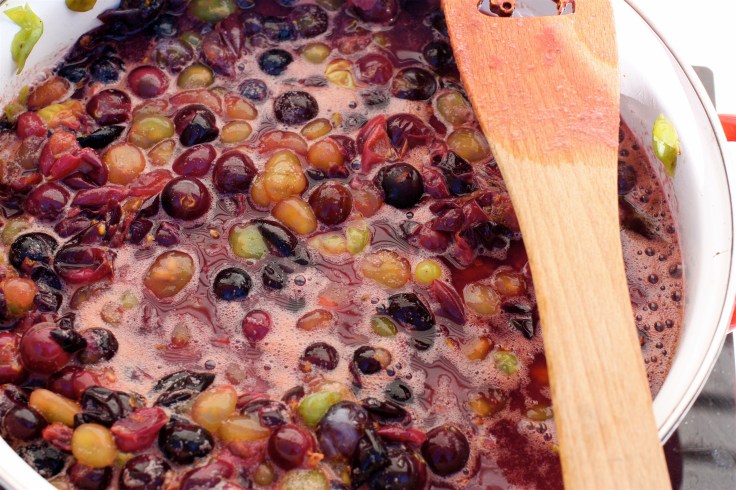
FullSizeRender.jpgHomemade concord grape jelly tastes nothing like sticky-sweet supermarket grape jelly. It has a deep, concentrated grape flavour and is equally tart and sweet. A jar of this jelly will find its way into many, many Christmas stockings this year – a Christmas stocking factory’s worth. It has all the kid-friendly nostalgia you remember, but with lovely floral notes and a thick consistency that comes from using concords at their peak and I love the purple.

Grape Scott!

My pal Linda bought an old farm house that was un-lived in long enough for grape vines to drape all the windows of the charming house – a bonanza of lovely ripe concord grapes planted by a farm family years ago. I picture the farmer’s wife making jars of jelly to fill her preserve cupboard in the house’s basement.

IMG_1853.JPG

Linda described the amount she picked with hand gestures and I determined that adding some farmer’s market purchased grapes to the mix would make a canning session worthwhile. Mistake. Big mistake. Hence the 72 jars, the Grapes of Wrath of canning sessions, zombi apocalypse preparedness, multiple store trips for more jars and two days of purple stained everything. Good thing the jelly is amazing.

IMG_1888.JPG
Just one of the boxes she brought over…

Ingredients

Too make a normal-sized batch you will need:

  • 7.5 lbs concord grapes (Linda’s were perfectly ripe and organic)
  • 1 pkg fruit pectin crystals
  • 5 cups granulated sugar

Method

Rinse grapes; drain well. Remove enough from stems to make 10 cups (2.5 L), discarding any wrinkled or bruised grapes.

IMG_1891.JPG

In 26-cup (6.5 L) pot, crush grapes with potato masher. Add 1 cup (250 mL) water; bring to boil, stirring occasionally. Reduce heat, cover and simmer for 10 minutes.

Scoop cooked grapes and juice into jelly bag suspended over large measuring cup or bowl. Let drip, without squeezing bag, until juice measures 4 cups (1 L), about 2 hours. (Or place in colander lined with triple thickness of damp cheesecloth. Bring up sides and tie top with string to form bag. Tie bag to cupboard handle or support bar over large measuring cup or bowl. Let drip, without squeezing bag, until juice measures 4 cups/1 L, about 2 hours.)

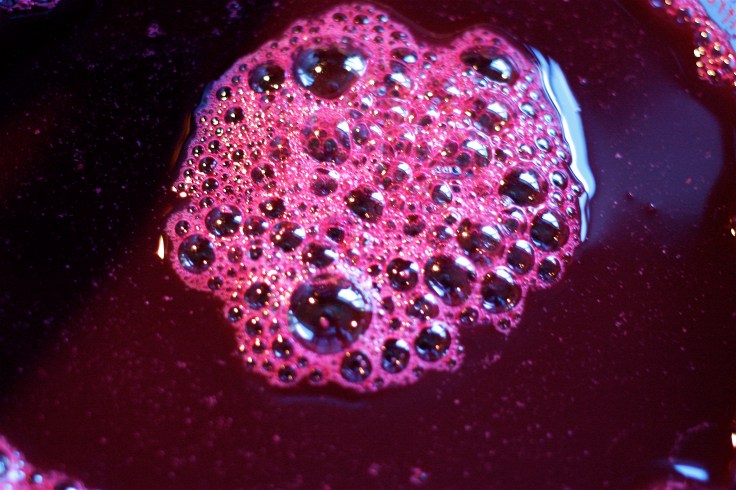
IMG_1893.JPGIn large pot, bring juice and pectin to boil. Stir in sugar; bring to full rolling boil, stirring constantly with wooden spoon. Boil vigorously, stirring, for 1 minute. Remove from heat. Skim off any foam.
IMG_1905.JPG
Purple!

Using sterilized metal funnel and 1/2-cup (125 mL) measure, pour into hot sterilized 1-cup (250 mL) canning jars, leaving 1/4-inch (5 mm) headspace. If necessary, wipe rims. Cover with prepared lids (boiling water poured over them in a bowl to sterilize); screw on bands fingertip tight.

IMG_3341.JPGProcess in boiling water canner for 10 minutes. Transfer jars to rack; let cool, undisturbed, for 24 hours. Unlike other jams, it takes that long for grape jelly to set up so it’s hard to determine if it will gel. Check for seal, ensuring that lids curve downward. If for some reason your jelly is too runny…this may have happened with one or two of our batches…it’s possible to empty the jars back out into the big pot, add some more pectin, re-boil and go through the entire canning process again. What’s eating Gilbert Grape? Doing things twice always ranks up there but the result is worth it. (Use full amount of pectin the recipe calls for.)

img_3325
I love using Wine Glass Writer pens to mark my preserves. When my jar of jam is all eaten, the writing washes right off with soap and water and I’m not left with sticky label gunk to deal with.


X marks the happy spot where Knotweed Restaurant and Legend Distilling meet

IMG_2680.JPG
If Legend and Knotweed had a baby: This chocolate espresso torte with a toasted hazelnut crust and cashew creme makes stellar use of the cocoa nibs used to infuse Legend’s Blasted Brew Spiked Coffee. Dessert first? May get hit by a meteor before I finish lunch.

Farm to glass meet farm to fork.  Legend Distilling in Naramata is now home to Knotweed Restaurant and its a perfect marriage. Both Knotweed and Legend Distilling share concepts and philosophies on community and supporting and buying local and sustainable.

img_2677
Salt Spring Island mussels.

“The Knotweed concept is farm to table,” says Chef /Owner Mike Sonier. “The concept is to tie farmers and chefs together and bring an ever-changing menu of quality food with the end result of a wonderful experience for guests.”

img_2685
Knotweed Chef/Owner Mike Sonier.

Chef Mike uses only sustainable wholesome ingredients that are locally sourced from the community as well as seeking out the highest quality organic ingredients from various humane farms around B.C.

“The pairing works beautifully with Legend Distilling’s overall philosophy of supporting our local community and locally produced products,” says Legend co-owner Dawn Lennie. “As a B.C. craft distillery, we use only B.C. grown raw materials in all of our products sourced from farms around B.C., many right here in Naramata like the Balaton Sour Cherries we use grown by Forest Green Man Lavender.” (And the raspberries from our farm…)

Every day is like a black box restaurant test says Chef Mike. “I like to get really creative with what the community has to offer and what’s in season. I’ve found my niche. I love to cook with local ingredients and the menu changes as often as nightly to weekly depending on what our suppliers have on hand.”

img_2667
I chose this wild mushroom risotto and it blew my socks off. So creamy and flavourful…

Chef Mike started getting serious about cooking at 13 but can date the first spark back even earlier. “In Grade 2 or 3 we did some cooking in a home economics class at school and I immediately went home and got busy. My mom came home to a kitchen with a food all over the counter.”

He attended Nova Scotia Culinary Arts school and worked in restaurants in the Maritimes, Toronto and Ottawa learning from chefs and compiling dishes, techniques and learning how to coax the most flavours out of a wide-range of ingredients along the way before starting Knotweed.

img_2671
Chicken coconut curry with Maple Hill’s chicken, purple cabbage, broccollini, crimini mushrooms, kale, onions and turmeric infused basmati.

“We ask our guests to allow some time for the dishes to come out of the kitchen,” says Chef Mike. “Everything is made from scratch, per order, freshly prepared as this is the best way to ensure our standard of quality is met.”

img_2658
Chicken and wild boar sliders. The chicken is prepared with Upper Bench Okanagan Sun soft ripened cheese, wilted kale, caramelized onion jam, spicy pepper aioli, smoked pork belly. The wild boar makes glorious use of Upper Bench King Cole blue cheese, apple, wilted kale, caramelized onion jam and smoked pepper aioli. Notice how the burger is in focus and the lovely server plays second fiddle in this food symphony?

Dining with some of the Okanagan’s food and wine literati, the wait was no issue as we happily tasted whichever meal came out first. Convivial lunch companions included Wine and Food Trails writer, book author and now winemaker, Jennifer Schell, Wine and Food Trails fellow writer Rosalyn Buchanan, Penelope and Dylan Roche, in the process of building a new winery on Upper Bench called Roche, Legend owners Dawn and Doug Lennie and Karolina Born-Tschuemperlin, co-owner of Forest Green Man Lavender. Forgivable bad manners in a gathering of food writers, we moved the dishes into good lighting and did some quick backdrop styling to snap some photos before we dove in.

img_2662
“Perfect, leave your hand there. It looks good in the shot.” The presentation of all the food, including this Cache Creek beef bone marrow with rosemary-infused grilled bread, was rustic and appealing.

The Legend drink menu compliments the lovely food or maybe it’s the other way around?  A wide array of hot and cold cocktails and seasonal drink specials are on offer with all of them using their own handmade spirits, as well as an ever chanaging selection local Naramata wines, bubble, BC craft beers and cider.

img_2656
My go-to Gone in Sixty Seconds lived up to its moniker.

Me and all my foodie pals had no hesitation in giving Knotweed a hearty bravo and another checkmark on the list of what makes Naramata so great.

img_2653
Legend Distilling when I went in for lunch…
img_2690
and when I left…perfect place to linger on a fall day.
img_2681
No meteors. Time for seconds.

Naramata – Life in a slow place that quickly steals your heart

IMG_2503.JPG
Old Main Road

Literally at the end of the road lies one of the most unexpectedly delightful places in the world. The temptation is to keep the discovery a secret. Fortunately Naramatians are too sociable and ardent about their home not to share and bloggers can’t keep any secret at all.

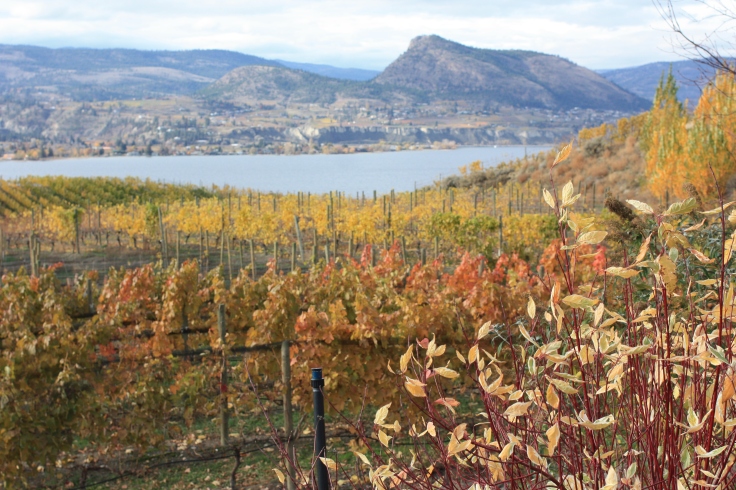
A trip along Naramata Road toward the Village is a sensory experience whose end result is an extraordinary sense of well-being. The scientists have gone to work and come up with a formula for scenery that most appeals to people (they study everything right?) and the Naramata Benchlands ticks all the boxes. It’s to do with the proportion of sky, the straight lines of the vineyards and orchards and the expanse of the blue lake grounding it all.

IMG_2535.JPG

Travelling through a winescape of row upon row of trellised grapevines dotted with sympathetically designed winery architecture and guest accommodation, the road twists and turns to reveal new vistas. Scientists tells us that we like making discoveries and the “I wonder what’s around the next corner?” feeling we get when heading from Penticton to Naramata fits the bill. The vines and orderly orchards advance across rolling hills that all lead down to the shores of Okanagan Lake and the elevation of Naramata Road lets us appreciate it all.

IMG_2338.JPG
Hillside Winery

Once lured in by the scenery it’s what Naramatians have produced from this naturally gifted growing region moderated by the lake that adds the next layer to our pleasure. Naramata’s artisanal products are lovingly produced by people whose lives are devoted to their craft whether it be wine, spirits, fruits and vegetables, pottery or painting and they revel in sharing this passion. Wine and culinary experiences are top-notch and varied but all share a similar philosophy. Skill and a light touch are used to let the ultra-premium, local, in-season ingredients shine.

IMG_0595.JPG
Lunch with scenery at Legend Distilling.

The village itself has lost all track of time. No traffic lights, no chain stores, few streetlights to blot out the stars, Naramata is made up of quiet streets with a mix of cottages and modest houses with well-kept gardens. A little church with bells that ring at noon, a general store shaded by elms, artisans and shops sprinkled here and there, cozy restaurants, the world’s best pizza place, a welcoming coffee shop, busy pub… Anchoring the Village, the perfectly in-keeping  Heritage Inn sits and the end of the main street, as it has for more than a century.

IMG_2335.JPG
Heritage Inn

Naramata’s quality and human pace of life is internationally recognized. We have been given the designation as a Cittaslow town. Cittaslow towns celebrate life in the slow lane, locally grown products and the slow food movement, in places where people care for the land and for each other.

img_2072
View of the Village from the Kettle Valley Railway trail.

Based in the Tuscany region of Italy, the Cittaslow network and accredited communities have a mandate to improve the quality of life. It’s karma that we have this Italian designation. Our town’s founder, John Moore Robinson produced a brochure in 1907 calling Naramata, with its wonderful climate, the Italy of Canada.

IMG_6234
Apple orchards are still a lovely part of the Old Main Estate in the Village.

Naramataslow

As part of the Cittaslow philosophy, I’m working to bring local chefs into the Village to teach us how to use all the lovely produce (like the raspberries from our Carpe Diem berry farm) to bake and cook for our friends, families and the many guests who have come to love our secret place.

The first guest Chef, Dana Ewart of Joy Road Catering is an Okanagan superstar. She is going to show us why we need brioche in our lives. CC Orchards will be providing sweet dried cherries for use as one of our brioche ingredients.

Tickets to the December 10 class are half sold and I’m thrilled with the response from the Village about the new venture. Here’s the link to join in Naramata Blend Cooking Class Series Brioche!  A second class on eclairs and profiteroles is in the works for February…

Naramata Blend launches cooking class series…Brioche!

img_3567

img_3572

If there are no cooking classes in your area … you just start one yourself! In what I hope will be win/win/win/win Naramata Blend is launching a series of classes that will:

  • give our local chefs and food gurus an opportunity to diversify their businesses
  • provide some income and awareness for the Naramata Centre
  • meet my needs to learn hands-on from some of the best
  • offer that opportunity to anyone else with a keen interest in learning how to make magic with what we grow and produce in the Okanagan Valley.

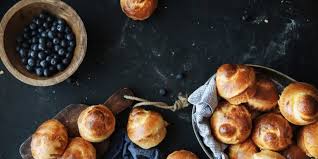
For the first class, Chef/ Proprietor of Joy Road Catering Dana Ewart will show us why we need brioche in our life – just in time to amp up our holiday baking.

img_3566

We will learn how to make this buttery rich yeast dough that is so tender that it walks the line between bread and cake. It will be fun to enjoy some mulled wine, sample what we bake and take home the recipes after the afternoon class.

With this amazing French dough as our base Dana will teach us how to make these brioche treats flavoured with:

  • Cocoa
  • Candied orange peel
  • Savoury herbs

IMG_8033This versatile dough will also be made into Joy Road’s famously delicious pull-apart cinnamon buns shaped into loaves and elegant small buns meant for classy desserts like baba au rum.
images

If you are in my hood and want to buy a ticket go online and learn more at Eventbrite.

I’m talking to chefs and gathering ideas for upcoming classes in the hope that my instinct that cooking classes are a perfect fit for Naramata is on the mark. Send me a comment if you have ideas for other classes… preserves, chocolate, fancy eclairs, bread…


Blog at WordPress.com.

Up ↑