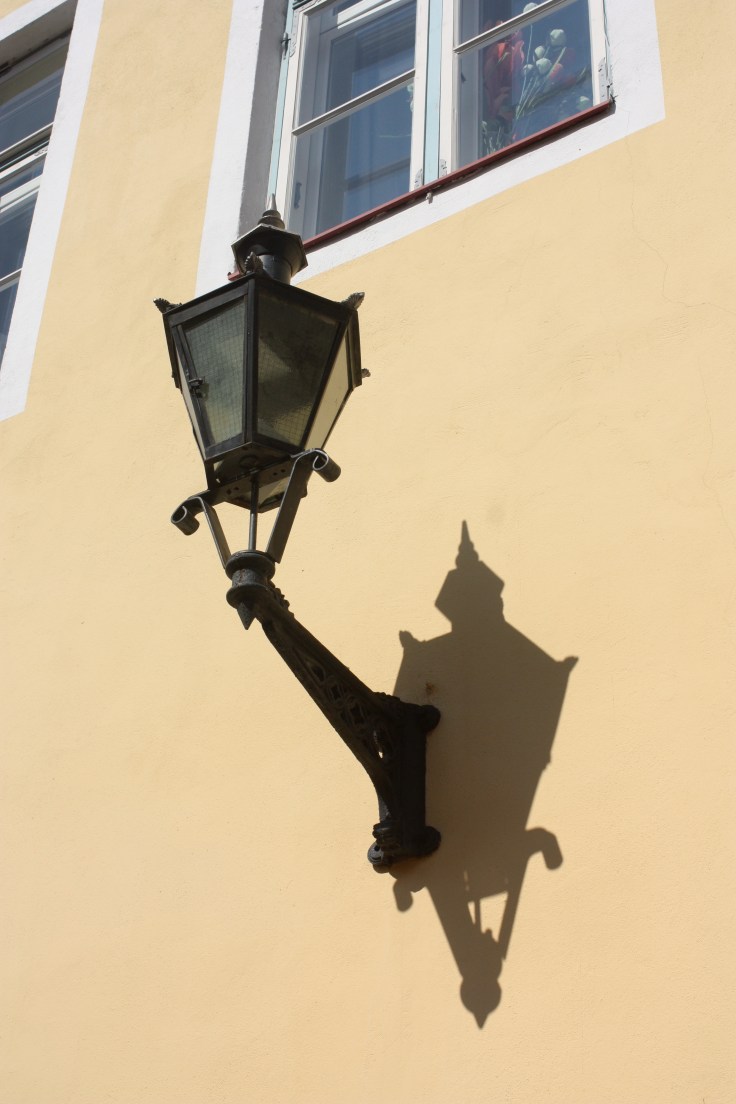
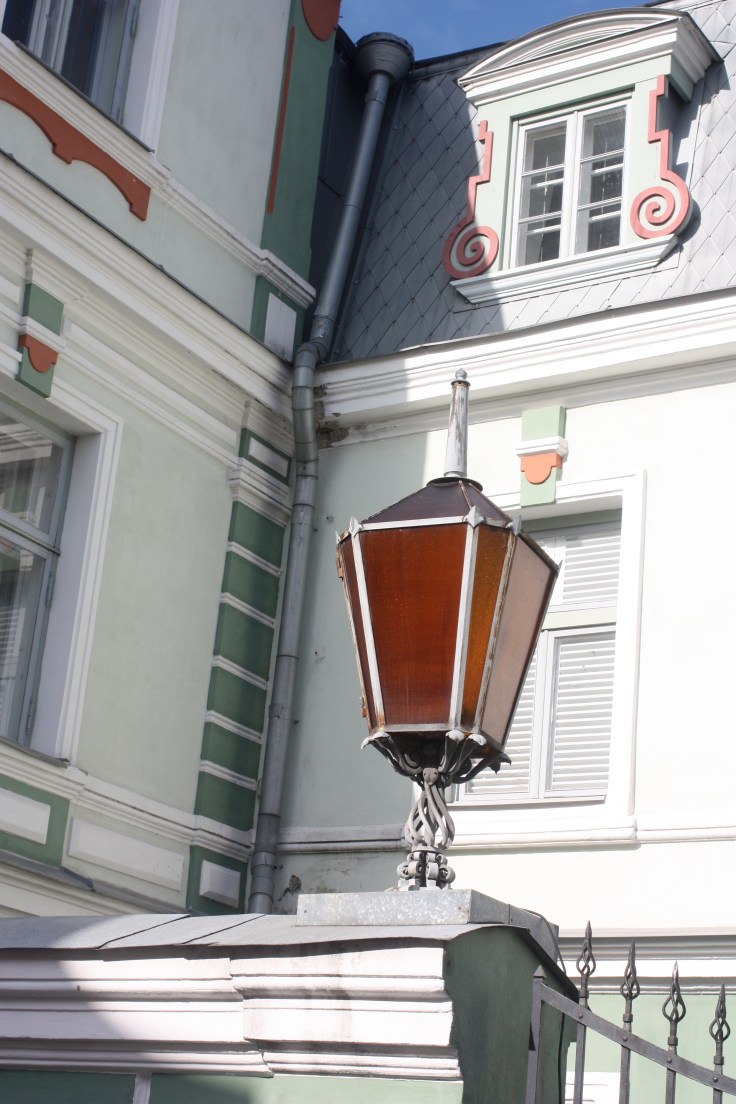
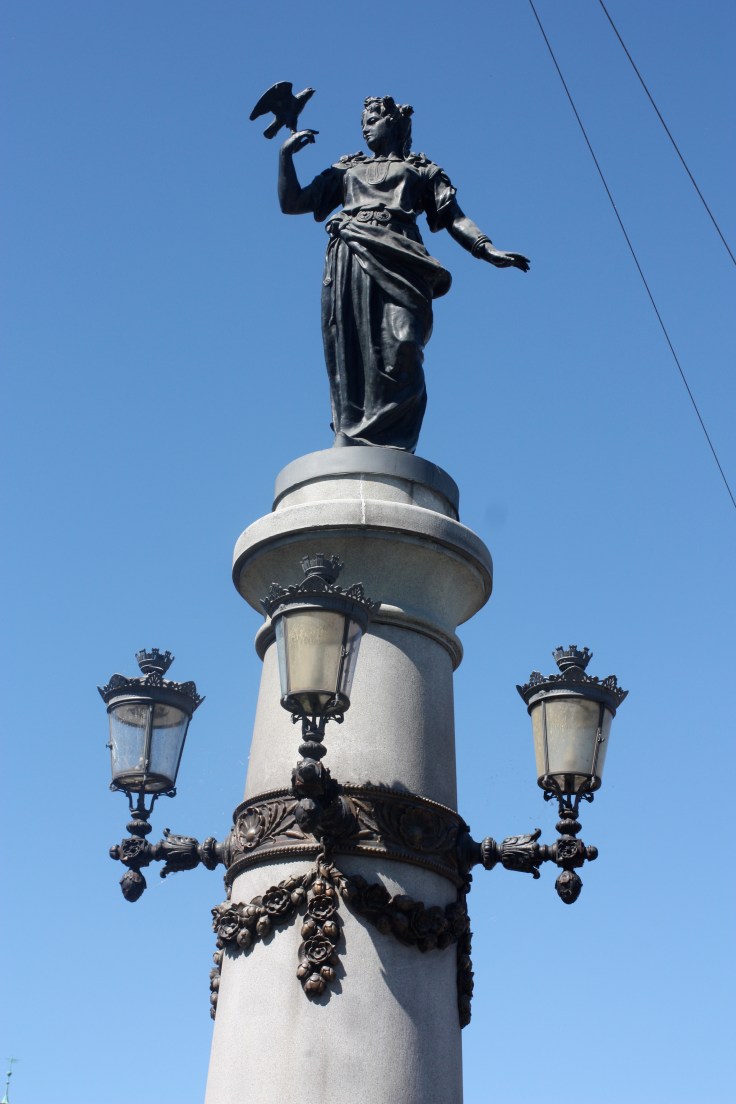
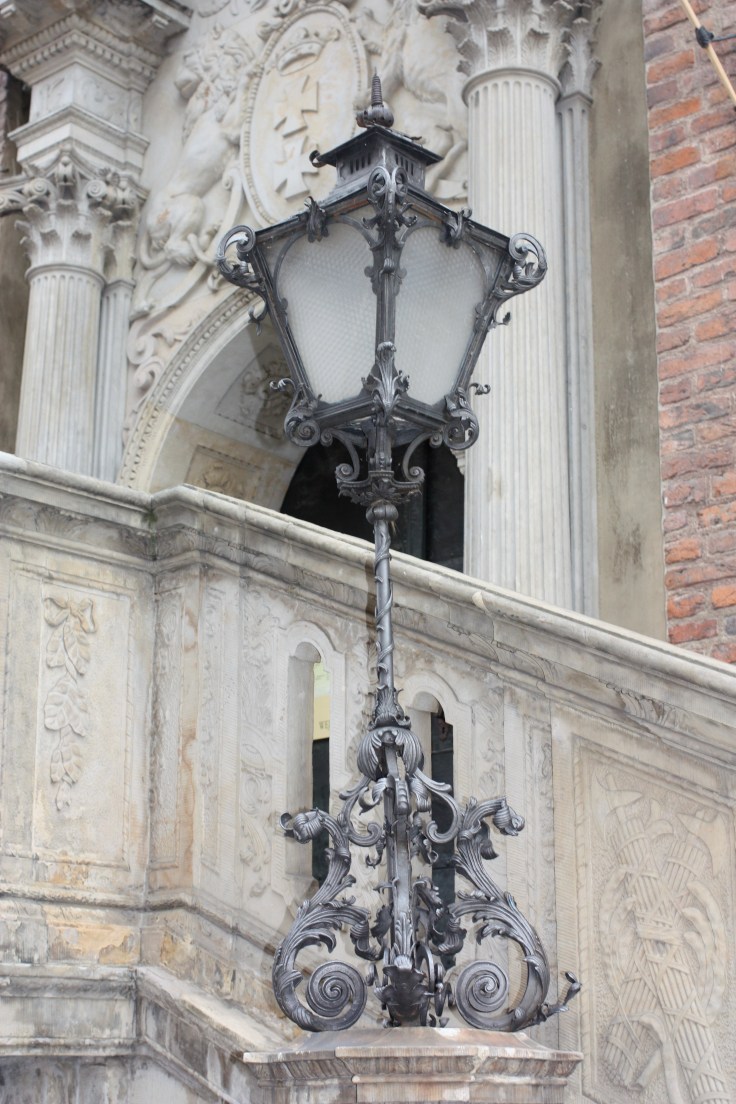
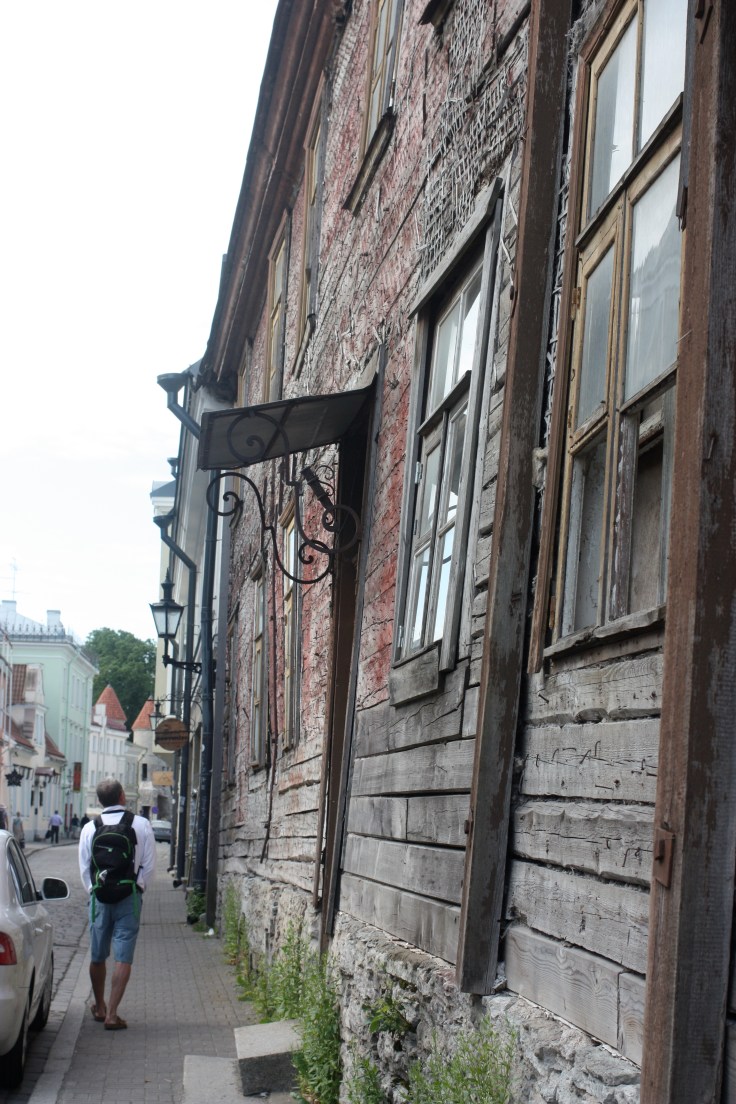
This is why Canadians go to Europe. Full stop. It’s a place where there is absolutely nothing utilitarian about pretty much anything. Here is a photo essay of lampposts in the Baltic’s that started with this photo in Stockholm. From then on I spotted the most beautiful photogenic lampposts and lanterns everywhere.
Even modern lighting looks pretty cool with this tower backdrop in TallinnI wonder if the maker knew about the shadows it would cast?
This beauty was in GdanskOver-the-top like everything else in St. Petersburg’s HermitageI wonder how long this Gdansk lamp took to make?
Bruges
TallinnOne thing leads to another when you start collecting…windows were next. This one is from an English pub.Copenhagen windowThen I started in on doors…I have many more for a future photo essay
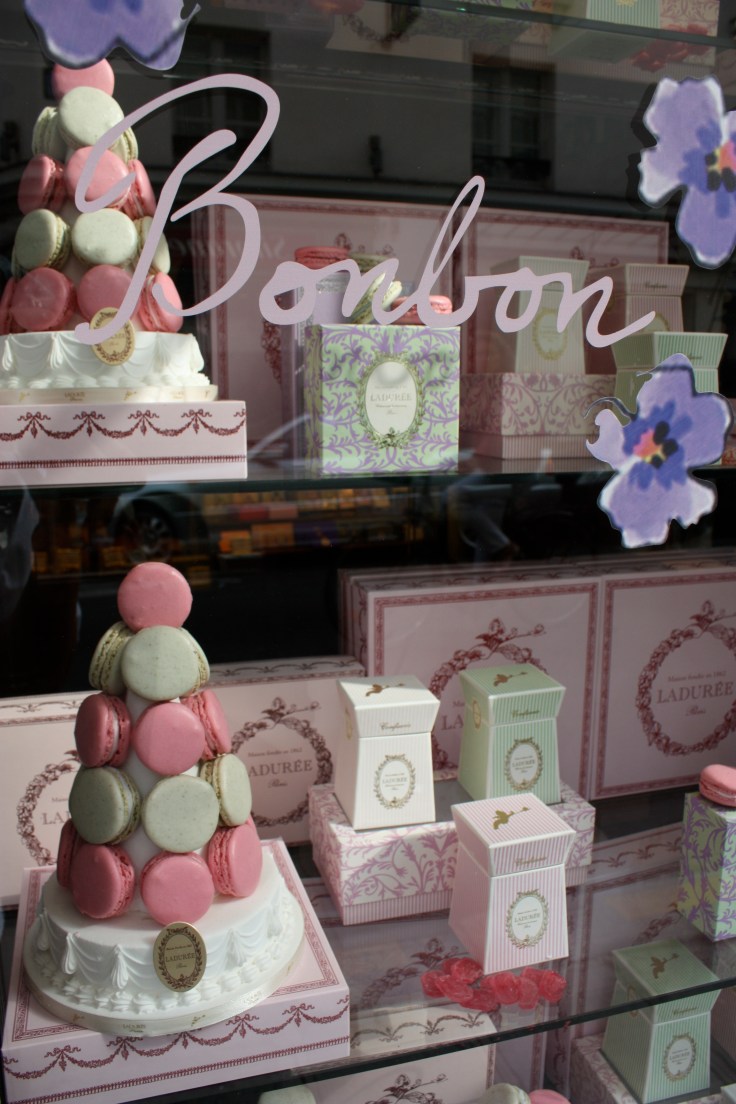
Paris’ famous Laduree’s first Canadian store recently opened in Vancouver and sparked this nostalgic post. Their Paris store window is one of the most beautiful I’ve ever seen. Can’t wait to see Vancouver’s this month.
With the idea that I’d rather spend my travel bucks on chocolate than a tour guide, which I’m not great at tolerating in any case, we found an online self-guidedwalking tour through Saint-Germain-des-Prés’ (6th arr.) most famous chocolate and pastry shops.
Stop one was Ladurée (21, rue Bonaparte). Get this…they invented the double-sided macaron — two almond meringue biscuits joined with various smooth ganache fillings. (This location on Bonaparte now houses their Secrets and Beauty store. Ladurée’s chocolate is now at 14, rue de Castiglione (1st. are.)). They have been in business since 1862.
The person that created this window display at Arnaud Larher at 57 Rue Damremont, must be a master at Jenga. I will help if I can eat all the broken ones.
In case you’ve never tried a macaron, which kind of puts you in the category of never having heard of the Eiffel Tower, they come in an amazing array of melt-in-your-mouth flavours, including bitter chocolate, orange blossom, coffee, rose and my favourite, carmel with salted butter. After purchasing a beautifully boxed selection at Arnaud Larher, next up was Debauve & Gallais.
One more peak at the Laduree window…
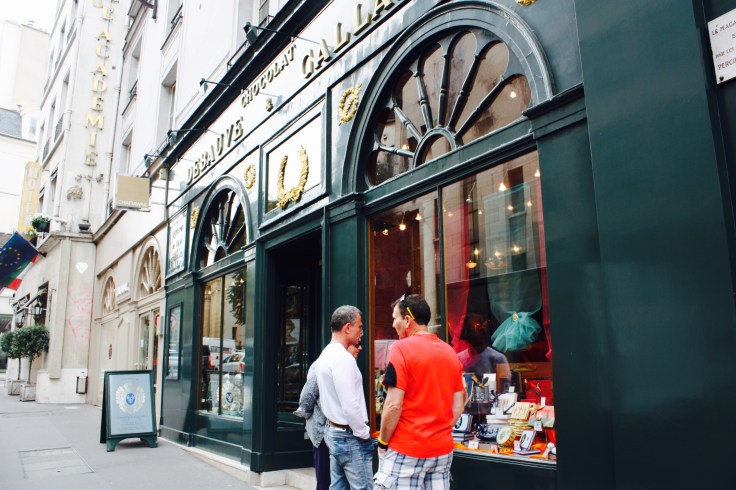
A small conference regarding how many chocolates our suitcases will hold at the Debauve & Gallais window.
In operation at the same location (30, rue des Saints Pères) for more than 200 years, the boutique’s wood-panelled interior and semicircular chocolate counter momentarily distracted us from the chocolates. How chocolatey does this chocolate shop smell? Who says scent memory is strong?
One of each please. Signature items include chocolate pistoles, small discs of chocolate flavoured with yummy things like almond oil, bitter coffee, Bourbon vanilla and orange blossom.
How ironic. Debauve & Gallais started out as an 1800s health food store. The chocolate was used to make bitter medicines taste better and the chocolate was marketed as promoting vigour and health. Ok.
We also stopped in at Pierre Hermé at 72, rue Bonaparte, but by this time my camera was sticky with chocolate I had to focus solely on the pastries made by a fourth-generation pastry chef.
What? You guys eating chocolate? Street art on our walk in Saint-GermainAll that chocolate required some cafe.
After our four stops we got distracted by the street life and shopping and will have to go back to visit Gerard Mulot, Pierre Marcolini, and Chocolate de Neuville another time.
Lucky us, Ladurée has opened its first Canadian location on Robson Street in Vancouver. We are heading there in three weeks to run the marathon (Handyman) and the half (me) and plan to get a macaron fix after our run.
If you can’t make it to Paris or Vancouver, here is Ladurée’s recipe for Cake au Citron (lemon cake) which is flavoured with lemon…four ways…and a tiny bit of rum. It’s easy to make despite its fancy French heritage although be sure to poach your lemon slices the night before so they can soften nicely.
A “secret” Laduree lemon cake recipe
Poached lemon slices:
3 lemons
1 cup water
1/2 cup + 2 tbsp granulated sugar
Lemon cake batter:
5 tbsp + 1 tbsp unsalted butter
1 2/3 cups + 1 tbsp all-purpose flour
1 tsp active dry yeast
1 lemon
1 1/4 cups granulated sugar
3 eggs
1/2 cup minus 1 tbsp cream
1 pinch coarse sea salt
1 2/3 tbsp rum
Lemon syrup:
1/2 cup water
1/2 cup + 2tbsp granulated sugar
1/4 cup real lemon juice
Lemon glaze:
2 oz. lemon jelly (or apricot jelly if you can’t find lemon)
1 tbsp water
The night before baking, cut lemons into thin (2 mm) slices. Bring water and sugar to a simmer and add the slices. Poach over very low heat for 20 minutes. Don’t boil. Cool and then refrigerate for at least 12 hours.
Set aside six of the poached lemon slices for decoration. Drain the remaining slices and measure a 1/2 cup and cut each slice in half.
Butter a loaf pan, dust with flour and line with a rectangle of parchment paper to make the unmoulding easier.
Place the 5 tbsp of butter in a saucepan and melt over low heat.
Sift the flour and yeast into a small bowl. Grate the zest from the lemon and toss with the sugar in a large bowl. Add the eggs one at a time, while whisking. Continue to whisk and add the cream, salt and rum. Fold in the flour and yeast mixture, halved lemon slices and lukewarm melted butter.
Preheat oven to 410F. Fill the loaf pan with the batter to 2 cm below the rim. Place in the oven and bake for 10 minutes. Remove from the oven, and using a knife, make a slit lengthwise in the crust that has formed on top. You will use this slit to soak the cake in the lemon syrup later. Return the cake to the oven and then lower the oven temperature to 350F an bake for 45 minutes. When ready, a knife inserted in the cake should come out clean, dry and free of crumbs.
While the cake is baking, make the lemon syrup by bringing the water, sugar and lemon juice to a boil. Remove from heat.
Placing a cooling rack on a rimmed baking sheet. When the cake is done, remove from the mould and place on the rack. Bring the syrup to a simmer. Using a ladle, pour syrup over the cake and allow to soak in. Gather syrup from baking sheet and pour over cake. Repeat twice. Cool and then decorate with the reserved poached lemon slices.
To make the lemon glaze, stir together jelly and water. Lightly heat without boiling until the mixture is thick enough to coat the back of a spoon. Coat cake with glaze.
“We had a lavender kind of love, so soothing and smooth, and if I could bottle up what we had, you’d want it all over your body.” Jarod Kintz
Lavender is one of my favourite garden perennials and it suits our hot dry Okanagan summers perfectly. I have a bank behind the house I want to plant up all in lavender which could cost several hundred dollars if were to buy them as plants from a nursery. I gave growing lavender from seed a go last year in the greenhouse with marginal success. It’s hard to germinate although I did get a few nice white lavenders to grow. I’ve since learned that it’s easier and much more successful to propagate lavender from soft-wood cuttings in the spring. This method clones the lavender so what you see (parent plant) is what you will get.
“Forgiveness is the smell that lavender gives out when you tread on it.” Mark Twain.
Taking cuttings is basically just snipping off a piece of an existing plant and placing in compost to grow its own roots.
Here’s how I went about it:
1. Using secateurs, a sharp knife, or scissors, snip off a piece of lavender from the parent plant just below a leaf node (place along the stem where the joints of the leaves grow out of).
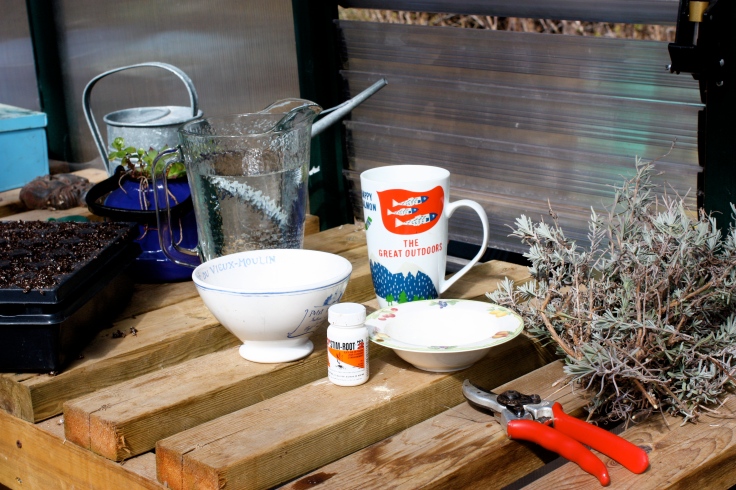
2. Prepare your pot, or seed tray with free-draining compost.
3. You will need a rooting hormone or Karolina from Forest Green Man Lavender suggestion of honey as a more natural and easily obtainable “green” substitute. It is thought that honey may contain enzymes for promoting root growth. It is also a natural antiseptic and contains anti fungal properties — both of which are believed to be one of the reasons that honey as a root hormone seems to work so well.
I am conducting a very unscientific experiment and planted up half my tray with the cuttings dipped in water and then the traditional nursery-bought rooting hormone and the other half by dipping the cuttings in honey. Stay tuned…
4. I stripped the lower leaves off each of my cuttings and nipped some of the top growth off with my fingers. The leaves will use a lot of the water in your potting soil better used for the new root production and will likely die off anyway. I inserted a pen (you could use any appropriate object) to poke a hole in the planting medium. You don’t want to use just insert the cutting without making a hole first as all your honey or rooting hormone powder will come off the tip.
5. Scrape the bottom of your cutting with your thumb on an angle to expose more of the rooting area.
6. Dip the cutting in water and then rooting hormone powder or into a dish of honey.
7. Plant up your tray or pots with the prepared cuttings.
8. Add a dome or plastic bag. Make sure to keep moist but not waterlogged and clean the condensation off the dome or bag periodically. Lavender doesn’t like it to be too wet. I placed mine on a heat mat but a greenhouse or window sill will work. Rooting will take place over the next two weeks to a month after which the plants can be potted up in larger pots or hardened off and planted directly into the garden. Only about half of the cuttings will produce roots. Check for new growth or wiggle the plant around a bit to feel for rooting. Look for mouldy or obviously dead plants and remove from your tray.
There are some things, after all that Sally Owens knows for certain: Always throw spilled salt over your left shoulder. Keep rosemary by your garden gate. Add pepper to your mashed potatoes. Plant roses and lavender, for luck. Fall in love whenever you can.” Alice Hoffman
I’ll let you know how my honey vs. rooting hormone experiment worked.
The lure of lavender has spawned a tourism industry that sees France’s Provence region inundated with photographers and plein air painters jostling for space. Naramata’s Forest Green Man Lavender offers stunning vistas with an incredible lake view and the-breathe-deeply, clean, distinctive lavender perfume – sans crowds. The clincher…the friendly local Naramatian vibe of its proprietors, Doug Mathias and Karolina Born-Tschuemperlin.
I’m kind of loving my monochromatic photo taken yesterday as the farm begins preparations for its opening in about a month.
“This is a happy place,” Karolina says. “It’s a soft, sweet place with the rolling hills and scent and it just seems to make people feel good. I love to see their smiles as they come around the corner and see the view for the first time when the fields are in bloom. It’s like we live in the Shire from the Hobbit.”
The farm has been growing lavender since 2000. With more than 2,500 lavender plants on its six acres, Forest Green Man features a shop in its new barn filled with high-quality lavender bath and kitchen lavender products all made from natural ingredients. An art gallery featuring many of Karolina’s own paintings is located up the barn stairs.
Naramatian Doug and and Swiss-born Karolina are masters of all things lavender and volley rapid-fire interesting lavender facts as we bask in the sun on a bench overlooking the lavender with the farm’s pear trees in the distance.
There are about 140 varieties in the world, about 50 in Canada and U.S. and 17 on the farm.
The word “lavender” comes from the Latin word lavandula which comes from the Latin verb lavare which means “to wash”. The Romans used lavender to scent their bathwater and wash their clothes.
Lavender is part of the mint family.
Calming, soothing, its long been used as a home remedy for sleeplessness and nervousness and as a disinfectant.
Monks spread lavender on their monastery floors and its scent was released when they walked on. It was believed to have helped ward off malaria.
It takes 100 kilos of lavender to make just one litre of lavender oil (which Doug distills after the harvest in July).
Different varieties of lavender are used for different products. For example, Royal Velvet and Folgate are great oil producers and other lavenders are grown specifically for use in cooking and for the lovely lavender lemonade offered at Green Man.
Photo: Forest Green Man Lavender. The copper still is a thing of gleaming beauty.
Karolina walked me through a typical day at the height of lavender season in July. “On harvest day we start to cut very early in the morning at 4:30 a.m. before the heat of the day. With a crew we cut and hang the bunches everywhere to dry and quit at 11 a.m. when it’s too hot to keep going. I then open the shop, water all the plants in pots, clean the fountain, make the lavender lemonade (we go through gallons when it’s hot) and generally tidy up. It sounds like a lot of work but I don’t think it’s a hard life. I would much rather be doing this than sitting in a cubicle. It’s a beautiful life and changes every month.”
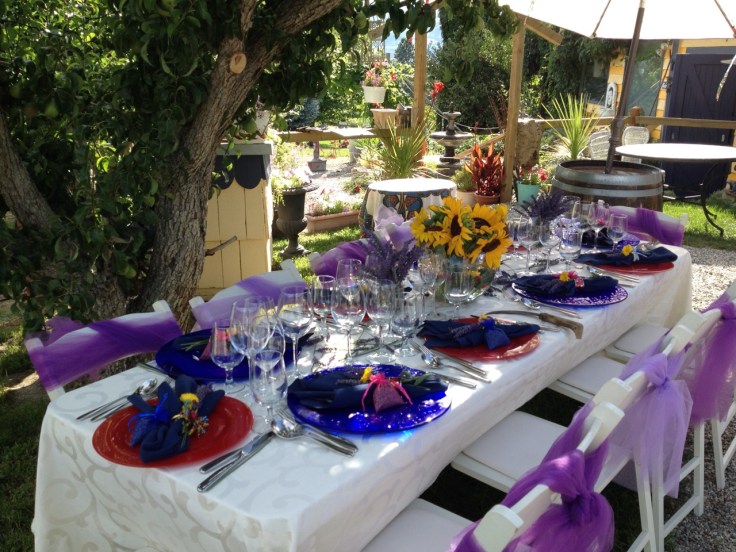
Photo: Forest Green Man Lavender. Special occasion dinners and small weddings have been hosted at the farm.Photo: Forest Green Man Lavender. You know you have made it as a plant when you have a colour named after you.
Many of the farm’s lavender plants are coming to the end of their approximately 14-year lifespan and the couple will begin replacing them with new vigorous ones row-by-row. They may also be planting the remaining meadow with an additional thousand plants. The farm is also a stop for Emily Carr University of Art and Design plein air painters again this summer and will be the sight for many wedding photos. Visitors can also get a total lavender immersion by sleeping like babies in its bright orange rental cottage.
Parting shot: This is the view from the orange cottage available for rent on the farm. Even though the lavender isn’t in bloom yet, it was a beautiful early spring day yesterday and great for photography.
Lavender shortbread
1/2 cup berry sugar or superfine sugar
1 1/4 cup all-purpose flour
3 Tbsp rice flour (gives it a nice texture)
1/2 tsp salt
1 cup unsalted butter, cold, cut into cubes
2 tsp dried Forest Green Man culinary lavender
Preheat oven to 275F and line a baking sheet with parchment. Mix sugar, flours and salt together in a bowl. Add the cold butter and toss until coated. Add the lavender and pulse in a food processor for 10 seconds. Shape into a ball and roll the ball on a lightly floured surface into a log shape about 2 inches thick. Wrap in plastic wrap and refrigerate for at least 2 hours.
Remove the plastic and use a sharp knife to cut thin slices (about 1 cm thick) and place an inch apart on the baking sheet. Use a fork to poke the centre of each cookie to stop air bubbles from forming.
Bake for 40 to 45 minutes until the cookies are lightly golden. Transfer to a cooing rack.
Off to the greenhouse to propagate some lavender from cuttings with Karolina’s tips…tomorrow’s post.
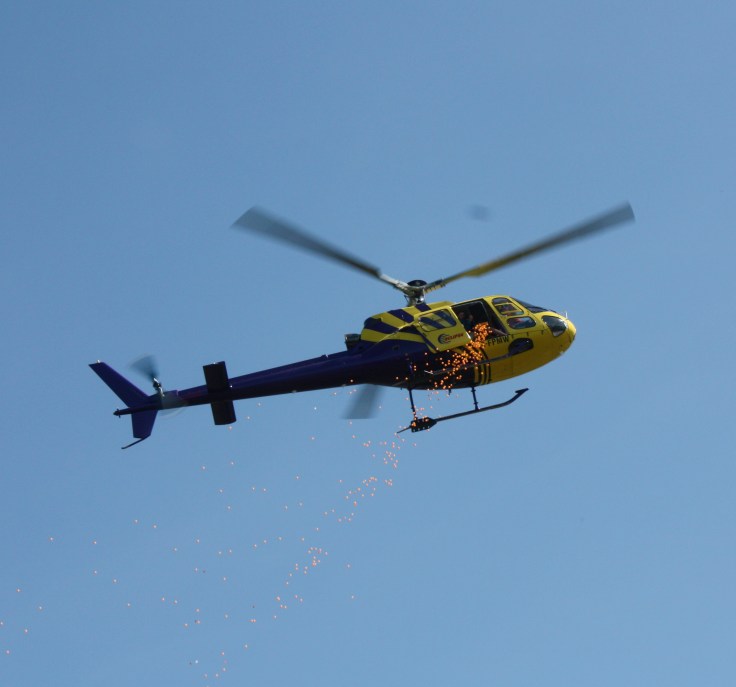
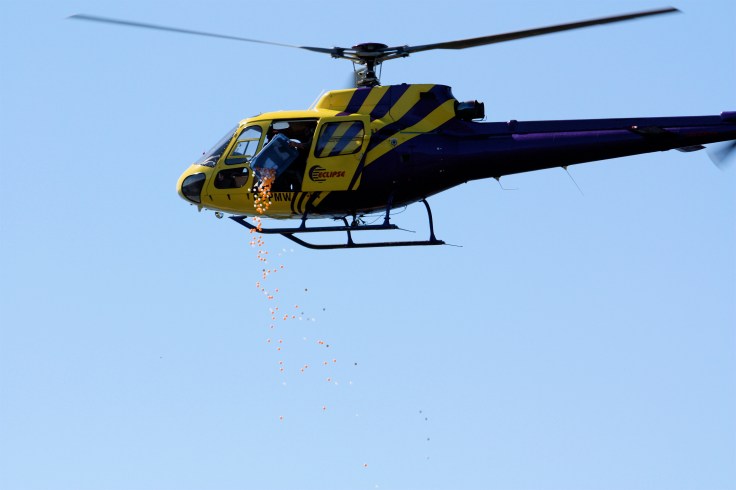
A long standing tradition in Naramata, almost every Easter a helicopter is enlisted to drop eggs onto Manitou Park for kids by our regional district. The kids come dressed up in costume or in their Easter finest. To prevent any eggcidents, the eggs are hollow plastic ones that when gathered up are exchanged for chocolate. The weather is also part of this tradition. It’s been a blue sky day for every egg drop I’ve attended.
Helicopters play a key role in area agriculture. Shortly after moving here I encountered a confusing scene that reminded me of the movie line,”I love the smell of napalm in the morning.” Helicopters were hovering at many locations in the Valley. After some rookie Naramata questions to long-time residents I learned that our valuable cherry crops, (much of which ends up in China) needs saving from time to time. Talk about the cost of farming… Following rainy spells, helicopters are used to dry cherries at Valley orchards. Rain can cause cherries to split, and if that happens the fruit won’t be marketable. For from between $600 and $1,200 an hour, the cherries are quickly dried by the chopper blades as soon as possible before the sun comes out.
The mad scramble
These mini ponies came to take in the action at Manitou. Jana Hill brought them to the park for some pets and some advertising for her pony party business.A parting shot of Manitou
I can’t resist adding a link as a cautionary tale about what not to toss out of a helicopter. The infamous WKRP episode entitled, “As God is my witness I thought turkeys could fly,” is a classic.
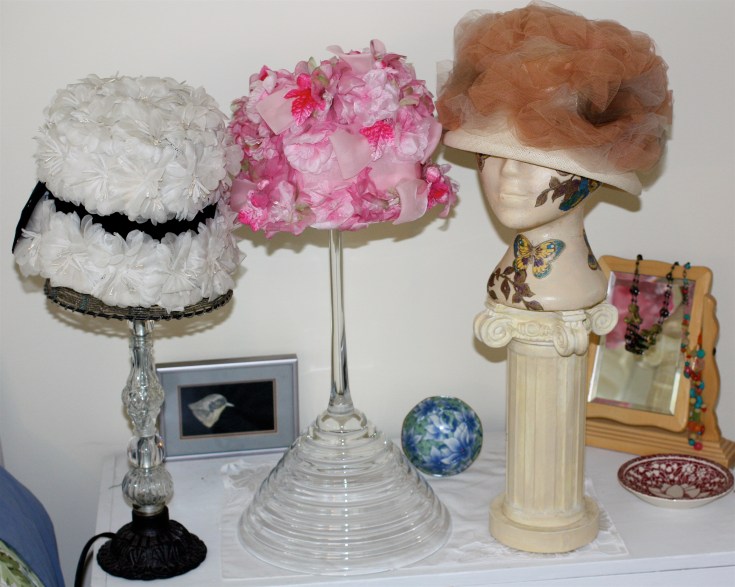
Although there is no “official” word for hat collector, there has been some attempt to create one. Millinophilia, derived from hat maker, or milliner is one possibility and a second is capellophile, using the word capel which is latin for hat or headdress.
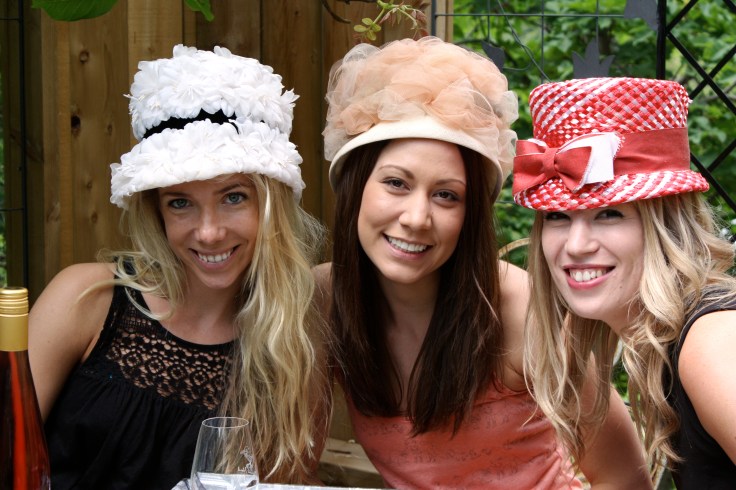
Whatever your term it, my growing collection of vintage and new hats is turning me into a mad hatter. In celebration of Easter bonnets, here are some of my frillier women’s hats. The hats come out to play often and are great for photo shoots where the wearers adopt some version of “hat face”. It’s a pose and expression brought on by the hat. Hat face is either a very serious face with an upturned chin in a regal pose or a silly smile.
Do you remember Marlo Thomas in That Girl?
Hat collecting turns out to be an affordable hobby with many only costing $20 or $30 and collecting works equally at home and on holidays to just about anywhere. There is also a good deal of nostalgia involved as I picture my mom choosing from among her hats stored away in flowery hat boxes.
This cotton-candy pink number screams Easter
I don’t even remember which hat was the first in the collection. They can be found at yard sales, auctions, antique and vintage stores and you will find them even when you aren’t looking.
The back of this hat is lovelyTakes a brave sole to wear this one anywhere but in a Star War’s movie
Some of my hats were reasonable and others more expensive. The more flamboyant the more expensive. If you add in French hat maker labels like Agnes, Chanel, Yves St. Laurent and Christian Dior, the price goes up. The more feathers the more money sometimes reaching up to $300 or $400. If the hat comes in its original box, so much the better. The fun of collecting is amplified by the possibility of wearing the hat. I don’t know how many times I’ve tried a hat on, found it fetching, bought it and chickened out actually wearing it.
I call this one the meringue
Cloche, high crown, tilts, doll hats, cocktail, pillbox, fedora, wide brim, beret, boater, Breton, cartwheel, turban, halo, peach basket, picture hat, sailor and slouch…so many hats for only one head.
“In your Easter bonnet, with all the frills upon it…”
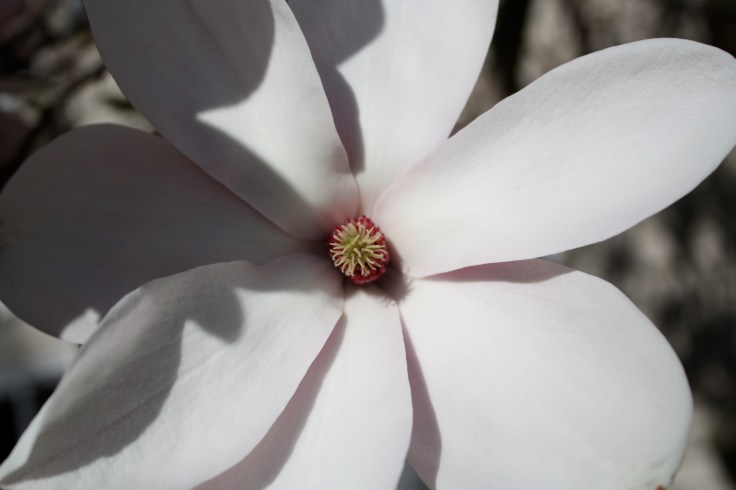
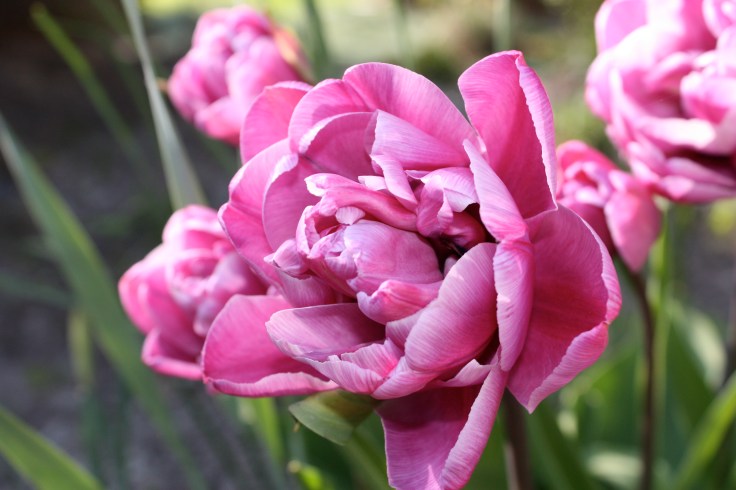
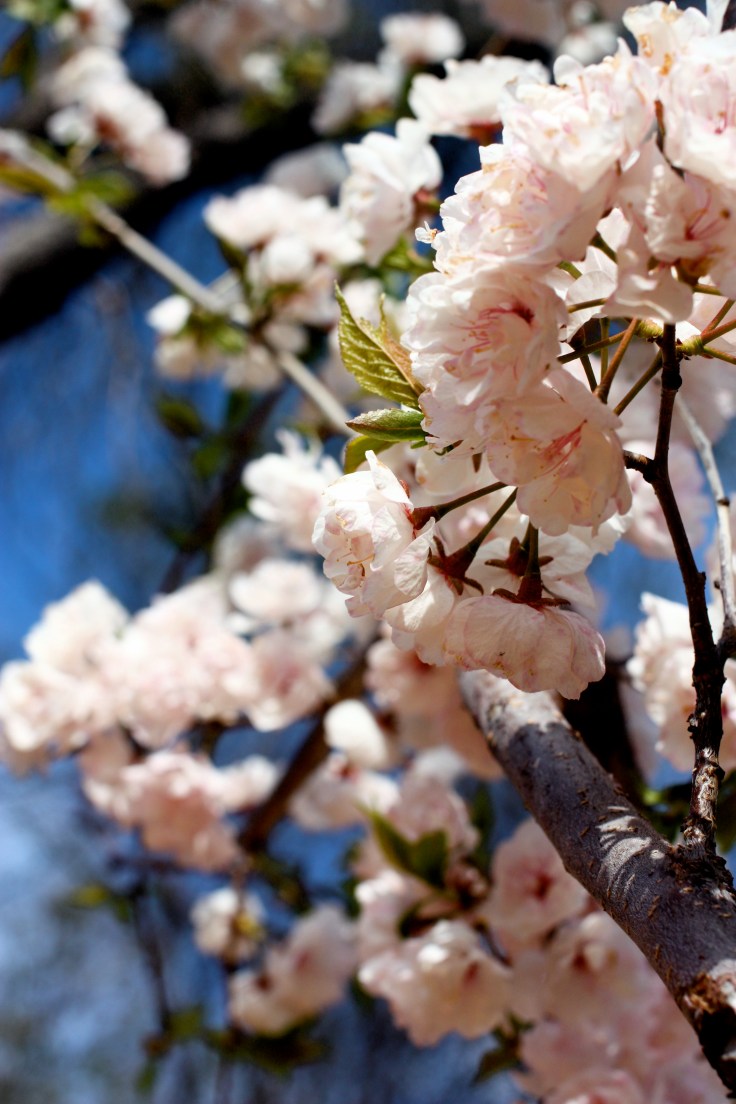
Flora and some fauna photo essay of spring in my hood.
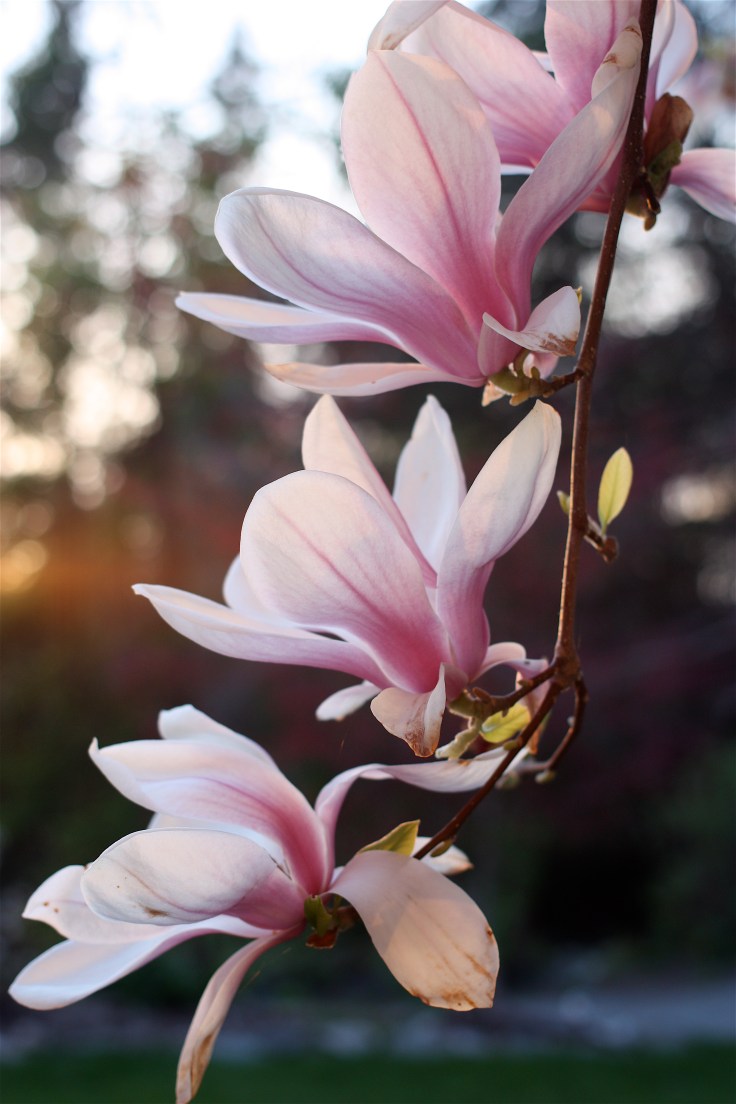
Columbines…I have them in many coloursOur magnoliaMagnolia…selfieSedum taking advantage of the longer days to bloomRuffled tulipCherry blossoms decorating Okanagan Lake vista
Located on Corbishley Avenue in Penticton, British Columbia, this new business is teaching homeowners the forgotten art of food gardening
In just a generation or two we have almost lost the accumulated food gardening wisdom of hundreds of years. The convenience of the big box food machine has made vegetable gardening seem like a complicated, involved secret too hard to attempt. Thanks to passionate, energetic young farmers like Michelle Younie, the lost wisdom is being passed on again. Michelle couldn’t have started her new Somewhere that’s Green Edible Landscapes venture at a better time. Fad diets are out for many, sensibly being replaced by simply adding in lots of organically grown fruits and vegetables to what we eat daily. Healthy eating is also coupled with a strong desire to do something about environmental sustainability, right in our own backyards.
Michelle can teach you where and what to plant in your yard with a focus on edibles. Her services range from designing and planning your edible landscape to building, planting and maintaining it for you.
Michelle Younie greeted me with a warm wide smile and a fittingly dirty-hand handshake at her homebase farm in Penticton
She is a self-taught farmer with enough energy and passion to fuel three enterprises. Michelle grows all the produce used at Penticton’s highly-rated Hooded Merganser Bar and Grill in Penticton from her work as the farmer of Valleyview Farm. She was hired on as the farm manager four years ago after the Penticton Lakeside Hotel’s owner admired her first vegetable patch on her parent’s land.
Younie now also employs her dad, Don at the Valleyview Farm and her brother Ryan at Somewhere that’s Green, which also feeds the Younies from their family plot and a growing list of others on an email list who come twice a week to pick up their bounty.
Somewhere that’s Green Edible Landscapes germinated because, “I’m obsessed with this. It is really something to help people start their own gardens. When you first start out you make a lot of mistakes. It’s really a lost skill now and many in my generation grew up with houses with yards that never had a vegetable garden. I can help people avoid mistakes at the beginning and get through some of the initial overwhelming learning curve. Our Okanagan climate is so extreme and getting more extreme so learning what works well here is very valuable.”
Michelle also spotted a niche. “There are tons of landscape companies in the Valley but none that I know of that are focused on edible landscapes.”
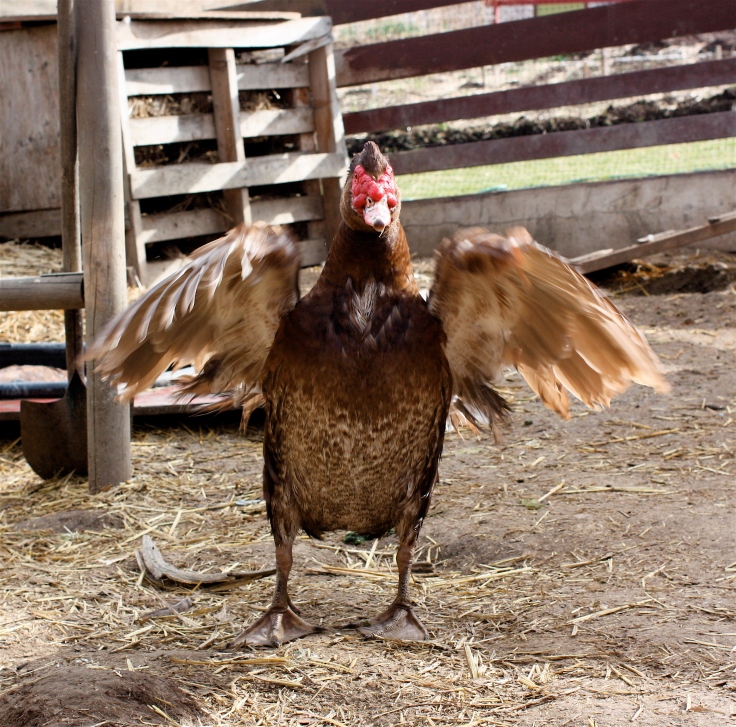
This Toulouse goose, a French breed of large domestic goose, was showing off for my camera during my visit to Michelle’s home farm
Michelle’s top three mistakes to avoid:
Don’t buy topsoil. It’s expensive and unnecessary. Build up the soil through the use of compost, manure and green manures instead.
Don’t go nuts buying seeds your first year. Try five different varieties and add more once you’ve mastered those.
Don’t worry so much about weeding. It’s not as big deal as you think and not a daily chore by any means.
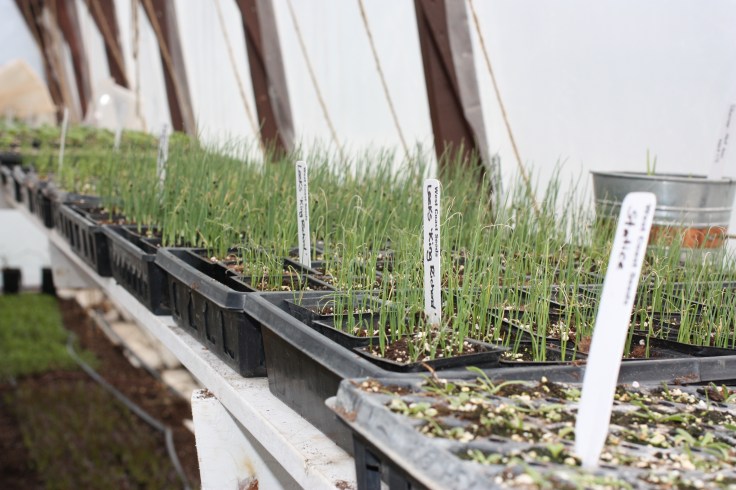
The greenhouse is in full swing already with salad crops that will soon be sold to local customers and eaten by the family.
Michelle’s top three suggestions:
Always plant in the ground versus a container if you have the choice. It’s so dry and hot here that container gardens need constant watering.
Plan out your irrigation and use timers and other methods to water properly and wisely.
Compost is very important in our silty soils.
One more tip we mutually agree upon:
If you want zucchinis…only plant one or you will be giving them away or trying to give them away to other people who planted more than one.
These happy chickens are fed kitchen scraps from the Hooded Merganser’s vegetables Michelle grows. They also are let loose on the farm to clean up bugs at various times of the year. Oh, and they make lovely eggs for the family and for sale.
Can you get rich farming?
“Ah, no. I want to be successful and am excited about adding Somewhere that’s Green into the mix but it’s not going to make me rich. I’m committed to this lifestyle and am passionate about sharing it with others. We now host three different groups of people a year to come and work on the farm for free and learn. I have an engineer friend who has come to work with me part time just to learn about farming. People are really interested in learning to be more resourceful and it’s such a valuable trait I think.”
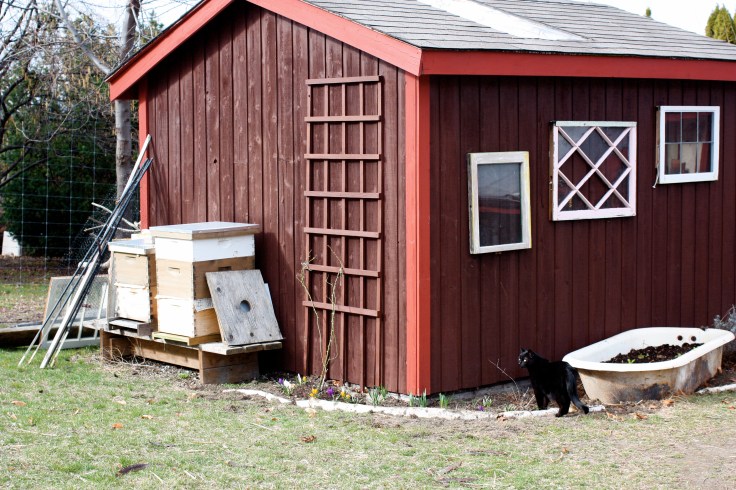
Bees are a valuable addition to the farm as is Missy, the cat, who does her part keeping the mice at bay.
Some of the benefits of turning your yard into an edible landscape include saving energy (no fuel used to ship and refrigerate), food safety (you know what you’ve planted and put on that plant), water savings (home gardeners use about half the amount of water industrialized farmers use), money savings and better nutrition.
Michelle at work. She wants me to come back when things are greener in a few months. I’m in.
A properly designed edible landscape can look beautiful as well. Lawns are minimized and blueberries can take the place of the fleetingly beautiful azaleas. Hedges can be made up of blackberry and raspberry canes and boarders created with rainbow chard, peppers and herbs. You will attract more birds and wildlife to your garden too.
Michelle and Ryan weeding in preparation for planting.
Victoria on Vancouver Island is fun to visit at any time of the year but for us, March is the perfect time. It may be pretty rainy but getting a jump on spring and beating the tourist season makes it ideal.
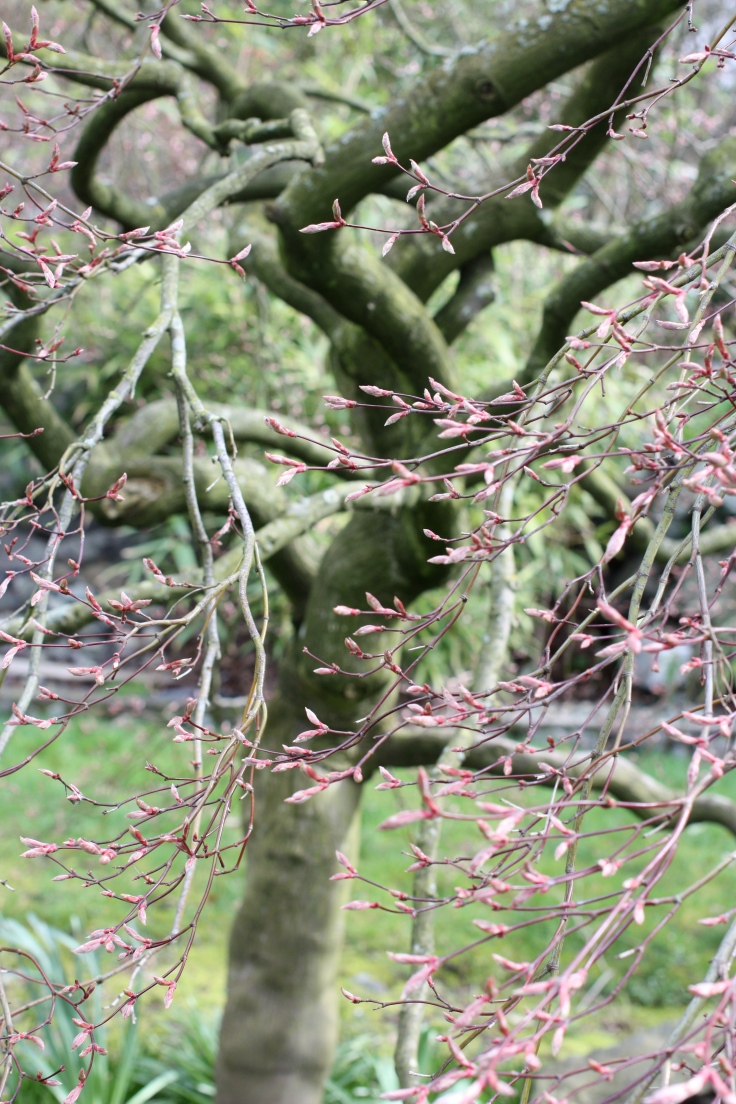
Cherry blossoms are everywhere
While much of the rest of Canada is dealing with the last of the snowstorms or at the very least grey melting snow and brown lawns, in Victoria in March it’s already fully spring.
There is no better place to enjoy spring blossoms than on the grounds of the Empress Hotel where staff have been hard at work planting thousands and thousands of spring annuals. Going from a world of black, brown and white to colour in a four-hour drive and short ferry ride is astounding and cheering.
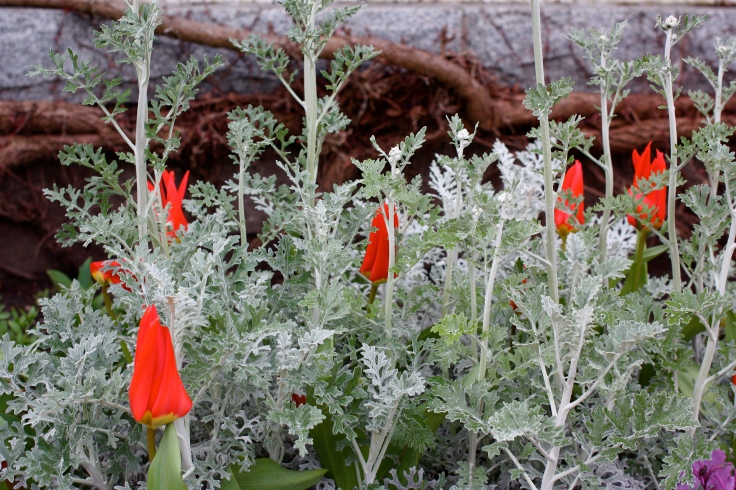
Going to steal this combo for my garden.
This perfectly pruned Japanese maple will be leafed out within daysA favourite spot for lunch or tea…loving the daffodil roofI hope that this venerable book store never closes…this trip’s purchase…The Zero-Mile Diet: A Year-Round Guid to Growing Organic Food by Victoria’s Carolyn HerriotVictoria’s Inner Harbour
Here is a perfect Victoria day itinerary:
Wake up to the view of the harbour from a room at the Empress.
Breakfast at Willie’s followed by some shoe shopping.
Star Wars freak daughter would love these…found at She She Shoes
A general wander about.
Some antique’s shopping and the purchase of a new hat for the collection.
Dinner at Pagliacci’s followed by a movie at the Vic Theatre.
And then home the next day via another favourite experience — the ferry ride back to Vancouver where I happily brave almost any weather to spend the hour and half trip out on the sun deck as we pass through the Gulf Islands. Regular commuters spend the time inside on laptops or reading the paper but I come prepared for the wind with extra layers.
I look at houses as we pass through the narrow passages between islands and wonder what our life would have been like had we bought the property on Mayne Island 10 years ago instead of choosing Naramata.
Probably would have been pretty great living there too. Home and all springed-up. There is more colour here too even in the few days we’ve been gone.
 This is why Canadians go to Europe. Full stop. It’s a place where there is absolutely nothing utilitarian about pretty much anything. Here is a photo essay of lampposts in the Baltic’s that started with this photo in Stockholm. From then on I spotted the most beautiful photogenic lampposts and lanterns everywhere.









 “Forgiveness is the smell that lavender gives out when you tread on it.” Mark Twain.
 1. Using secateurs, a sharp knife, or scissors, snip off a piece of lavender from the parent plant just below a leaf node (place along the stem where the joints of the leaves grow out of).
 2. Prepare your pot, or seed tray with free-draining compost.
 4. I stripped the lower leaves off each of my cuttings and nipped some of the top growth off with my fingers. The leaves will use a lot of the water in your potting soil better used for the new root production and will likely die off anyway. I inserted a pen (you could use any appropriate object) to poke a hole in the planting medium. You don’t want to use just insert the cutting without making a hole first as all your honey or rooting hormone powder will come off the tip.
 5. Scrape the bottom of your cutting with your thumb on an angle to expose more of the rooting area.

 7. Plant up your tray or pots with the prepared cuttings.
 8. Add a dome or plastic bag. Make sure to keep moist but not waterlogged and clean the condensation off the dome or bag periodically. Lavender doesn’t like it to be too wet. I placed mine on a heat mat but a greenhouse or window sill will work. Rooting will take place over the next two weeks to a month after which the plants can be potted up in larger pots or hardened off and planted directly into the garden. Only about half of the cuttings will produce roots. Check for new growth or wiggle the plant around a bit to feel for rooting. Look for mouldy or obviously dead plants and remove from your tray.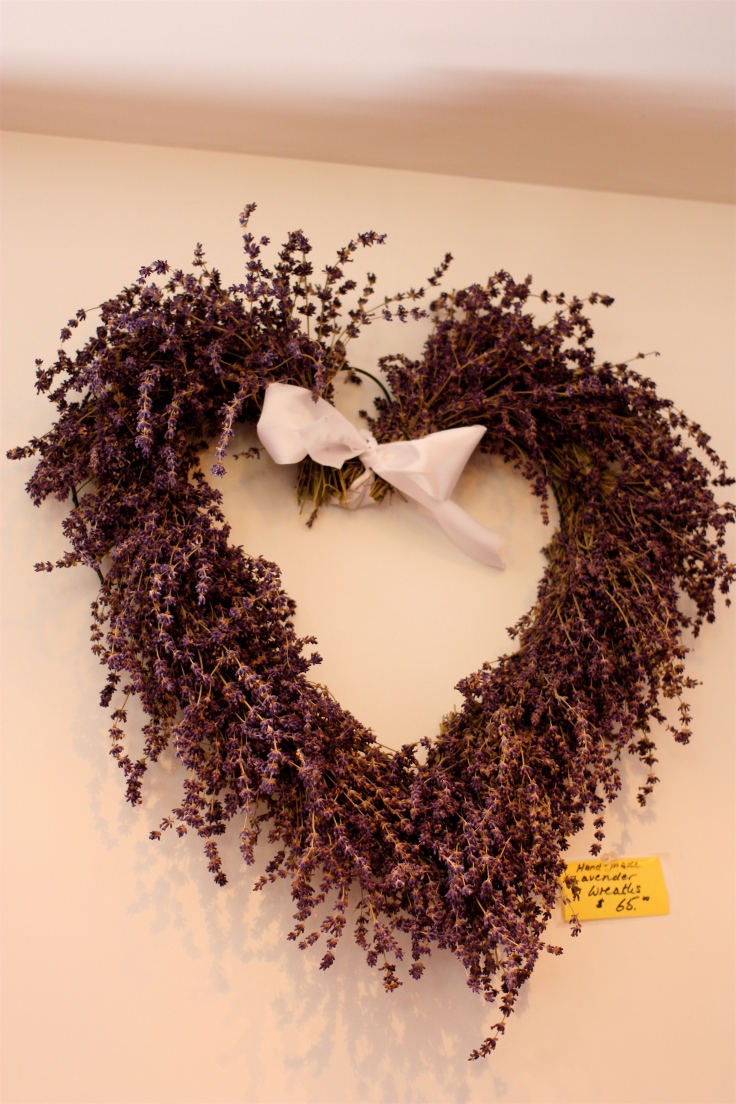
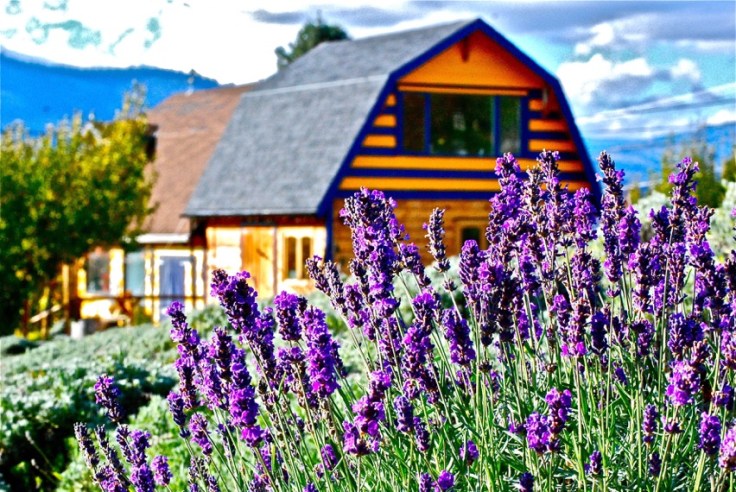

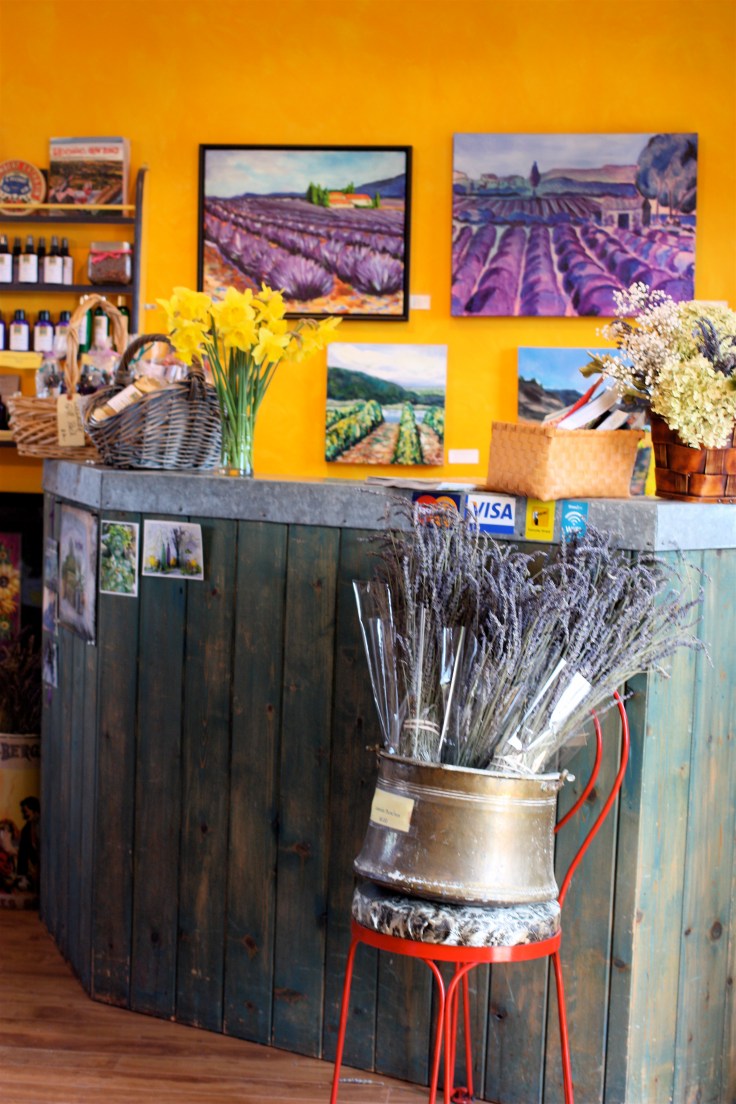


 Naramatian Doug and and Swiss-born Karolina are masters of all things lavender and volley rapid-fire interesting lavender facts as we bask in the sun on a bench overlooking the lavender with the farm’s pear trees in the distance.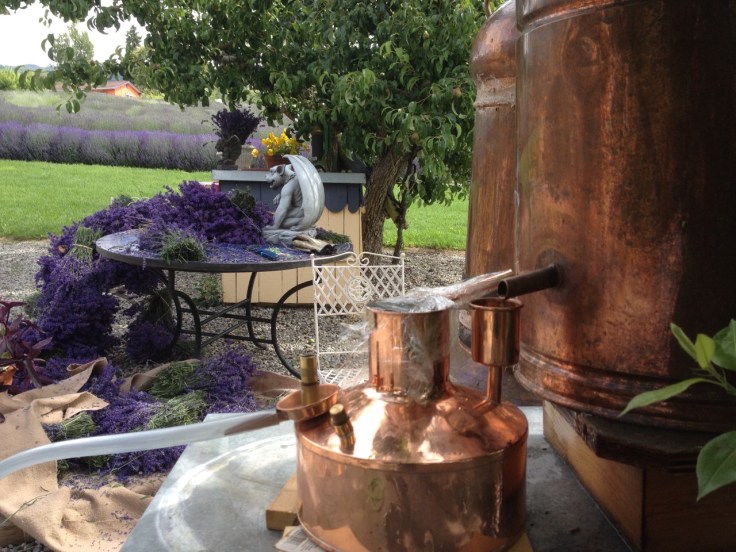


















 Breakfast at Willie’s followed by some shoe shopping.
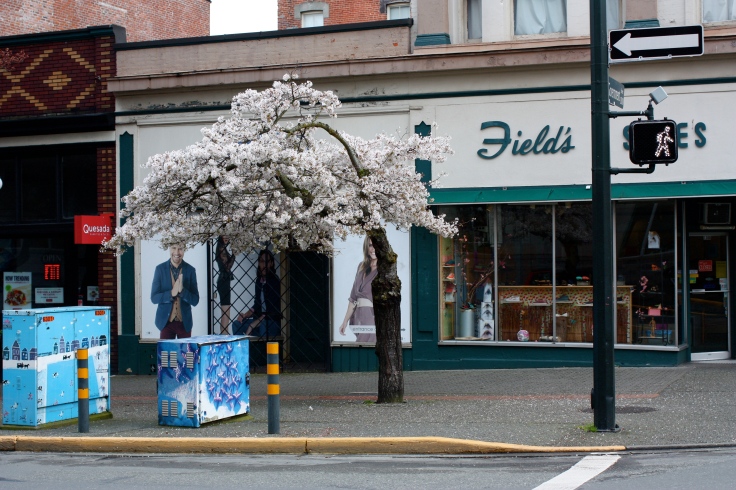 A general wander about.
 Some antique’s shopping and the purchase of a new hat for the collection.
 Dinner at Pagliacci’s followed by a movie at the Vic Theatre.
 And then home the next day via another favourite experience — the ferry ride back to Vancouver where I happily brave almost any weather to spend the hour and half trip out on the sun deck as we pass through the Gulf Islands. Regular commuters spend the time inside on laptops or reading the paper but I come prepared for the wind with extra layers.
 I look at houses as we pass through the narrow passages between islands and wonder what our life would have been like had we bought the property on Mayne Island 10 years ago instead of choosing Naramata.
 Probably would have been pretty great living there too. Home and all springed-up. There is more colour here too even in the few days we’ve been gone.
 naramata-blend