Consider saving money on your gym membership for the summer and taking your workouts outdoors. Scientists agree that we get a bigger boost to our mental well-being by exercising in natural environments. There is even a new term for it – green exercise and it comes with a greater feeling of revitalization, increased energy and…
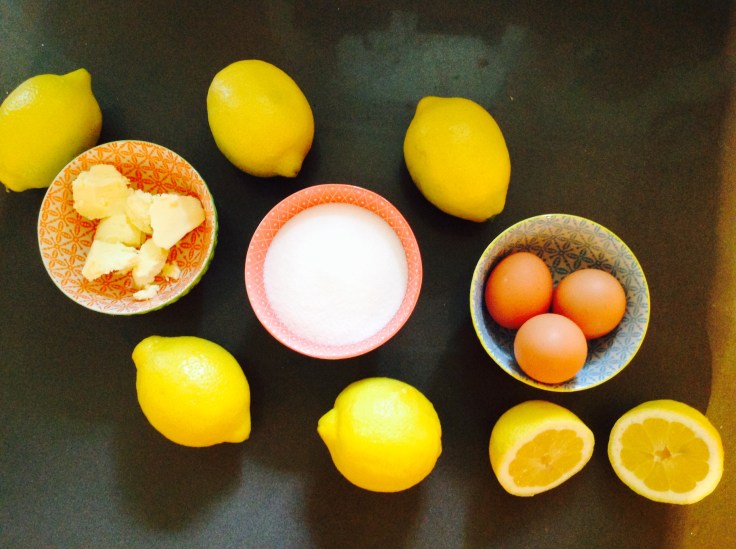
A series of fortunate events brought together my niece and family, including her 10-month-old blue-eyed lady-slayer, and the baby’s great-grandma all together for her 81st birthday. A fresh, light, three-layered Lemony Snicket buttermilk cake is just the ticket. Lemon buttermilk cake, glued together with lemon curd, soaked in lemon syrup and topped with a luxuriously buttery, vanilla swiss meringue buttercream icing is a worthwhile afternoon’s bake-a-thon.
Lemon curd
- 5 tablespoons butter, diced
- 3/4 cup granulated sugar
- 5 tablespoon fresh lemon juice, don’t even think about bottled
- 2 large egg yolks
- 1 large egg
Place the butter in a heat-proof bowl and set aside. Whisk together the sugar, lemon juice, egg yolks and egg in a medium sauce pan and cook over medium heat stirring to prevent the eggs from curdling. Cook about 6 to 8 minutes until thick enough to coat the back of a spoon. Remove from the heat and strain it through a sieve over the bowl containing the butter. Sir to combine and cover with plastic wrap touching the curd to prevent a nasty skin from forming and put in the fridge for about 4 hours to cool and set.
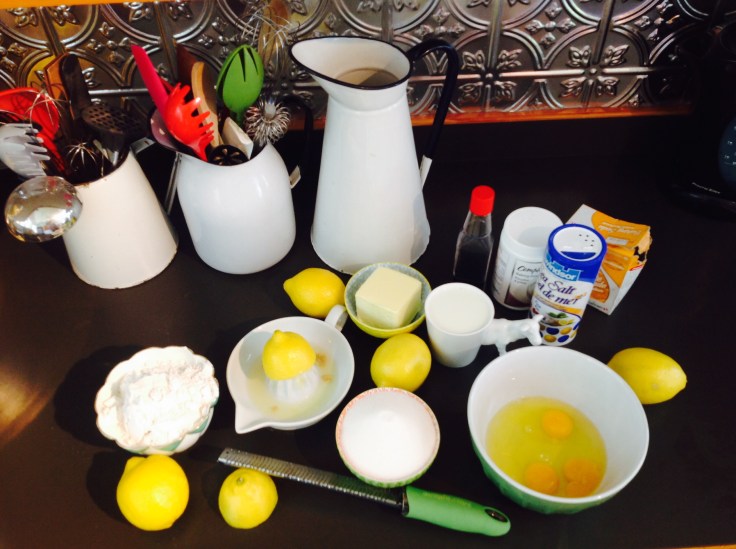
Lemon cake
- butter and flour three 6-inch cake pans
- 2 1/4 cup cake flour
- 1 1/2 teaspoons baking powder
- 3/4 teaspoon baking soda
- 1/4 teaspoon salt
- 1 1/2 cup granulated sugar
- 1 tablespoon finely grated lemon zest
- 3/4 cup butter at room temperature
- 2 tablespoons fresh lemon juice
- 1 teaspoon pure vanilla extract
- 3 large eggs
- 2 egg whites
- 1 cup buttermilk
Pre-heat oven to 350F. Sift together flour, baking powder, baking soda and salt and set aside. Place the sugar and lemon zest in a bowl and rub them together. In the bowl of a stand-mixer fitted with a paddle attachment, beat the butter on medium speed for 2 minutes. Add the sugar mixture and mix on medium-high until light and fluffy, 3 to 5 minutes. Stop the mixer and scrape down the bowl. Turn the mixer to medium-low and add the lemon juice, vanilla, eggs and egg whites, one at a time. Stop the bowl and scrape it down. Turn the mixture on low and add the flour mixture in three batches, alternating with the buttermilk. Just mix until combined, about 30 seconds or so. Evenly divide the batter into prepared 6-inch pans and bake for 22 to 24 minutes checking with a toothpick for doneness. Cool for 15 minutes on a rack before removing the cakes from the pans.
Lemon simple syrup
- 1/4 cup granulated sugar
- 2 tablespoons fresh lemon juice
- 2 teaspoons finely grated lemon zest
Stir all the ingredients together in saucepan and bring to a boil. Reduce the heat to low and simmer for 10 minutes. Cool.

Buttercream icing
- 1/2 cup egg whites
- 1 cup granulated sugar
- 1 1/2 cups butter at room temperature cubed
- 1 1/2 teaspoons pure vanilla extract
- Yellow food colouring
Place the egg whites and sugar in the bowl of a stand-mixer and whisk together by hand and place over a medium saucepan filled with a few inches of water to create a double boiler. The bottom of the bowl should not touch the water. Whisk intermittently and heat until it registers 160F or until it is hot to the touch. Fit it onto your stand mixer and with the whisk attachment, beat on high for 8 to 10 minutes. Stop the mixer and swap out the whisk for the paddle and turn the mixer to low. Add the butter lumps a few at a time and then the vanilla and beat for 3 to 5 minutes until very smooth. Add a tiny bit of yellow food colouring a bit at a time until you achieve a pale yellow colour.
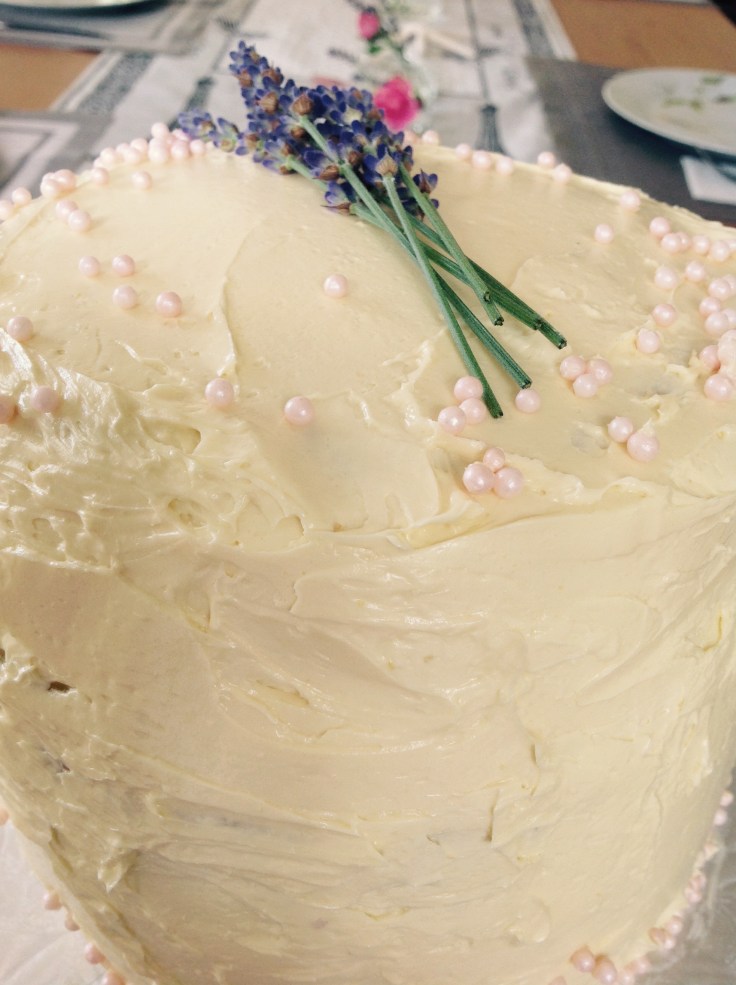
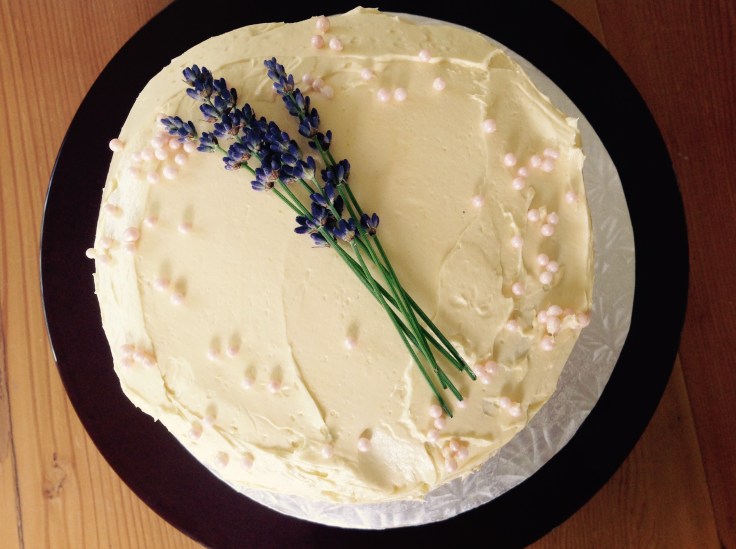
Level the cakes and select one for the bottom layer. Using a pastry brush, brush the top of each cake with the lemon syrup. Pipe a line of buttercream around the top edge of the first layer to create a dam. Fill in with half of the lemon curd, top with a second layer and repeat the procedure using the rest of the lemon curd. Add the final layer. Crumb coat and frost the cake with buttercream and decorate with sugar pearls if you want to get fancy.
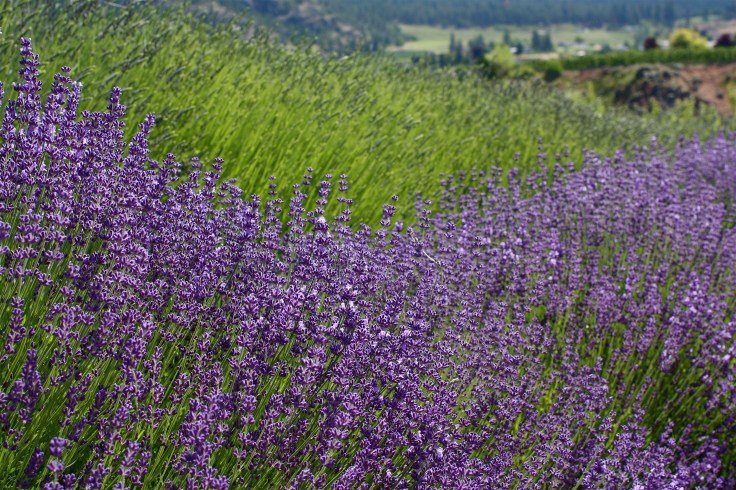
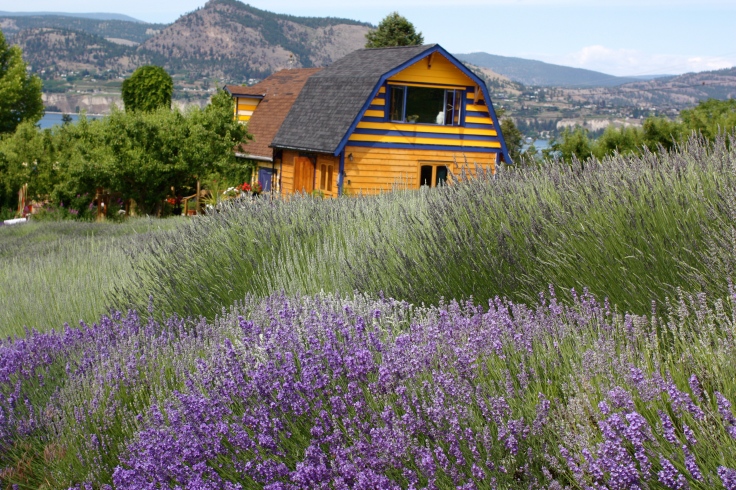
Me and my camera paid a visit to Karolina and Doug’s lavender farm to drop off 140 white lavender plants I started from cuttings for them in my greenhouse.

In an earlier post…Money for nothing and the plants for free…I did an experiment using honey on half the stems to be rooted and a root hormone stimulate (powder) on the other half. I had equal success with both methods so will use the more natural, readily available and economical honey from now on. After I took the cuttings from the farm, prepared them for planting, transplanted them from plug trays into bigger pots and fussed and hovered over the little guys for several months I have now turned them over to the lavender farm to complete the fussing for a while longer before they have enough of a root system to withstand transplanting in the field. Lavender grows best from cuttings as they often don’t come true from seeds. The white lavender looks stunning in wedding photographs. I did a trade for some of the farms famous Balton sour cherries.
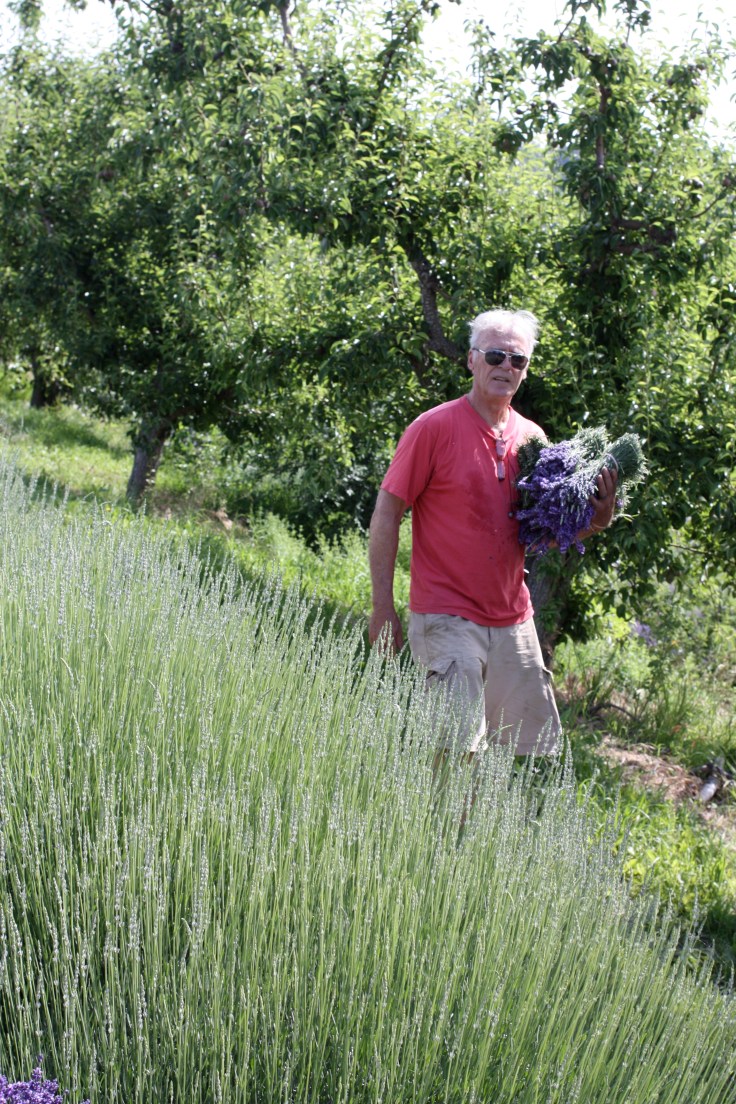
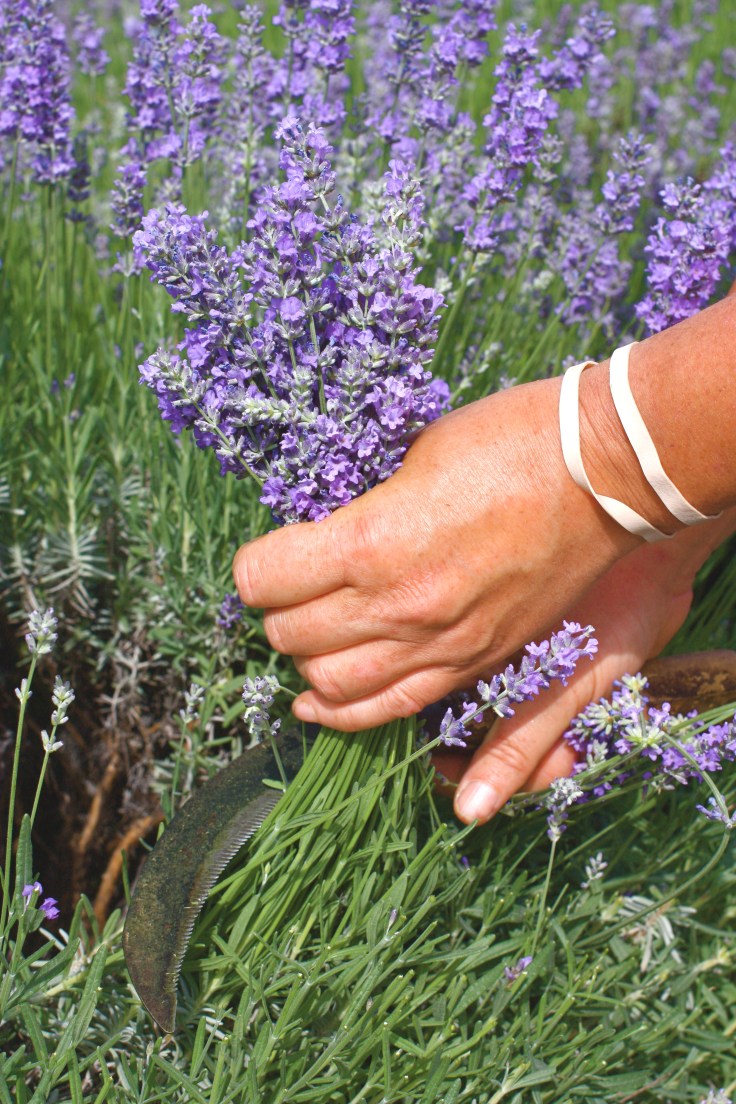
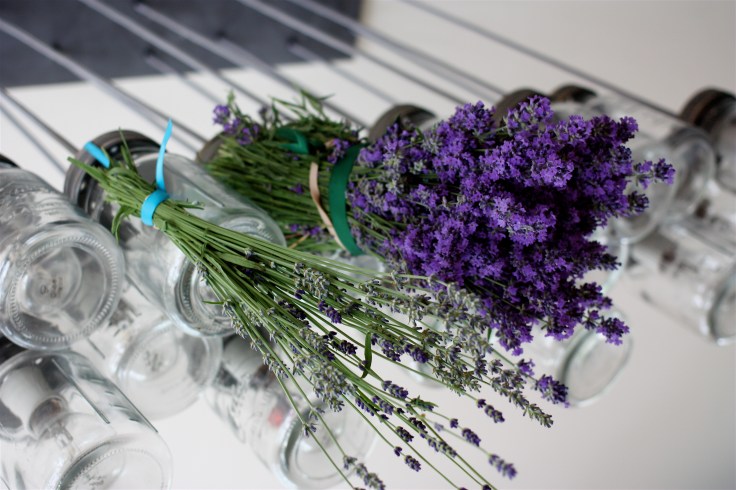
 The farm was in the midst of their first harvesting when I stopped by.



Jennifer Cockrall-King’s Food Artisans of the Okanagan will make you salivate and then want to hop on a plane, train, car or bike and set out to sample as much of this bounty as your pants will allow. This new guide to the best of what’s grown, fished, foraged, made, baked, brewed or cooked in the Okanagan and Similkameen is the result of a year of Jennifer’s curation, interviewing and storytelling of more than 125 artisans. A food culture writer and urban agriculture expert for more than 20 years, she spent an afternoon talking to me about the the behind-the-scenes process of writing the guide book, the momentum of the Okanagan’s culinary scene and the people and passion behind it, life as a food writer and her next big project. Highlights of our discussion follow.
“The toughest thing about the project comes after all the writing, editing and lay-out work is done and it’s too late to change anything,” she says. I’m always scared that there will be something I want to change or I’ve gotten something wrong.”
Unfounded worries.
Food Artisans of the Okanagan is attractively and thoughtfully designed and well laid out. The guide is organized geographically and then by category such as fish and seafood, cheese, spirits, beer cider and mead, fruits and vegetables and chefs… Each section (North, Central, South Okanagan and The Similkameen) includes a clear map to help you plan your foodie route. It’s also fun just to flip through the guide stopping to admire the great photos and reading through the stories of the artisans that catch your interest.
“I’m pleased with the book,” says Jennifer. “The publisher (Touchwood) spent money in the right places. The cover stock is perfect and the illustrations great. We went through a lot of different ideas for the cover and then chose between six different colour schemes.” The guide’s Tuscan yellow and blue scheme is perfect for the Okanagan.”A good cover design makes a world of difference as does a good spine design. There are so many things you don’t think about such as the trim size. The book feels good in your hand and it’s a standard guide book size which helps you see immediately how the book is designed to be used. There is nothing worse than picking up a nice looking book and it’s all floppy in your hands.”
After Jennifer was approached by the publisher to write the book, she pushed back on the timeline to allow her the breathing room to do the great job she wanted to do. That meant the time to visit each of the artisans in person in a 20,000-square-kilometre area. “For that entire year you have no income from the project. You are working on perspective and just hope people will buy it.” (Sales are great so far…) Not to mention all the driving…
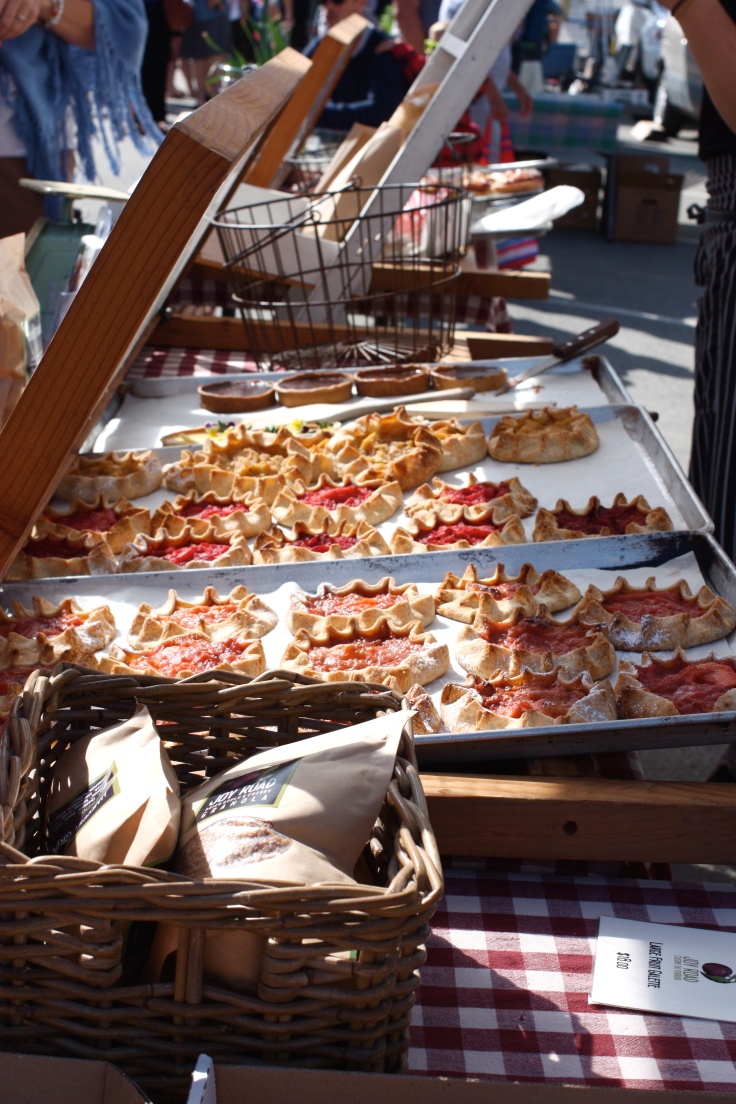
Her criteria for choosing the artisans to feature is illustrated by a recent encounter at The Bench Market (featured in the guide). “I ran into a German tourist who bought a copy of my book which I signed for him. “I thought to myself if this guy buys my book and decides to drive to Osoyoos to seek out some of the artisans that captured his interest am I going to feel confident that he will be happy he did? This was my gut check. Can I feel confident that someone randomly opening a page and deciding to go somewhere will be glad they did.”
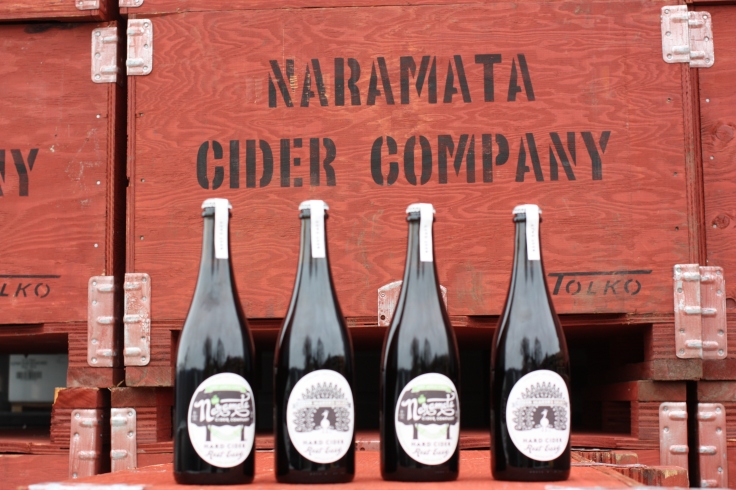
Jennifer writes about who the artisans are, how they got into their business and what makes their offering unique. “Part of the fun of writing the book was making new discoveries myself. I didn’t know the North Okanagan at all. One really surprising discovery was Fieldstone Organics in Armstrong. I’m a Prairie girl and just didn’t picture grains being grown in the Okanagan.” Fieldstone Organics works with 25 other local organic farmers and now has a line of dozens of organic, non-GMO whole grain and whole seed products like rye, flax, spelt and Emmer wheat along with organic lentils, dried peas and buckwheat.
She also had fun discovering unlikely success stories like Doug’s Homestead Meat Shop which is pretty much in the middle of nowhere in Hedley. With a cult following Brent and Linette McClelland sell over 300 pounds of beef jerky alone every day through their front door.
Jennifer also made a point of giving a shout-out to the amazing chefs of the Okanagan that are doing some very cool things attracting international attention with all the lovely meat, fish, produce, grains, fruit…that our bountiful valley produces.
“My hope for the success of the book is largely for the people I profiled. I want readers to make an emotional connection and to understand what goes on in the production of their food. These people put their heart, soul, sweat and backs into this physically demanding work.”
Jennifer’s engaging writing gets right to the heart and stomachs of the people who buy her book. “Good food writing is not as much about the writing as it is about communicating. It’s not about flowery quill pen activity but more about being approachable, open, curious and well-informed.”
Job done or job jobbed as they say in England.
Her next project is about seed banks around the world and we got onto the topic of her visit to the Norway Global Seed Vault on the island of Spitsbergen. Future blog post I hope…
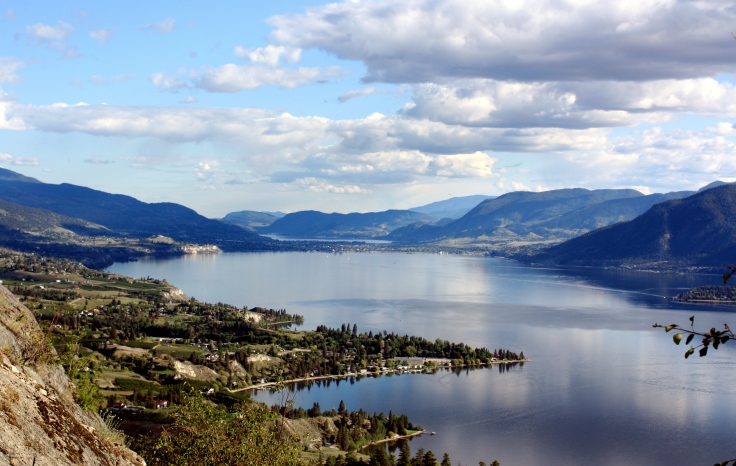







When Marichel owner, viticulturist and winemaker Richard Roskell is asked what makes his winery special he pauses and chooses his words very carefully: “The offerings from this farm are an expression of love of Naramata. This is a special place for growing and making wine.”
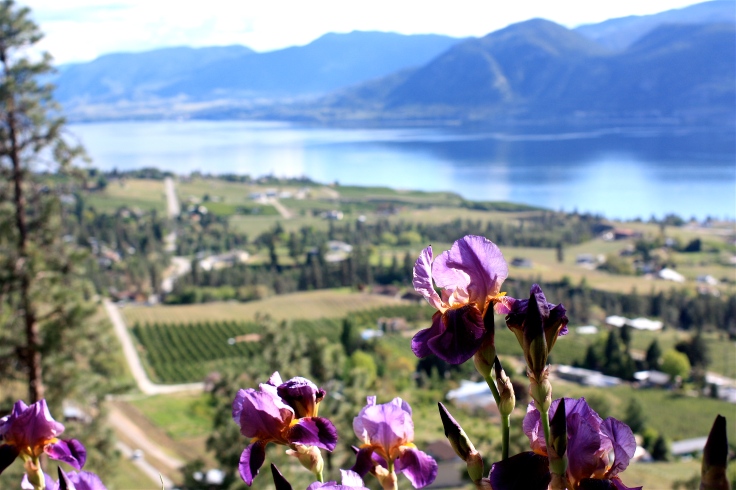
More than just the attention and care Richard pours into the 1,500 cases of Viognier and Syrah Marichel he produces yearly, the farm too is about love. He was persuaded into buying it by his wife Elisabeth in 2000 who fell hard for the beautiful land on a bluff overlooking Lake Okanagan with its incredible across-the-lake view of Summerland’s Giants Head Mountain.
Elisabeth passed away a year ago. “She was key in helping us acquire the farm,” Richard says. “For example, she spoke German with the former owners who were in Germany. We both fell in love with it as soon as we saw it. She is a huge part of what Marichel is today, her efforts and her vision.”
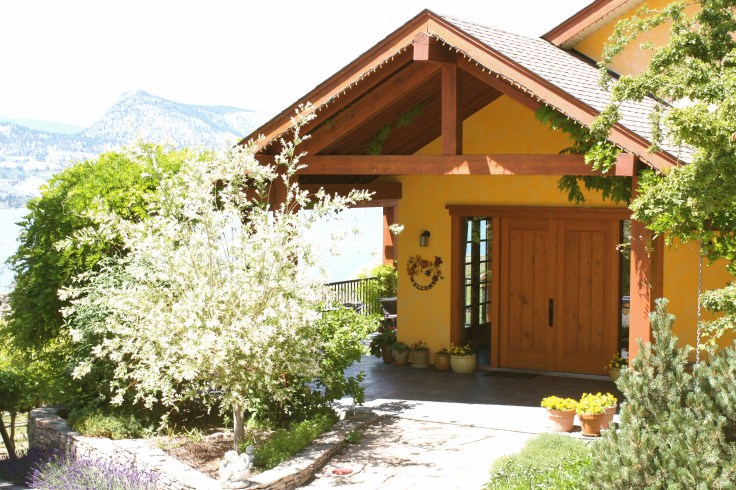
The vineyard’s name is a combination of the first initials of Elisabeth’s son Marlow, Richard and Elisabeth. I think it sounds lovely and very French.
A retired Air Canada pilot, Richard says he is relishing his second career spent in the outdoors. “There is some useful cross-over from my days as a pilot,” he says. “The discipline you need to approach a problem and the organizational skills definitely apply. But it’s not in any way a mechanical process like flying from Point A to Point B. It’s a much longer and hugely rewarding process to plant vines, watch them grow, tend them and years later literally see the fruits of your labour.”
Richard says his take on wine-making is very hands off. “The wine is quintessentially an expression of the farm. I don’t manipulate the wine…It’s the vineyard you are tasting.”
Anthony Gismondi does a much better job at describing Marichel Vineyard’s Syrah saying, “Mocha, liquorice, black berry jam, port-y nose with intense vanilla, leather, resin, cooked rhubarb notes spiked with garrigue and slightly volatile notes…” Sounds good too me. Here is my description: “Damned good.”

This small winery is a bit of a hidden gem tucked away in Naramata on Little John Road which boasts only two properties…that of our good friends Bill and Pam and Marichel. Richard carefully tends the vineyard himself which is divided up into eight small microclimates. He has left areas of natural plantings on the property which is home to a variety of wildlife. Partway through the growing season he will select prune off a good deal of the fruit to supercharge the flavour of the remaining grapes.
With a quiet, but dedicated following, Marichel is a wonderful surprise for new visitors who are astonished by the dramatic views, special wines and the warm welcome. The tasting room is open daily through mid-October from 11 a.m. to 5 p.m. and 1016 Little John Road is on the lakeside of Naramata Road before you reach the Village of Naramata.
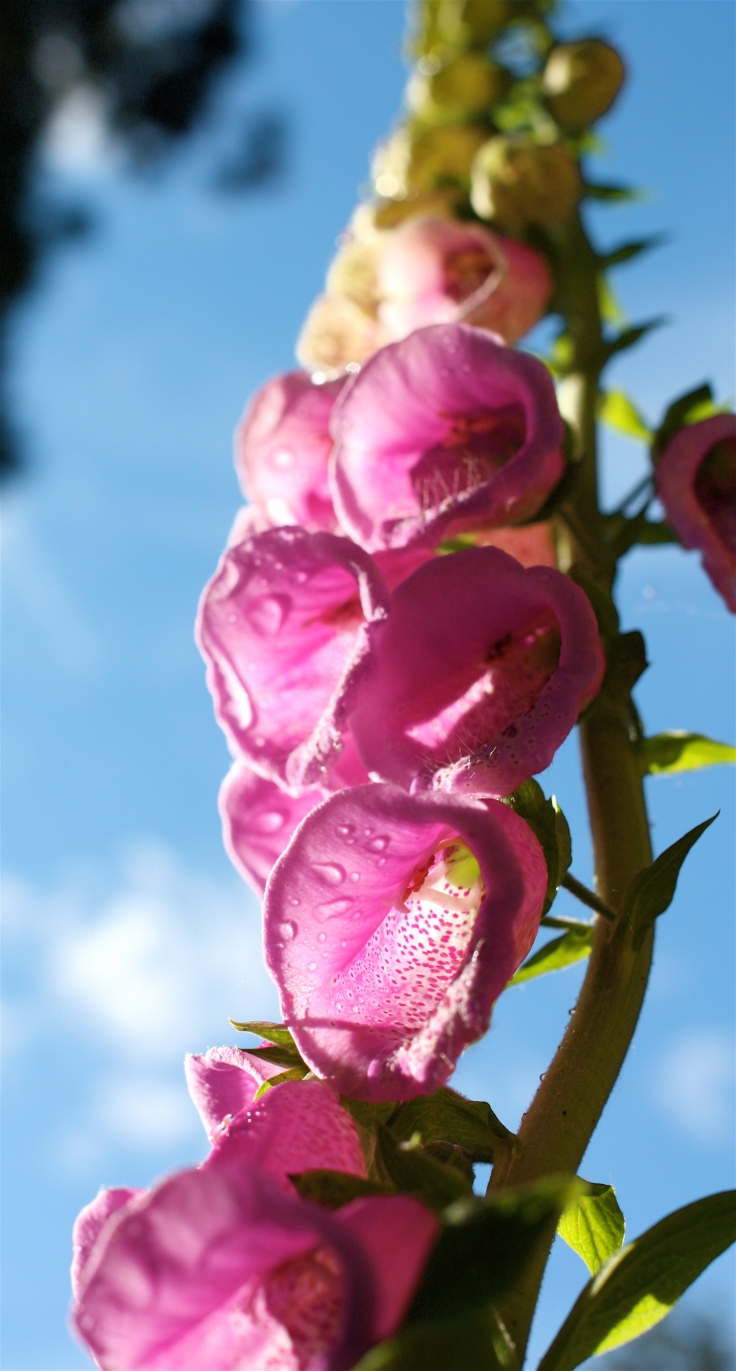
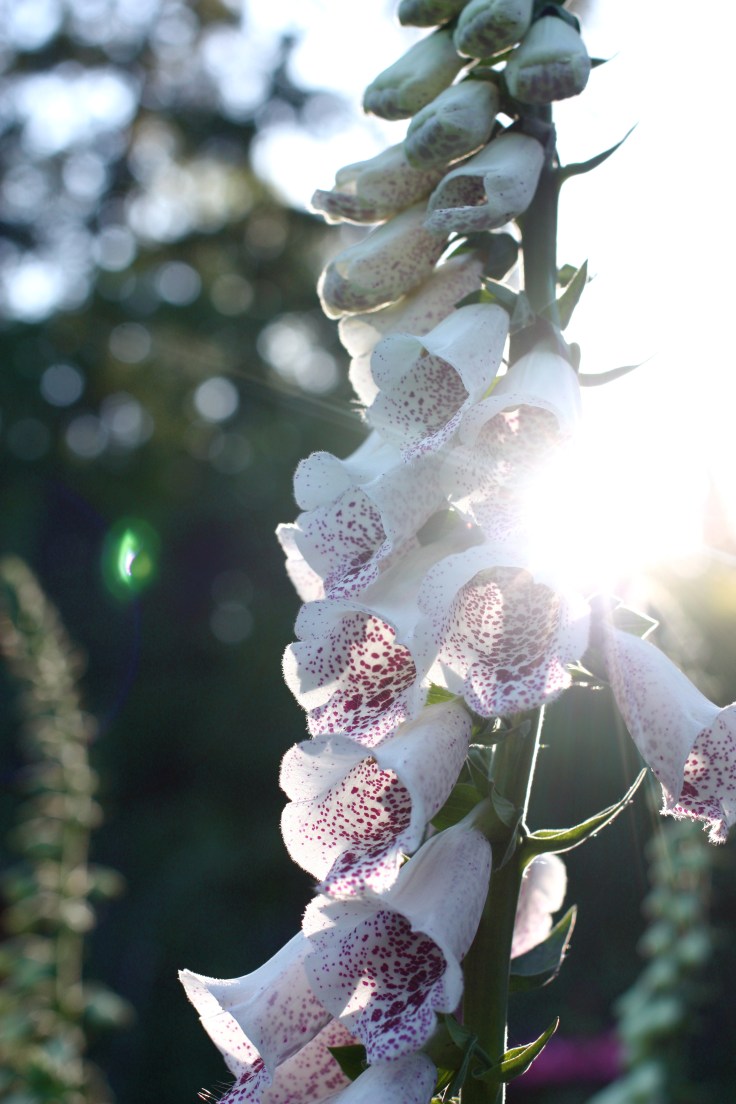
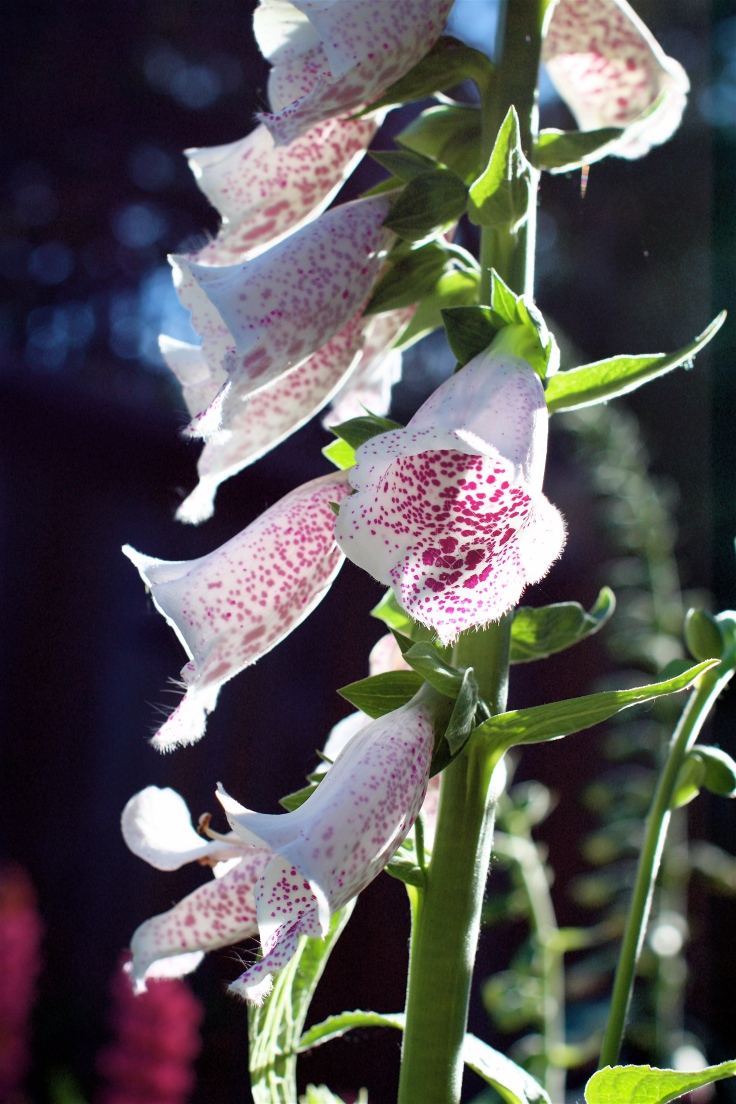
What does it say about me that my favourite garden plant is deadly? Digitalis, also called Dead Mans Bells, Bloody Fingers and Witches Gloves is toxic but beautiful. A few years ago a US woman poisoned her husband by adding foxglove leaves to his salad. He became violently ill but survived. I guess the guy wasn’t handy.
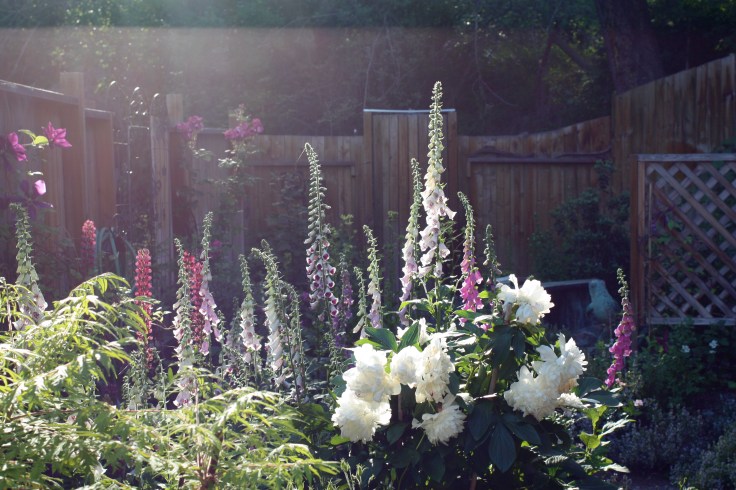
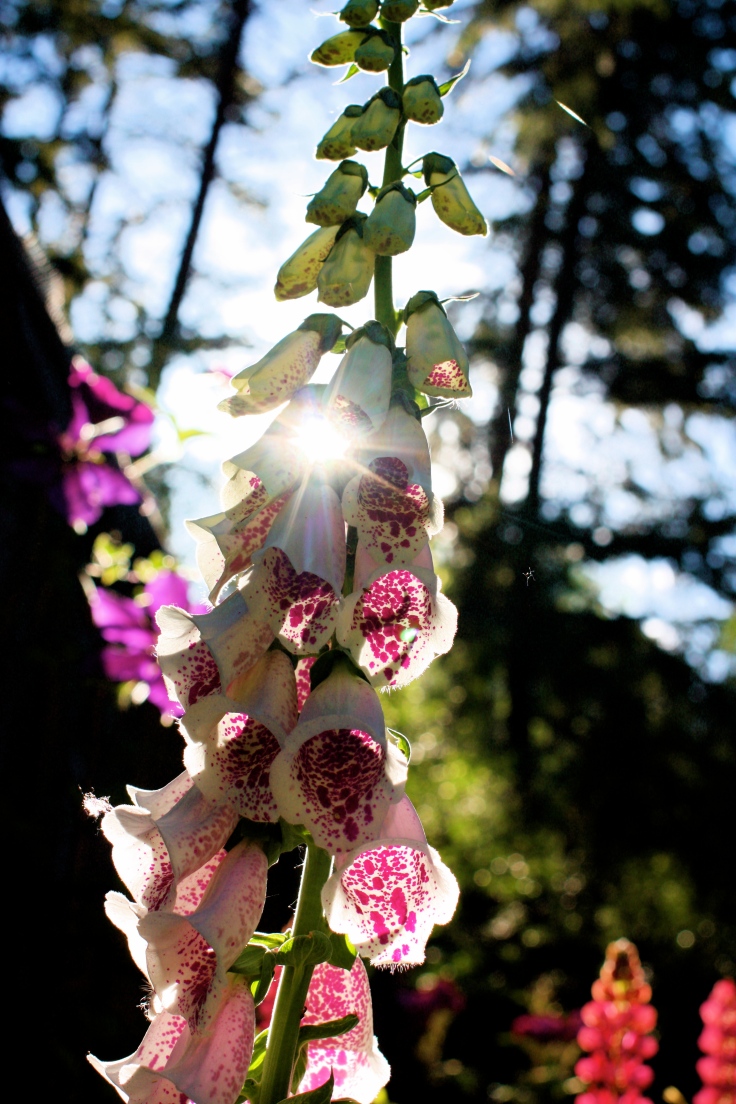 I prefer to call by them by their more endearing name, Foxglove. Also called Virgin’s Glove, Fairy Caps, Folk’s Glove and Fairy Thimbles, this cottage garden flower is a key reason my secret garden looks magical this morning. I grew all the foxgloves in my collection from seeds in the greenhouse…many of them ordered from Plants of Distinction in England. Some of my favourites are Candy Mountain Peach (see, not a sinister name at all)…the bells face upwards in this one, Camelot cream with its densely clothed stems of Guernsey cream bells, Elsie Kelsey, with its beautiful snow white bells and a raspberry jam lip and obscura with a nodding red-veined yellow flower from Spain. Heywoodii is of the palest of pinks with heavy freckles with densely packed bells on a dwarf plant. Mertonenisis is also a very fine hybrid reproducing truly from seed with its crushed strawberry bells…I could go on.
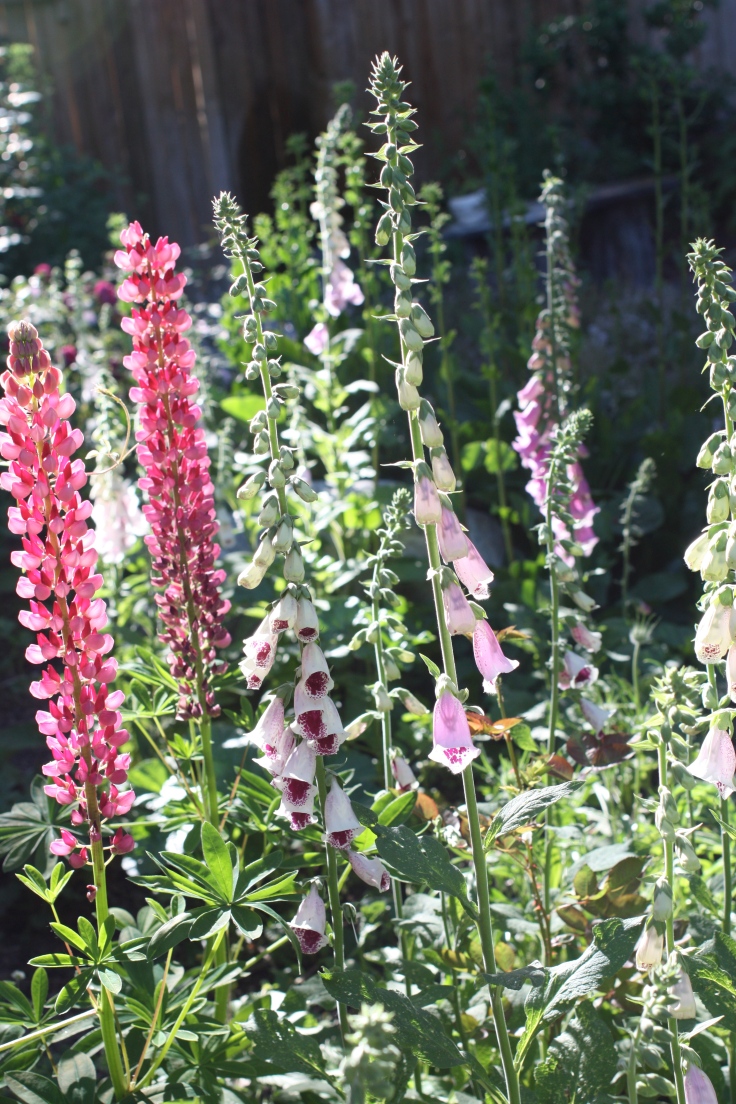
They are virtually maintenance free and hardy. It took some patience as most are biennial. I had to nurture my seedlings, harden them off, plant them and wait another whole year to see their bells. They will grow in a number of soil types as long as there is good drainage. Most are hardy to zone 4.

Once your foxgloves are blooming let them for for as long as you can. Your goal is to allow the plant to go to seed and for the seed to dry so it can be scattered around the garden. Yes please. I love the unkempt look of the garden with self-seeders.
 Bees love foxgloves and their blooms are entirely dependent of the visits of this insect. The projecting lower lip of the corolla forms an alighting platform for the bee and as he pushes his way up the bell, to get at the honey which lies in a ring around the seed vessel at the top of the flower, he rubs on the pollen. A single foxglove can provide from one to two million seeds. This particular plant is a whopper with beautiful markings towering above my head. They love the dappled shade of my secret garden although they will tolerate full sun.
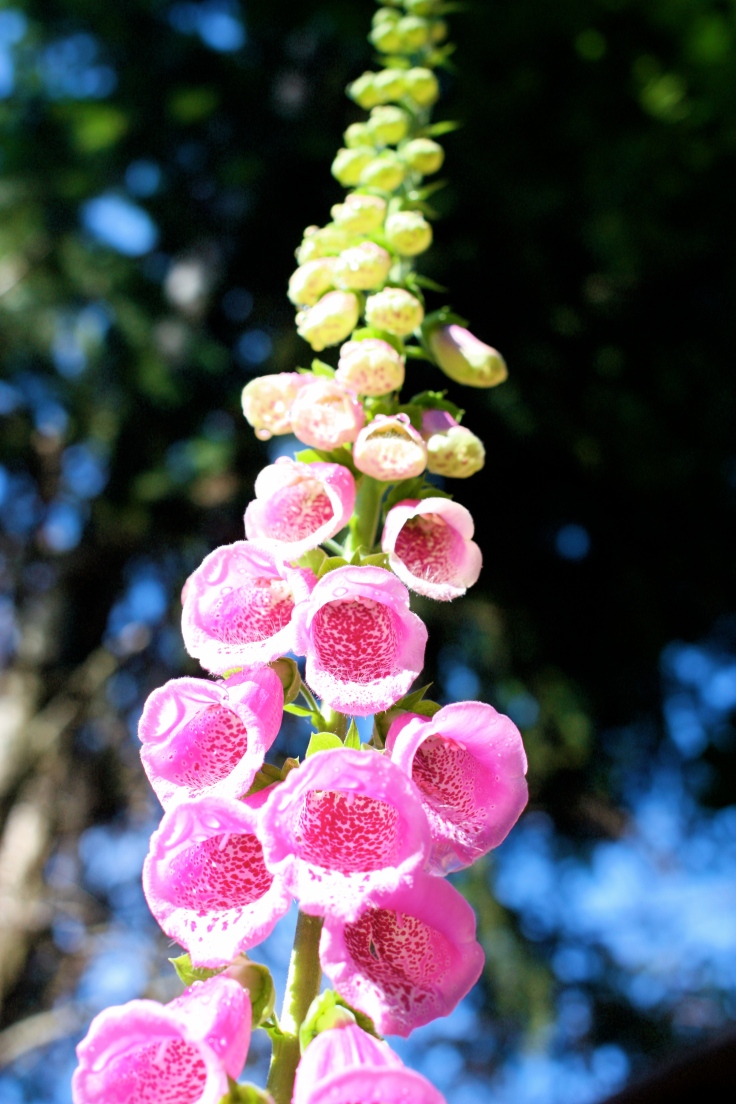 I love they way their dramatic spikes of tubular flowers with speckled throats add elegance and height to my garden.
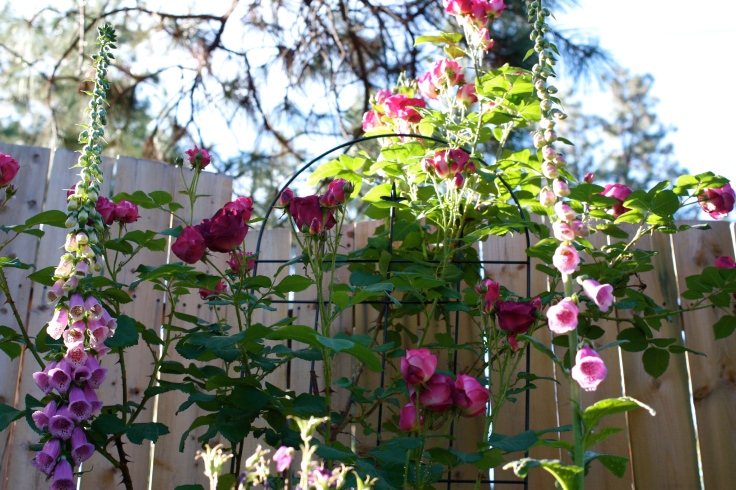
Foxgloves are pretty darned handy. They are used to produce the important heart drugs digitoxin, digitalin, digitonin and digitalenin which are extracted from the leaves. The drug increases the activity of all forms of muscle tissue, but more especially that of the heart and arterioles, the all-important property of the drug being its action on the circulation.
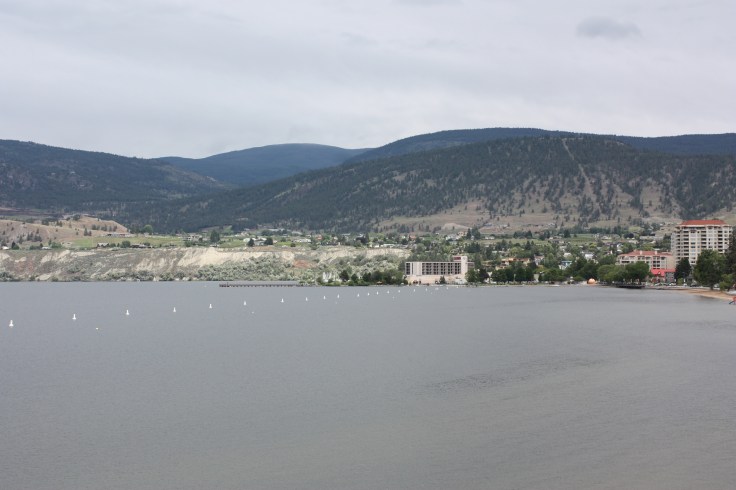
We have been in the lake since May 9th training for our chilly relay swim across the English Channel this summer. Our conversations have been going like this as we stand in the water trying to talk ourselves into actually swimming:
“Colder than yesterday, which was colder than the day before. How is that possible?” — Me
“Just get in.” — Charlie
“Don’t rush me.” — Jan
“It’s a good thing we don’t have balls.” — Me
“Maybe we do.” — Charlie
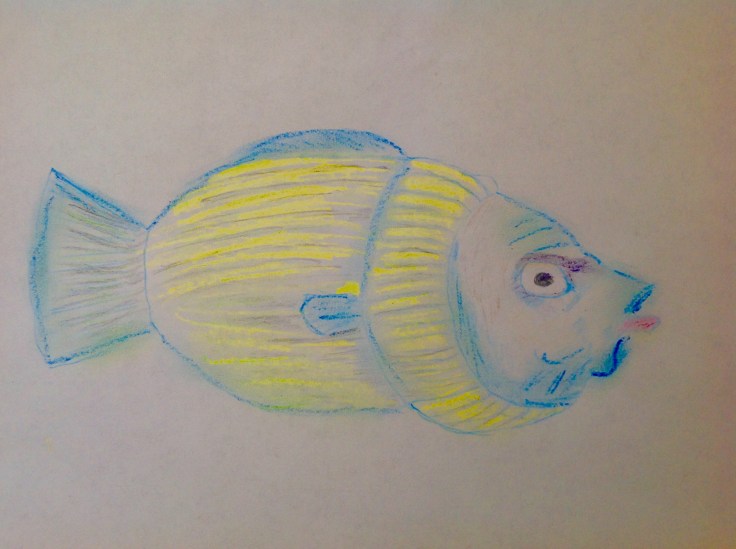
“I just saw a fish go by. It was wearing a sweater.” — Me
“Just get in.” — Charlie
“Look at the ducks on the shore, I think their feet are frozen to the ground.” — Me

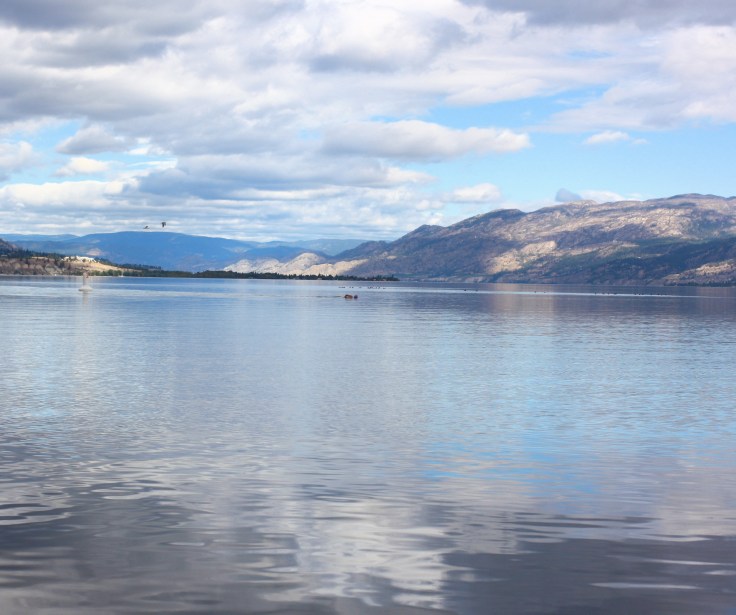
When we start whining I bring up teammate Jaime who is swimming in chillier waters in Alberta. The day she went in when it was 7 degrees in the water with an air temperature of 8 and it was snowing a bit was pretty hardcore. We have been swimming in 12- to about 15-degree water and once in, over the initial ice cream headache and teeth-aching first few minutes we are actually finding it almost “enjoyable”. We have the lake to ourselves as even the hard-core Ironmen are still in the pool. We’ve learned to trust that this too shall pass and we actually will find it bearable.
The glass is half-full…of lake water
- The cold water is helping our immune system. It helps boost the white blood cell count because the body is forced to react to changing conditions. The cold actually shocks your system into rallying its defences.
- We get an endorphin high because it brings us close to the pain barrier or on some days through it. The pain stimulates endorphins and voila…it hurts so much it makes us feel good. Something like that…
- It boosts our circulation and flushes our veins, arteries and capillaries. The cold water forces blood to the surface and pushes the cold downwards.
- It burns a few more calories.
- Cold water swimming places stress on the body physically and mentally. So, go figure this one…those stresses reduce life stress making us more calm and relaxed.
- You actually habituate to the cold water. You find it hard to breathe for the first minute or so but you settle in, relax and get used to it. You learn it won’t kill you.
- The pain of immersion never disappears but the cold shock response will reduce somewhat after about five or six cold water swims.
- It makes you feel BAD ASS to be out there when it’s frigging cold and wavy and people on the beach stop and stare. You learn you have the power to master the cold.


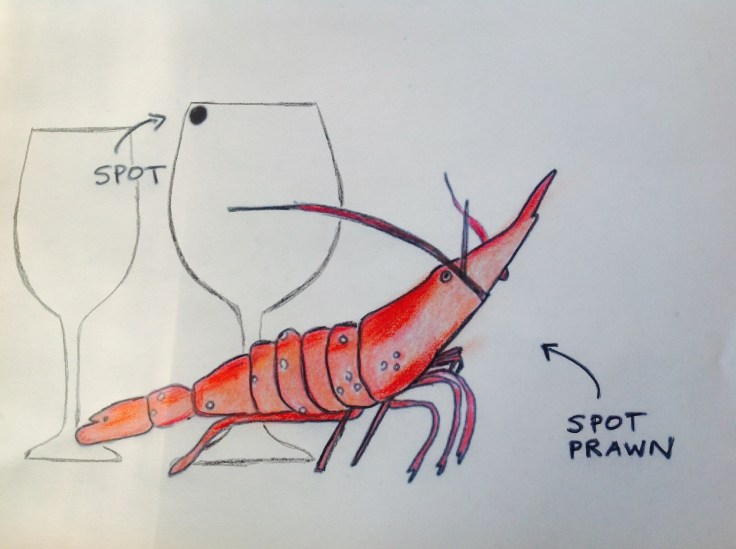
A sold-out crowd of about 100 wined on 10 Okanagan wineries’ takes on Sauvignon Blanc and dined on three famous local chefs’ versions of spot prawns on a heritage paddle wheeler. I have a wonderfully scribbly, tomato-stained notepad to show for it and a spot or two of my own on my white blouse. OK by me. It was just the right number of people to fill the beautifully-restored SS Sicamous to create a convivial buzz of talk and laughter and the feeling that this was the perfect place to be on a Sunday afternoon in Penticton.
The inaugural Wine Party (Jennifer Schell and Terry Meyer-Stone) spotlight event was designed to focus on a local sampling of a single varietal paired with the BC shellfish that has risen to superstardom in the seafood world. Spot prawns are such a big deal in the culinary world that it’s gotten to the point where it’s very hard to part fisherman from some of their catch before it heads overseas to lucrative markets and if you do, the prices are higher than for lobster. This year’s catch is 50 per cent more than last year’s, partly because Asia’s farm-raised tiger prawn industry has been decimated by a disease.
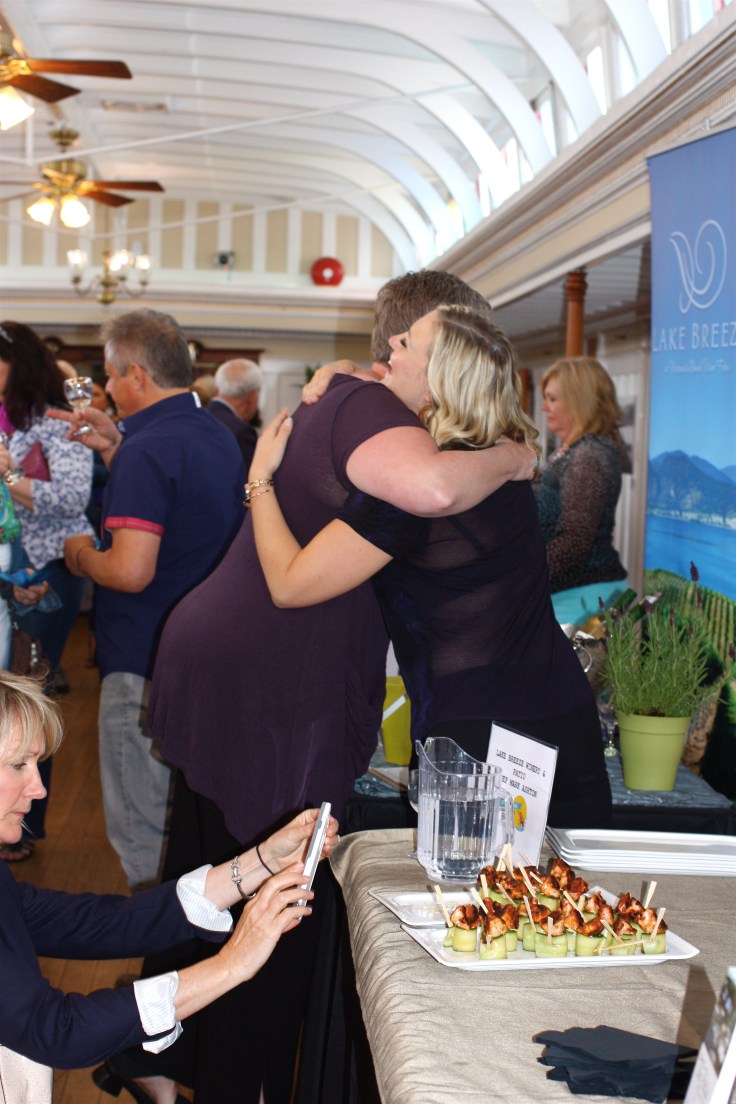
What’s the big deal about spot prawns? The little critters are large, sweet, firmly fleshed and are harvested sustainably for about 80 days every spring off BC’s coast in the inside waters of Vancouver Island.
The Spotlight on Sauvignon Blanc and Spot Prawn Festival chefs worked some magic with those already tasty crustaceans.


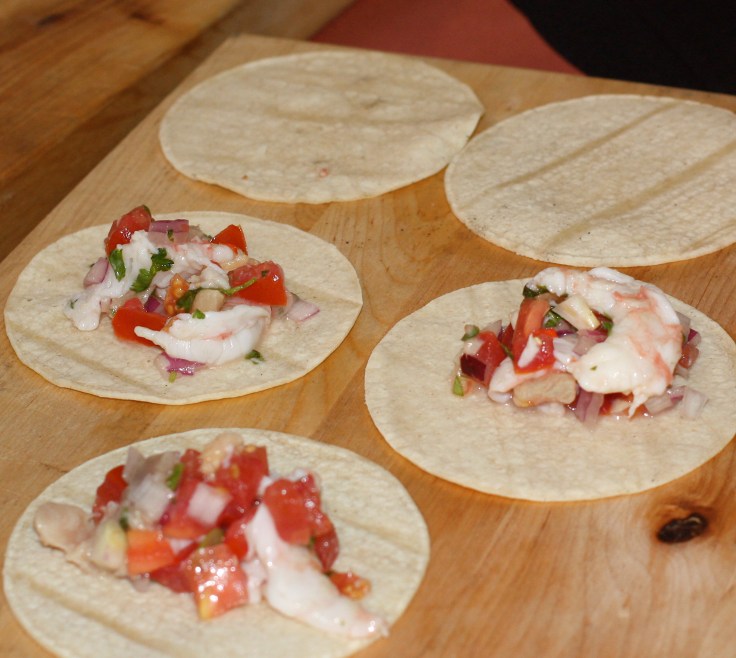
I now get what the big deal is about spot prawns. A doggie bag would have been an idea…
“Our Wine Party brand is about education as well as fun and this type of event allows people to experience a range of styles produced here in the Okanagan,” says Jennifer Schell. We are spotlighting the local version of the varietal — many wine drinkers immediately think of New Zealand when they think of Sauv Blanc — so we are aiming to redirect their palates here.”

Lovely glasses of summer-in-a-glass Sauv Blanc was poured by these fine wineries:
- Bench 1775
- Lake Breeze Winery
- Fairview Cellars
- Pentâge Winery
- Evolve Cellars
- Gehringer Brothers Wines
- Black Market Wine Co.
- Le Vieux Pin Winery
- Therapy Vineyards
- River Stone Estate Winery
“Can you believe this venue?,” says Jennifer. “I immediately fell in love and couldn’t believe I hadn’t been on it before. That will not be the last Wine Party event on the SS Sicamous.”

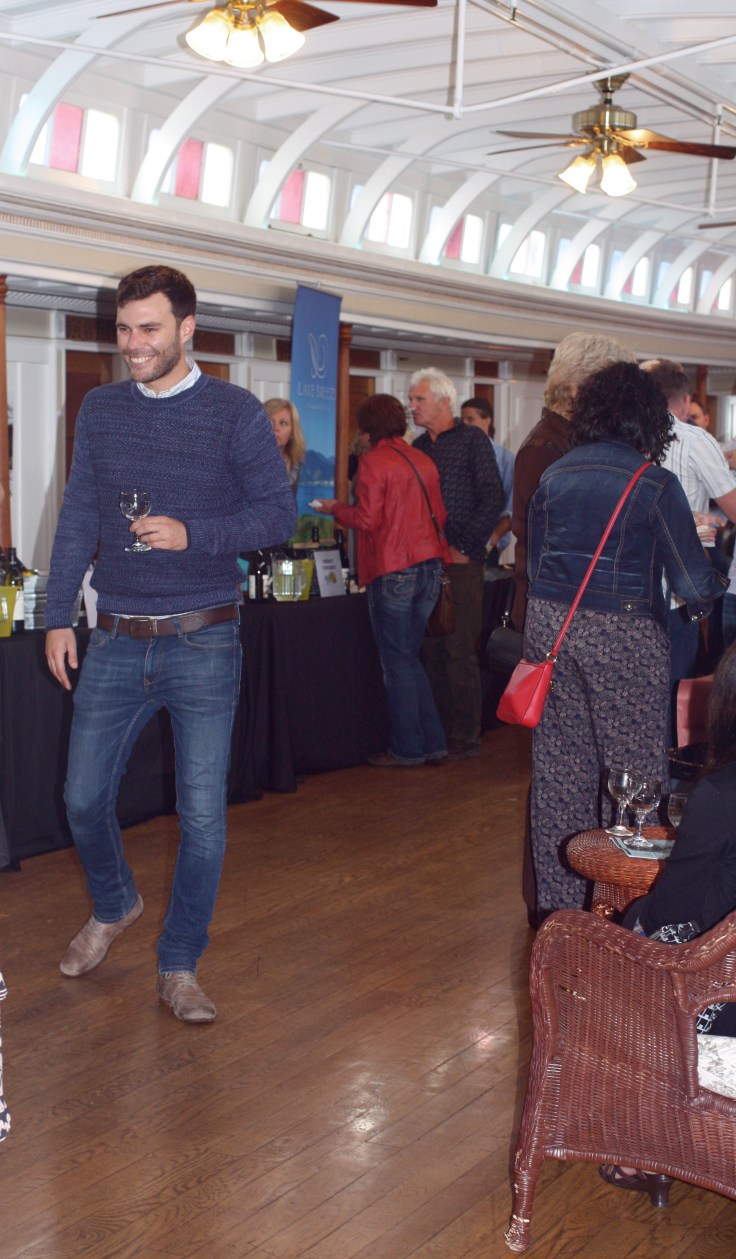


We’ve come a long way baby. I wonder what the crew of the ship would make of the wine and spot prawn party and some of its interesting guests?

Renée Stewart (Operations & Sales Manager) and her mom, Jeannine Fradelizio are pictured here with Jeannine’s cool invention, Wine Glass Writer. These fantastic pens helped me keep track of my wine glass throughout the event. Beats a wine charm. Who can ever remember which charm you had?
 naramata-blend