Search

naramata-blend

Life in a slow place that quickly steals your heart.

Author

writely2015

Do not leave this cake out in the rain, takes so long to bake it sure but mostly it will make you happy, two slices happy

IMG_3256.jpg“Cake is happiness! If you know the way of the cake, you know the way of happiness! If you have a cake in front of you, you should not look any further for joy!”
― C. JoyBell C.

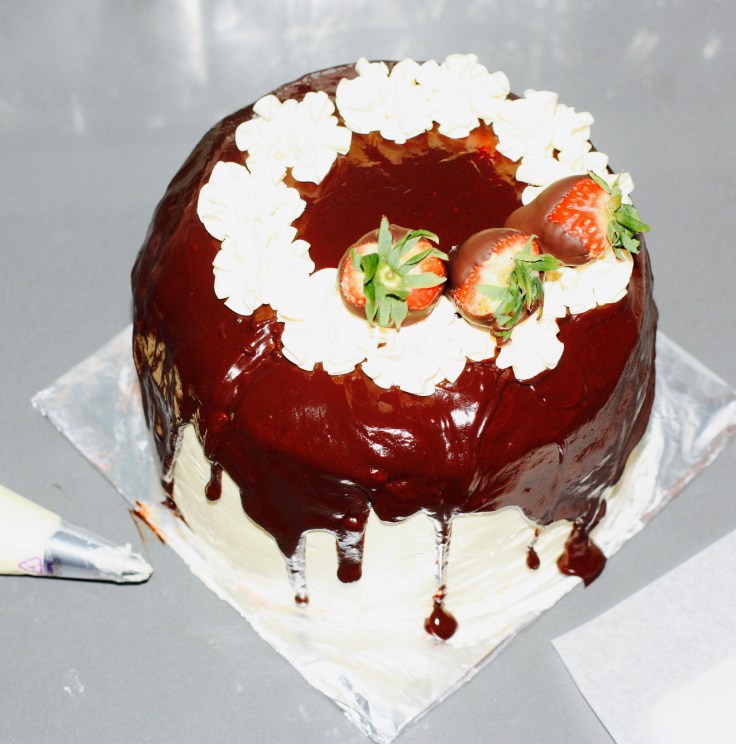
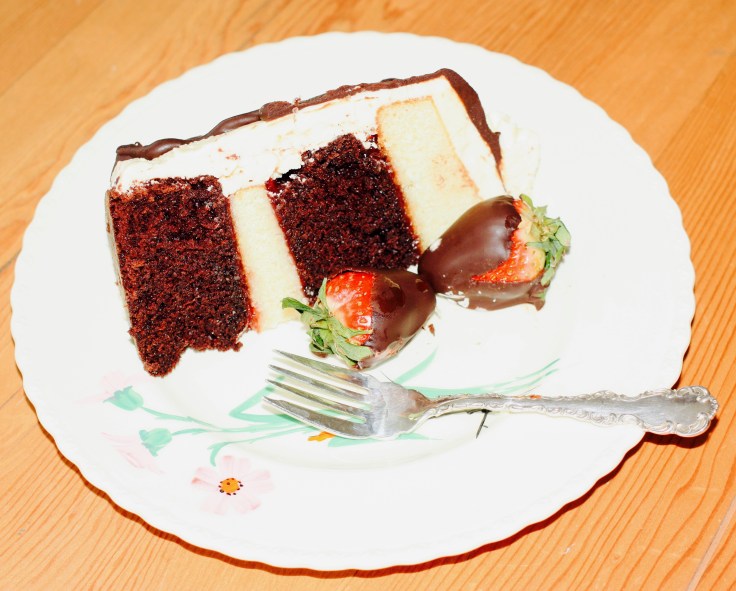
From start to chocolatey towering finish, this velvety white chocolate, rich dark chocolate, strawberry filled, Swiss meringue vanilla buttercream topped, chocolate glazed, chocolate-covered strawberry four-layer Neapolitan Cake took six hours to bake and assemble. I can’t think of a better way to spend six hours can you?

There are a total of five recipes involved including two cake recipes that will give you a pretty dramatic piece of cake when sliced with alternating layers of white chocolate and dark chocolate cake. I can totally picture an evening dress and a tuxedo to celebrate its formal look whereas expanding sweatpants are probably a better option.
IMG_3209.jpg

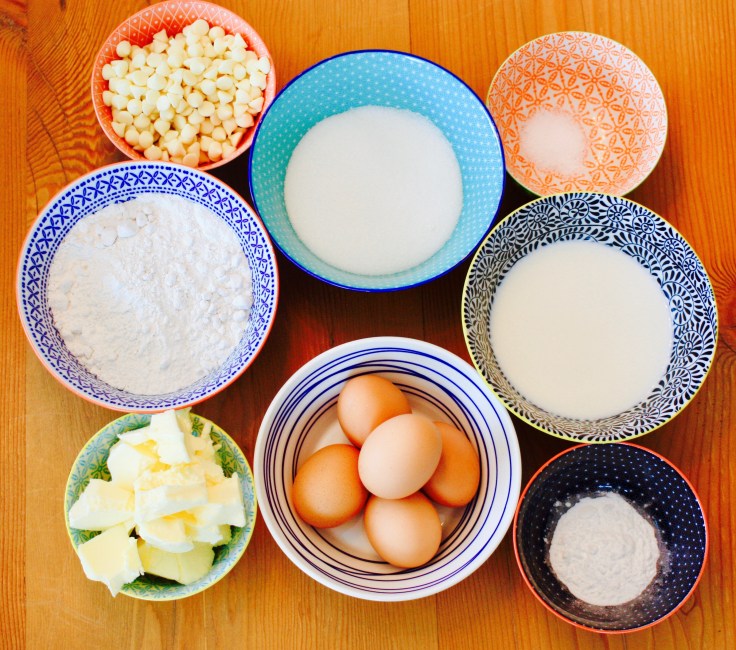
White Chocolate Cake

  • 5 large egg whites (My eggs came from Bella Wines farm…thanks Jay!)
  • 3/4 cup whole milk
  • 2 3/4 cup (360 g) cake flour
  • 1  1/4 cups (250 g) granulated sugar
  • 1 tablespoon plus 1/2 teaspoon baking powder
  • 1/2 teaspoon salt
  • 3/4 cup (170 g) unsalted room temperature butter
  • 1 1/2 teaspoons pure vanilla extract
  • 6 ounces (170 g) white chocolate, melted and cooled
  • Note — you will also need a jar of (80 ml) strawberry preserves for assembling the cake and 12 strawberries

Directions

Preheat oven to 350F. Grease and flour two 8-inch cake pans.

Stir together the egg whites and 1/4 cup of the milk in a small bowl, set aside. Sift the flour, sugar, baking powder and salt into the bowl of a stand mixer fitted with the paddle attachment. Mix on low until combined. With the mixer on low add the butter, vanilla and the remaining 1/2 cup of milk until the dry ingredients are moistened. Turn the mixer to medium and mix for about a minute until combined. Stop the mixer, scrape down the bowl.

Turn the mixer to medium. Add the egg white mixture in three parts, mixing for about 20 seconds after each addition. Stop the mixer, scrape down. Add the white chocolate and mix until just combined.

Evenly divide the batter between the two prepared pans. Bake for 25 to 28 minutes or until a toothpick inserted into the centre of the cakes comes out clean. Cool on a wire rack for 10 minutes before removing the cakes from their pans.

Yipeee…you have completed one recipe at this point!

IMG_3213.jpg

Chocolate Cake

  • 2 1/2 cups all-purpose flour
  • 1 cup unsweetened high-quality cocoa powder
  • 2 1/2 teaspoons baking powder
  • 1 teaspoon salt
  • 3/4 teaspoon baking soda
  • 1/2 cup plus 2 tablespoons (150 ml) grapeseed oil (could use canola)
  • 2 cups (400 g) granulated sugar
  • 2 large eggs
  • 1 large egg yolk
  • 2 teaspoons pure vanilla extract
  • 1/2 teaspoon pure almond extract
  • 1 1/2 cups whole milk
  • 1 cup hot strong-brewed coffee

Directions

Grease and flour two 8-inch cake pans. Your oven will also be at 350 F for these layers.

Sift together the flour, cocoa powder, baking powder, salt and baking soda, set aside.

In the bowl of a stand mixer fitted with the paddle, beat together the oil and sugar on medium for 2 minutes. Add the eggs, egg yolk, vanilla and almond extract. Stop the mixer and scrape bowl.

Turn the mixer to low and add the flour mixture in three batches, alternating with the milk, beginning and ending with the flour mixture. Stop the mixer and scrape bowl. With the mixer on low, stream the coffee. Mix on medium-low for no more than 30 seconds or until combined.

Evenly divide the batter between the prepared pans and bake in a 350 F oven for 25 to 28 minutes or until a toothpick inserted into the centre of the cakes comes out clean. Let them cool on a wire rack for 10 to 15 minutes before removing the cakes from the pans.

IMG_3230.jpgChocolate-dipped strawberries

  • 1 1/3 cups (8 ounces/ 226 g) chopped semisweet chocolate
  • 12 medium strawberries, washed and dried well

Directions

Melt the chocolate in the top portion of a double boiler. Line a baking sheet with parchment paper. Remove the chocolate from the heat and dip each strawberry into the chocolate one at a time and set it on the parchment paper to dry and harden.

IMG_3224.jpg

Vanilla swiss meringue buttercream

  • 1/2 cup plus 2 tablespoons egg whites
  • 1 1/4 cups granulated sugar
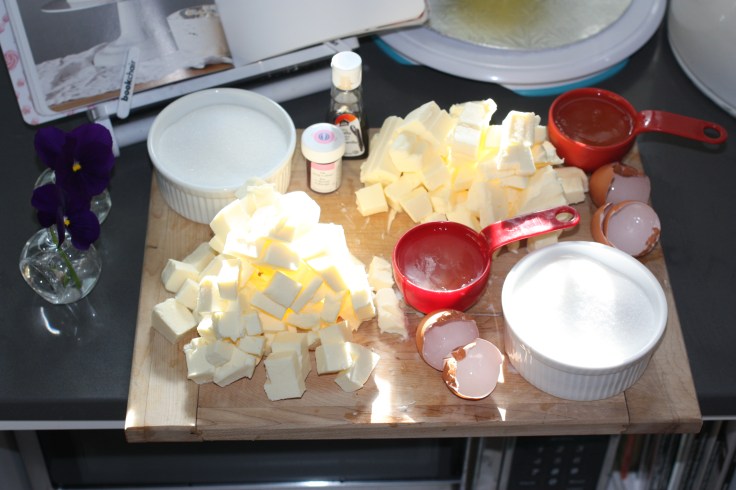
  • 2 cups unsalted butter (very important that it be at room temperature or it won’t combine properly) cubed
  • 2 teaspoons pure vanilla extract
  • Note…you may end up making two batches to fully cover your cake and have enough left over for the rosettes…

Directions
Place the egg whites and sugar in the bowl of a stand-mixer. Whisk them together by hand to combine. Make a double boiler by filling a medium pot filled with water over medium-high heat. Place the mixer bowl on top of the pot. The bottom of the pot should not touch the water.

Whisk intermittently and heat the egg mixture to 160F (candy thermometer) or until it is hot to the touch. Carefully fit the mixer bowl onto the stand mixer and whip with the wire attachment on high speed for 8 to 10 minutes, until it holds medium-stiff peaks. The bowl should be back to room temperature at this point. Stop the mixer and swap out the whisk attachment for the paddle.

With the mixer on low, add the cubed butter, a few tablespoons at a time then the vanilla. Once incorporated, turn up the mixer speed to medium-high and beat until the buttercream is silky smooth, 3 to 5 minutes.

Some Assembly Required

Once the cakes are cool, level them and choose which layer will be at the bottom. Place it on a cake plate. Spread on about 1/3 cup of strawberry preserves. Place the second layer of cake on top, alternating between the white and dark chocolate cakes and repeat. Smoothly frost the cake with the buttercream and refrigerate it, uncovered until firm.

Chocolate Glaze

  • 2/3 cup (4 ounces/115 g) chopped semisweet chocolate
  • 1/2 cup (120 ml) heavy cream
  • 1/4 cup light corn syrup
  • 1 teaspoon pure vanilla extract
  • 1/8 teaspoon salt

Directions

Place the chocolate, cream and corn syrup in a small saucepan. Heat over medium-low until the cream begins to steam and the chocolate starts to melt. Remove from the heat and stir in the vanilla and salt until combined. Cool to room temperature, about 10 minutes.

More Assembly

Starting with about 1/2 cup at a time, pour the chocolate glaze into the centre of the frosted cake and use an offset spatula to spread it around the top allowing it to drip over the edges. Add more glaze until you like the way it looks.
IMG_3238.jpg

Fill a pastry bag with a star tip with the remaining buttercream. After the glaze has set, pipe rosettes around the top edge of the cake. Place the chocolate-dipped strawberries on the rosettes.

Voila!
IMG_3264.jpg

“Your good friend has just taken a piece of cake out of the garbage and eaten it. You will probably need this information when you check me into the Betty Crocker Clinic.” Cynthia Nixon

IMG_3248.jpg


Why we love to bake – Flour and butter, cream and sugar… It’s all about love… even for the pros

FullSizeRender 2.jpg
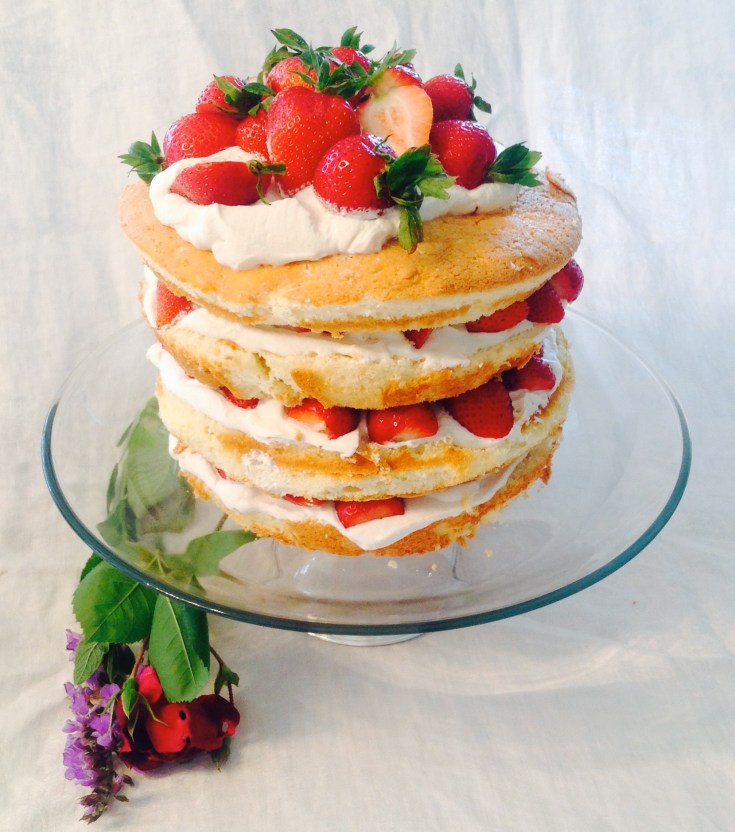
Strawberry shortcake with basil-infused whipping cream.

A house that smells deliciously yeasty of bread baking, or intensely chocolatey from the rich cake in the oven or of cinnamon from the sticky buns baking are the scents that make us the most nostalgic for our childhood. Dr. Alan Hirsch, a neurologist who studies such things tells us that the smells produced by baking have a particularly powerful effect on memory.
Baking is also about celebrating. Any event is made an occasion with a cake. Audrey Hebpburn was onto something when she said, “Let’s face it, a good, creamy chocolate cake does a lot for a lot of people.”

IMG_1684.jpg

Baking is also about sharing. A four-layer cake with a filling, buttercream frosting, and elaborate decorations is not made to be be eaten solo.

Baking is also about science that seems more like magic when a sloppy cake batter rises in the oven and turns golden. It’s about the comforting rhythm of measuring, mixing and folding. It’s about taking an indulgent amount of your time to give pleasure to someone else. In the end, it’s very little about the eating.

IMG_1514.JPG

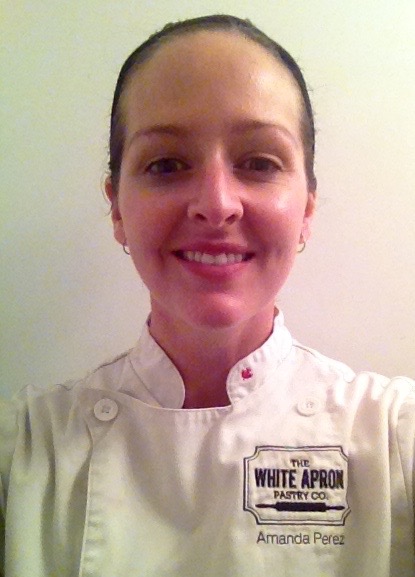
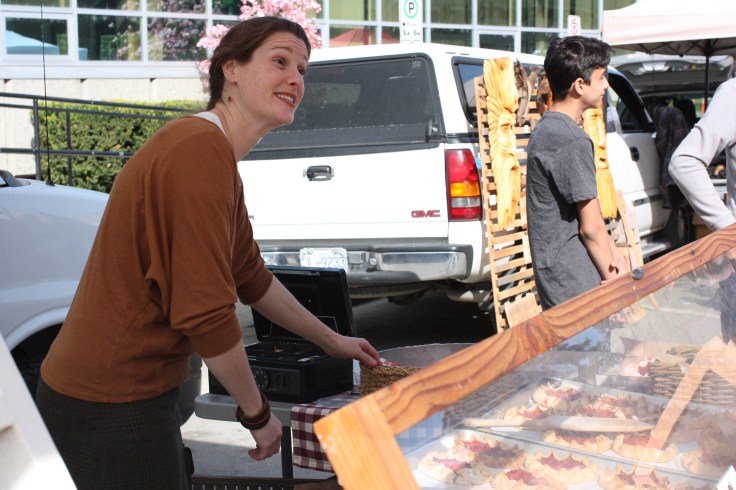
For some like Amanda Perez of Naramata’s The White Apron Pastry Co., baking becomes an avocation for many of these reasons so much so that she delved into as second career.

10888581_945554035479249_1732072882199286371_n.jpg
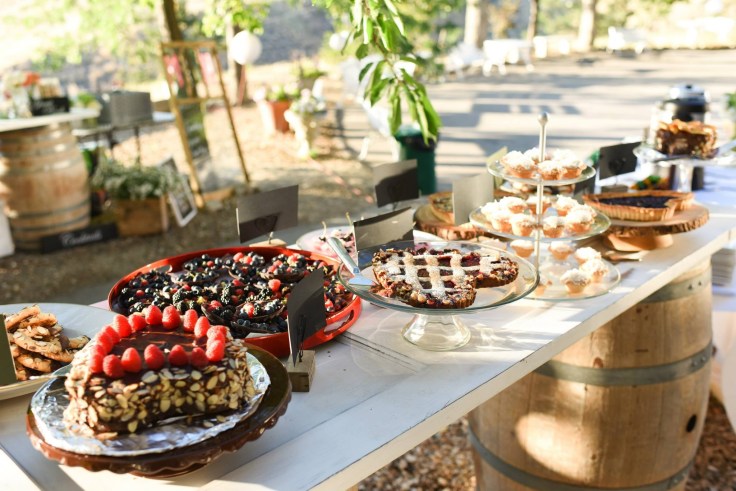
Work of art right? Photo: The White Apron Pastry Co.

How, why did you end up pursuing your career as a pastry chef?

I came into the culinary world in a roundabout way, as it seems that many chefs do. It wasn’t my first career — I actually already went to Simon Fraser, earned a degree in Communication, and worked in Public Relations/event planning for a number of years. But, I had always harboured a dream of going to pastry school, and I have always found comfort in baking. One day, I realized that although I liked my current job at the time, I wanted to feel passionate about how I spent my work day….and so, the pipe dream of going to pastry school became a reality. Many of the students in my class were career changers as well. After graduating with straight A’s from the grueling but exciting year-long foray into French Pastry, I worked at a number of high-end restaurants in Vancouver, mostly doing 5 pm – 2 am dinner service plating desserts, and then more prep, and eventually, becoming pastry chef for two restaurants in Vancouver.

45710_143580742343253_535702_n.jpg526451_567415683293088_1231188421_n.jpghttps---cdn.evbuc.com-images-26648668-88357838431-1-original.jpg

66335_160421547325839_1450859_n.jpg
Some of Amanda’s fabulous creations

Upon deciding to leave the coast and move to the Okanagan, I was offered the Pastry Chef role at Burrowing Owl in summer 2011. Instead, I accepted a Pastry Cook position at Mission Hill Family Estate, where I did the majority of the prep for the high end Terrace restaurant, as well as the large number of private functions, celebrity dinners, concert events etc. Every day I made beautiful crisp loaves of sourdough bread, which were served at lunch and dinner, as well as all of the desserts. I returned to Mission Hill in 2012, and that summer, found the little spot on Front Street in Penticton, recognizing it as a great spot for a tiny little pastry shop. The White Apron was born at that time.

What do you like most about having your business?
It feels good to create something. I worked for years in Public Relations, where my days were spent promoting other people’s products, and I felt like something was missing. It feels very satisfying to create something from start to finish. To work in a trade where there is so much creative license. To own my own business where I can have the flexibility to work around my family’s schedule (and our orchard, as well!) is a blessing to me and my family. And…..not having to do night shifts any more is pretty great. Plus, my husband has a pretty flexibly but demanding work schedule (he is a Financial Consultant with Investors Group), so having the flexibility to be able to stay home and raise our children while still working in the field I am passionate about is worth more than anything.

1507065_871293959571924_2428545517135743327_n.jpg10665125_871291809572139_4871347386229573679_n.jpg

IMG_4645.jpg

What are your future business plans?
After having my Front Street bakery for two years and recognizing the summers are where the business is at (and winters were too slow to even be financially worth opening), I decided that solely focussing on Farmers Markets and custom orders would be where I wanted to focus. I parted with my Front Street shop, moved our family to a property that is zoned to allow having a commercial kitchen on the premises (our previous home in the village wouldn’t allow one), and after a one year hiatus from orders while raising our Sous Chef #2, Zach, The White Apron is getting ready for business.

Currently, our garage space is being renovated into a commercial kitchen. I am at the electrical upgrade stage, and then the fun work begins. I plan to be open in May, and plan to do the Penticton Farmers Market, and quite likely, the Naramata Market as well. I am also taking wedding and special occasion orders now, and will again have a menu of holiday orders, particularly for Thanksgiving and Christmas. I look forward to possibly partnering up with B&B’s to offer my freshly baked brioche cinnamon rolls to guests and possibly even partnering with a couple wineries in the future as well!

Do you still enjoy baking?
I do! I bake as much as I can (which right now, is generally kid-friendly treats baked while the littlest one naps), and I am counting down the days to having my kitchen ready downstairs so that the real fun can begin! I should note that since selling my Front Street location, I haven’t been taking orders, because producing food that is to be sold from a home kitchen, is not permitted by Interior Health (or insurance companies).

Will you teach your kids to bake?
I already am! Clara helps me bake quite often and she is already learning a lot of valuable skills. Pretty impressive for a three-year-old. She loves scooping muffin batter with a portion scooper, cracking eggs and of course, taste testing.

What do you think is responsible for the increasing popularity of baking and cooking?
The Food Network has been instrumental in increasing the popularity for professional cooking. It is a bit of a double-edged sword though, because as great as it has been for increasing interest in the field, and in bringing attention to the effort and art that properly prepared food takes, it only shows the glamour and glitz and not the true experience and cost to those who choose it as a profession. This new popularity in baking and cooking has brought us a newfound interest in food in general, both in the preparation and consumption of it all.

Five tips for the home baker that will make a big difference to what they make?
1. Get a scale and use recipes that measure by weight rather than by volume. A cup of flour, scooped, can vary by as much as 20%, but 250g of flour will be 250g of flour no matter which way you scoop it.
2. Be confident. It’s just food. If you think a substitution or addition will work, try it. Recipes don’t have to be adhered to 100%. Have fun with it. And don’t bake when you’re rushed or in a foul mood!
3. Clean as you go. My favourite way of doing this is fill the sink with hot soapy water before you start cooking. Toss dirty dishes in the sink as you use them. Washing up is a breeze afterwards, and you’ll find you’ll bake or cook more often when you don’t dread the clean up. Also, start with a clean kitchen, with all your dishes put away.
4. Find a few websites and cookbooks that you trust, and use those when trying out new dishes. My favourites are www.food52.com, www.smittenkitchen.com and for baking/pastry, www.davidlebovitz.com
5. If you want to really go pro, scale out your ingredients in advance. At the very very least, gather all of your ingredients out on the counter before you start, and as you add each ingredient, put it away. I can admit to forgetting key ingredients by not doing this.


Five tools or pieces of equipment that you couldn’t live without?
Kitchen Aid mixer, bench scraper, my stack of glass mixing bowls, lots of rubber spatulas, and parchment paper.

Why should a home baker take a baking class?
Because it is fun! We don’t often get a chance as adults to take a class and learn something new. You’ll leave with a few new recipes, a few new techniques and an enjoyable afternoon out. Why not! I have taken a few classes myself for inspiration and just for fun, and never regret it.

Good advice. Check out the next Naramata-Blend baking class with Chef Amanda teaching us how to make fancy French pastries.

IMG_1254.jpg
One of my creations…having fun learning.

Naramata’s Bella sparkles in the Canadian wine scene

IMG_3103.jpg

British Columbia’s only winery exclusively dedicated to bubbles and one of a very few in Canada, Bella Sparkling Wines focuses on single vineyard expressions of classic Champagne grape Chardonnay and Gamay Noir, an underdog BC grape that won’t be for long. Bella is special too as the exceptional sparkling wines are made using traditional and ancestral methods.

Newsflash: Making wine, as everyone in the Okanagan Valley knows, is hard work. It’s dependent on the weather and growing conditions that change from year-to-year. It’s about hard physical, unglamorous, labour. It’s about finicky science with art, research, education, knowledge and risk thrown in. Making sparkling wine? Double, triple, quadruple the work. Making traditional and ancestral (natural) sparkling and the work goes off the scale.


IMG_3082.jpg
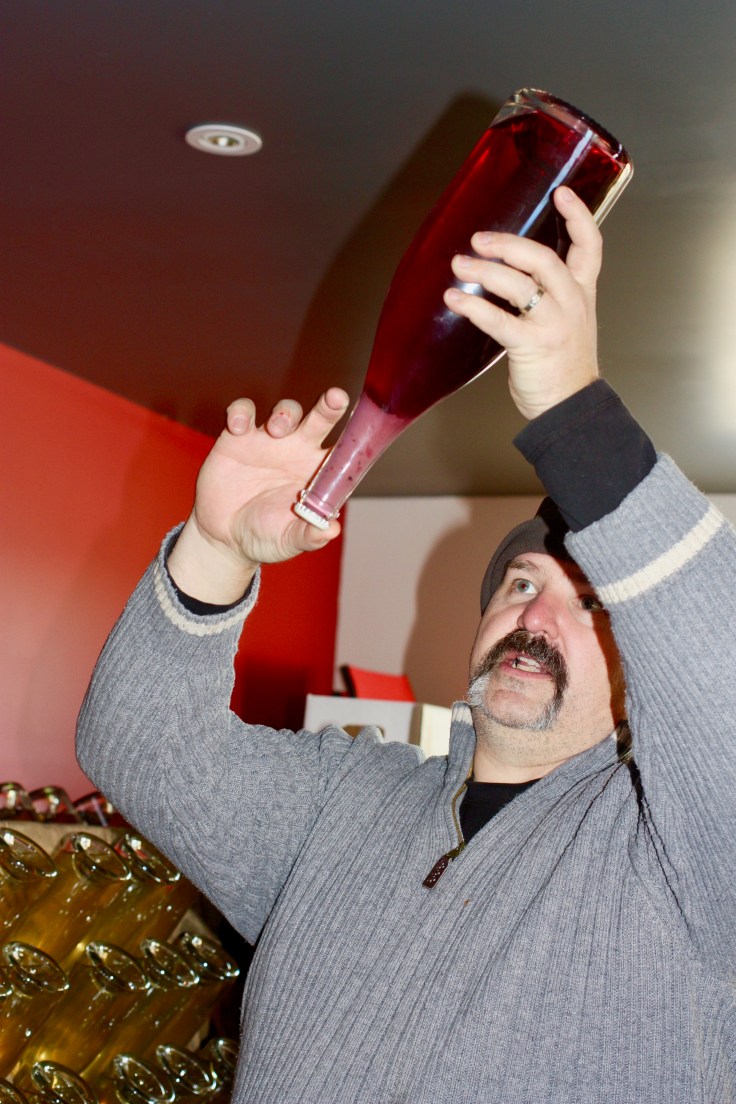
Bella Wine Maker/Owner Jay Drysdale showing me how his painstaking work riddling has dislodged particles allowing them to settle out at the mouth of the bottle making it possible to remove the sediment during the discorging step

Found a niche

“I love what I do,” says Bella wine maker/owner Jay Drysdale. “It’s hard to get a true sense of the fruit with so much makeup,” says Jay. “I love to see what the ground gives us with nothing added to hide the flavours or strip the colours.

“It may be hard but we have also found a niche.” After a thoughtful pause, Jay says, “I don’t know how to put this properly but it is amazing to share my science experiments, work at making the wine better and better and share my passion with others.”

Mission accomplished. Bella, now five years in, is selling out of all they produce and is garnering a loyal and effervescent following.


IMG_3095.jpg
Sur lie aging happening here.

Riddle me this?

How many times does Jay touch a bottle to do a process such as hand riddling  and hand discorging before it’s sold? “About 85 times,” says Jay. “All we do has become the norm and we don’t really think about it anymore but the 2,000 cases we produce is a lot to do by hand.”

IMG_3123.jpg

Jay says Bella is about using traditional techniques that are a dying art. Jay likens what he does to the pushback in what’s happening with our food. “Our grandparents used real butter in their food. Our generation went to using margarine and all the stuff that’s put into that. Now we are seeing why our grandparents’ generation were healthier and enjoyed better tasting food.”

Of Bella’s 2,000 cases, 500 of them are natural wine made with ancestral methods. When wine was first made 8,000 years ago, it was not made using packets of yeast, vitamins, enzymes, reverse osmosis, cryoextraction, powdered tannins…among other additives and processed used in winemaking worldwide. Wines were made from crushed grapes that fermented into wine. Full stop.

IMG_3117.jpg
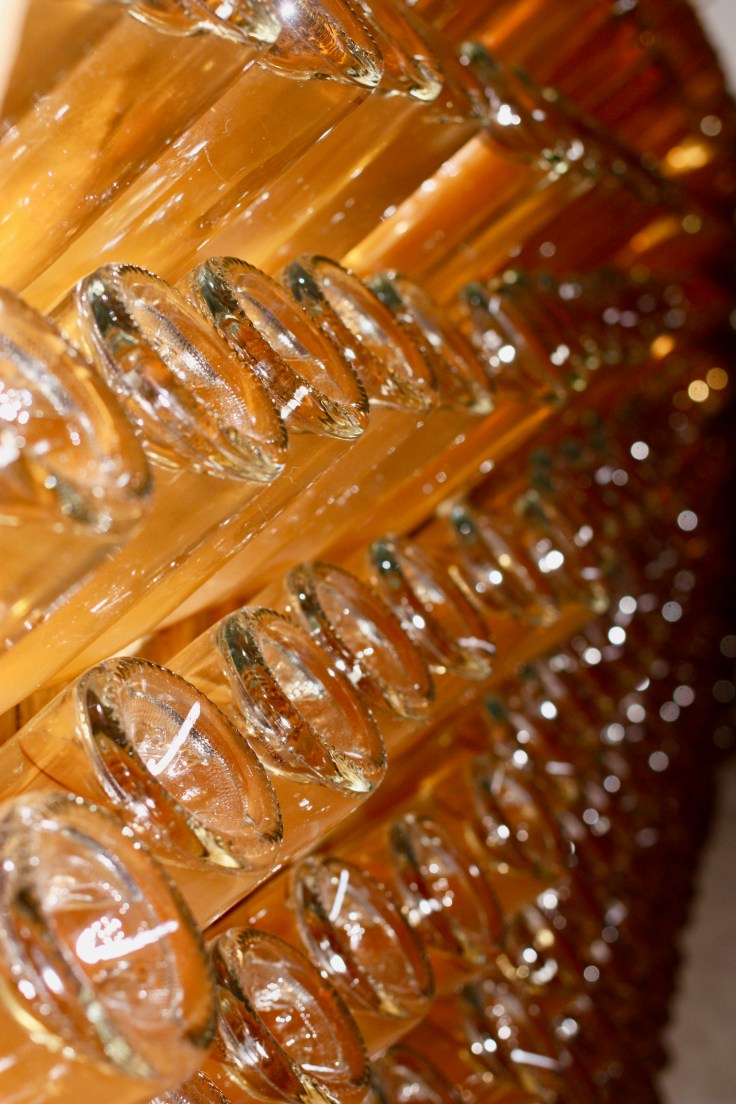
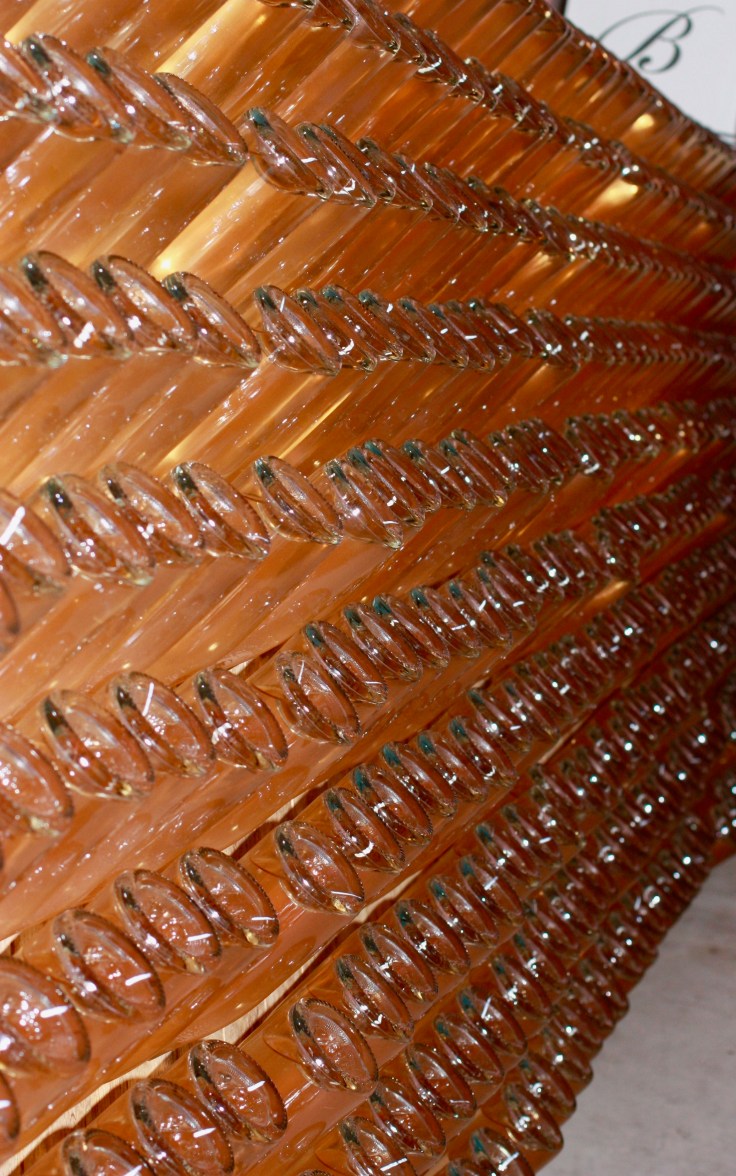
Wines getting their sparkle on in riddling racks are a beautiful thing.

Traditional and ancestral methods

Jay explains that his wines made with the traditional method involve a first ferment in a tank. The clear wine on top is then racked or siphoned off the murky lees and sometimes aged in oak barrels during or after this clarification and racking. The second step involves bottling with the addition of yeast and sugar for the second ferment. This is where the riddling comes in. Jay grabs each bottle, giving it a small shake, an abrupt back and forth twist, every day over a period of one to four weeks. The shaking and the twist dislodges particles that have clung to the glass and prevents sediments from caking in one spot. (A Gyropalette is on Jay’s wish list…a computer-automated machine that would reduce his workload enormously.) The final step is discouraging where a small amount of wine is released along with the sediment plug.

Natural wine has only one ferment involved and no added yeast, sugar or sulphur.

IMG_3101.jpg
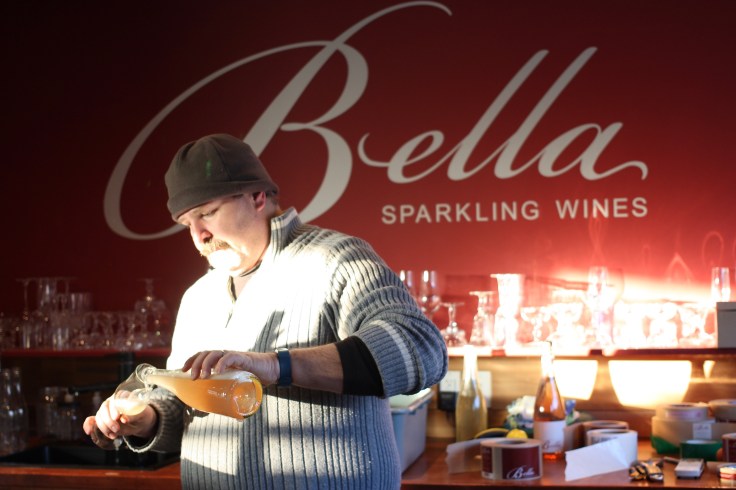
Jay pouring me a flute of Orchard House Gamay, a natural wine made with ancestral methods so I could compare it to a glass of traditional Champagne-style sparkling made with Chardonnay.

We compared Bella’s first vintage of Orchard House Gamay with a glass of their traditional Champagne-style sparkling, B2 (Buddhas Blend), 100 per cent Chardonnay from two vineyards, one in Oliver and one in Kamloops to blend two levels of acidity. (Editor’s note – I love my job.) The traditional style was lovely. To quote Dom Perignon, “I am drinking the stars!” Fresh, dry, citrus notes.

Bella’s Orchard House Gamay, with grapes from a small holding on the Naramata Bench was more flavourful with sherry, apricot and peach notes and it was a lovely pale pink. Made with traditional methods, the sparkling wonderfulness was made with Gamay Noir that remained on the lees for a year in a tank. The lees act as a natural preservative and as long as it stays smelling clean no sulphur is required. As Jay says, each sip tasted a little differently. (Editor’s note – for better or worse re the writing quality – I’m sipping a glass as I write this. Worth a typo or two…)

The lucky students at my Naramata-Blend valentine baking class will be among the first to sample Orchard House Gamay, this special sparkling of only 40 cases that will be released for Valentine’s. There are a few tickets left if you want to learn to bake fancy French pastries with Chef Amanda Perez of The White Apron Co.

IMG_3153.jpg
Orchard House Gamay will be a treat for students at the next Naramata-Blend baking class just in time for Valentine’s Day.

Champagne love story

For their first date Jay took Wendy Rose and his dog (Bella) truffle hunting just outside of Portland, Oregon. They had a lot in common including a shared rich culinary background. Jay was a retired chef, currently working in the wine industry and Wendy grew up in a household where her mom was a chef and her dad’s only hobby was wine. Long story short, the couple has been celebrating ever since. Wendy and Jay founded Bella in 2011 on a four-acre Naramata homestead that incorporates vineyard, pigs, chickens, bees, organic gardens and heritage fruit.

IMG_3126.jpg
I left Bella with a bottle of sparkling and two dozens freshly laid eggs. I love Naramatians –shirt off their back = wine from their cellar. Their view…winter or summer…is stunning.
IMG_3131.jpg
The ultimate oxymoron…Beautiful Bella is located on Gulch Road in Naramata which always brings to mind The Wizard of Oz’s Miss Gulch whose alter-ego was the Wicked Witch.
IMG_3098.jpg
Got carried away with photos of the bubbly on the riddling racks. Just so cool after all my visits to traditional Okanagan wineries.

Okanagan dives into role as international open water swim mecca

IMG_9923.jpg

When we were kids, open water swimming meant freedom – no lifeguards, no chlorine, no drudgery of laps following the black line on the bottom of the pool. Recapturing some of that freedom is part of why open water swimming events are the fastest growing watersport of the decade.

IMG_8472.JPG

A lot of Okanagan open water afficiandos came to the sport from triathlon and yet more became interested after marathon swimming was introduced into the Olympics at Beijing. Lake Okanagan has a long history of open water events. The Across The Lake Swim began in 1949 and is the longest running and largest (1,200 swimmers) annual open water event in Canada. This swim was recently recognized as one of the top swims in the world by openwaterpedia.com. The 3.1 and 7 k Rattelsnake Island Swim is a destination swim attracting a loyal following and new swimmers every year. The Skaha Lake Swim started life in 1985 and despite a small hiatus, is back to celebrate it’s 20th anniversary this year.

image.png
American Adam Ellenstein swam from Vernon to Penticton last year in almost 41 hours.

International attention was brought to the lake last summer when Adam Ellenstein entered the Guinness World Record with the fastest, continuous lengthwise swim of British Columbia’s Okanagan Lake.  The 39-year-old U.S. resident completed his 106.6 kilometre swim from Vernon to Penticton in 40 hours, 57 minutes and 11 seconds.
Ellenstein’s swim began in the early hours of July 25 and wrapped up late the next night (just about the time my Crazy Canucks English Channel Relay team completed our swim from England to France).

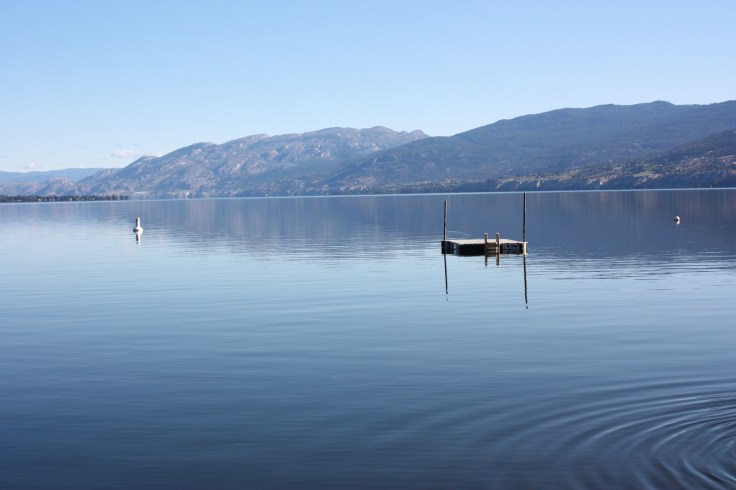
Okanagan Lake’s clean and relatively warm waters are shark and jelly fish free making open water swimming here all the more enjoyable. Winds can whip the lake into some challenging waves but events are held in the relatively calm waters first thing in the morning.

P7180007.JPG
The Across the Lake Swim start

It’s back and I was the first swimmer to register

The newly resuscitated Skaha Lake swim started life in 1985 organized by local sport’s legend Steve King as a complement to the Ultra International Triathlon which the next year became an official Ironman.

UltraSwim-598x1024.png

“The Race took a hiatus because we hadn’t been able to find the right race director,” says King. “Now we have a solid team in place. There is definitely a rise in participation and interest in open water swimming,” says King. “You can look at the increase in numbers in Master’s programs, events like the Across the Lake swim and the new Canaqua Open Water Swim Series (this event will be part of that). We always had swimmers from the U.S. and a few other internationals and the South Okanagan is now world-renowned as a sports mecca.”

IMG_6036.JPG
Some Crazy Canuks after a chilly fall dip in Skaha Lake.

“Reviving the race has been on everyone’s mind for a number of years,” says one of the Skaha Ultra Swim organizers Steve Brown.

The event returns Aug. 13 for the 20th running of the race that was held from 1985 to 2004 with the exception of 1999. Brown is joined by Steve King, Shelie Best, as well as ultra distance athletes Chad Bentley, Matt Hill and Lucy Ryan of Vancouver. The group came together last September and talked about resurrecting the Ultra Swim.

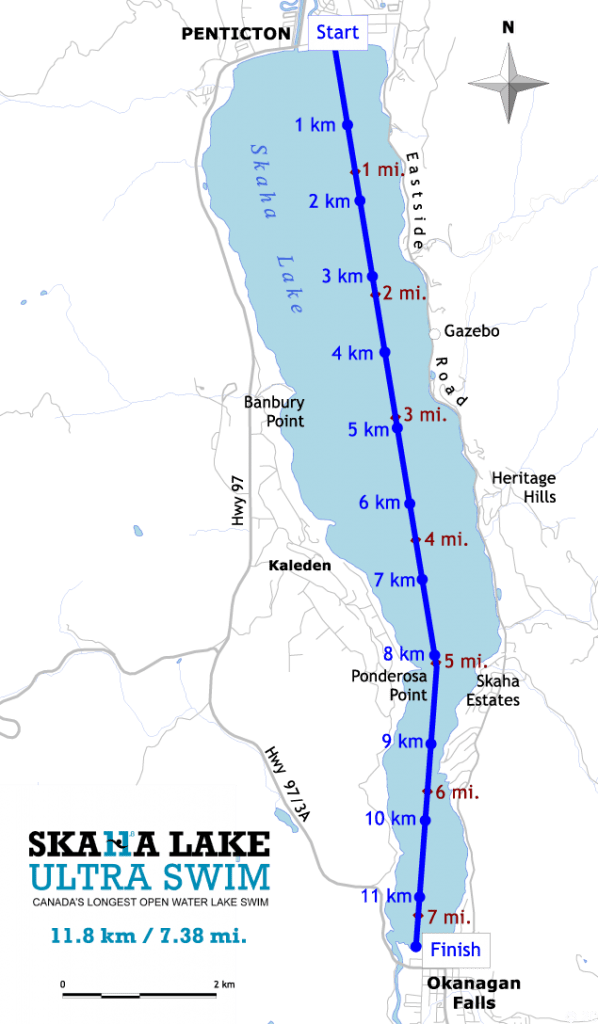
The Skaha Lake Ultra Swim is being reinstated as an official event of Peach Festival. The swim is 11.8 kilometres starting from Skaha Beach to Kenyon Park in Okanagan Falls. The swim begins at 7 a.m. and ends at 1:30 p.m. or six hours, 30 minutes later. Entry is limited to 100 athletes and their support paddlers. The race is affiliated with Canaqua Sports Open Water Series. Now in its third season, the Canaqua Sports Open Water Series has grown to nine open water races for 2017. The goal of the series is to promote open water swimming across Canada, creating a Canadian brand to the sport. Currently there are two in B.C. (Invermere and Penticton), one each in Saskatchewan and Manitoba and five in Ontario.

“No question that there has been an upsurge in open water swimming interest,” says Brown. “Skaha is unique in that swimmers will swim the entire length of the lake. There are a lot of swims that go across lakes but we are the longest lake swim in Canada and that’s why there is huge interest in this one.”

Swimmers this year will be gunning for some records including the one set by
Luke Stockdale of Port Coquitlam who swam 5:50:42 in 1992 and did it all with the butterfly stroke. The most senior finisher ever was 70-year-old Lorne Smith of Okanagan Falls 5:10:38 in 2004. The most wins for men has been four  by record holder Serge Score and five for women by record holder K.C.Emerson. Swim times have varied from the record 2:21:44 to 6:35:13.Participants must be at least 16 years of age and swim the distance. There is also a cut off at eight kilometres at Ponderosa Point which swimmers must reach in four hours, 25 minutes.

For safety reasons each athlete has a specific support watercraft with them throughout the swim. Organizers also provide high-speed rescue watercraft with medical and lifeguards in case of emergency.

“There is also a huge interest in open water swimming from older age groups as well,” says Brown. “For those athletes that have been beating themselves up on the roads for years swimming, even long distances, is a kinder, gentler from of exercise.”

IMG_8460.jpg
It’s time to recapture that open water freedom


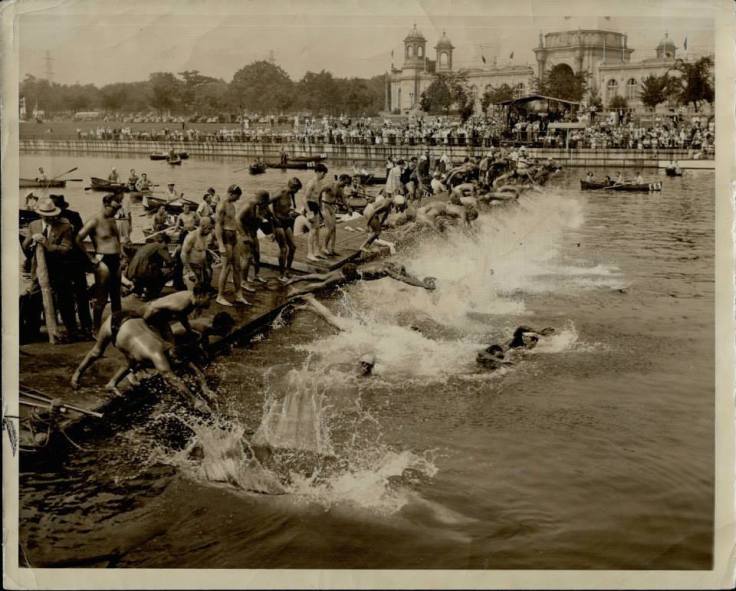
The earliest known open water swim races were held in Japan and then Europe during Roman Times. The sport reached a heady popularity in the early 20th Century in North America where its heroes were front page news.

In Canada, crowds in the tens of thousands flocked to Toronto in the 1930s. They came to cheer on local favourites for purses that would equal hundreds of thousands of dollars today. Huge crowds, big paycheques and ticker tape parades awaited winners like Marilyn Bell and Winnie Roach Leuszler.

What’s old is new again and the Okanagan is the perfect place to get immersed in the world open water swimming and open water swim racing.

cne-marathon-swim.jpg
CNE Marathon Swim 1937  Photo: Toronto Star Archives

A lullaby to sleeping vines

IMG_3020.jpg
Naramata Bench vines lie sleeping under a blanket of snow
img_3038
Vineyard workers rest along with the vines
IMG_3017.jpg
Insulating snow helps protect the dormant vines
IMG_3046.jpg
Bud break is a few months away
IMG_3051.jpg
Rare sunny day in winter in the Valley
img_3054
Short days as the sun starts to set in the late afternoon over Okanagan Lake

A Calgary Highlander plays a mournful lullaby at Legend Distilling on the Naramata Bench.

How do you solve a problem like Maria?

FullSizeRender 6 2.jpg
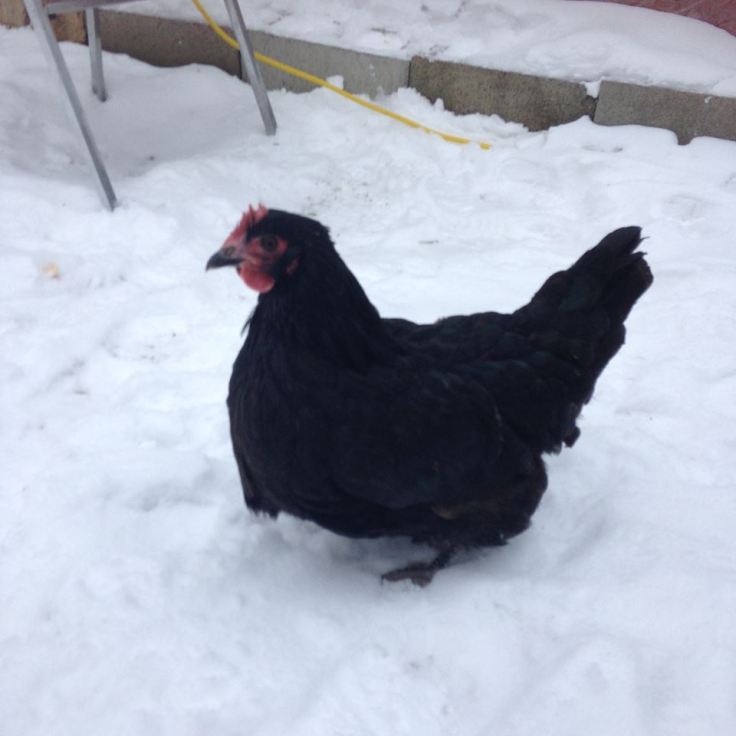
My Rent The Chicken, named Maria, is a rare Partridge Chantecler.

This year’s Christmas present is a pair of laying hens from Marie and Ron McGivern’s farm  in Kamloops, a coop, feed and some help getting up and running. My RentTheChicken.com pals will be delivered in May and picked up again in October, unless I get so attached I will need to give them a forever home…

Marie has indulgently agreed to let me choose my hens now and says she will band them and help them get used to their new names… Maria and The Baroness. They are such smart feather-brains that they will come when called or when called and a bowl of feed shaken…same, same.

FullSizeRender 7.jpg
The Baroness is Black Sex-Link, so called because the hens and roosters are different colours as chicks so easy to tell apart.

 I can’t seem to stop singing wherever I am. And what’s worse, I can’t seem to stop saying things — anything and everything I think and feel.

It will be interesting to see how the two ladies will get along. They will get a trial run paired up together before being delivered Marie says as, “hen pecked and pecking order” are real things. I may be dooming them from the start with their names but without Rooster Georg in the mix they may be OK with some brown paper packages tied up with string, whiskers on kittens, snowflakes that stay on my nose and my lashes…

15644292_1264065160306295_1151813826_n.jpg
Marie kindly sent me a photo of Maria who is a pretty special Canadian.

Somewhere out there is a lady who I think will never be a nun. Auf Wiedersehen, darling.

Maria may never be a nun but a monk is responsible for her breeding. The Chantecler breed was developed in the early 1900’s by Brother Wilfred Chatalain, a monk who resided and worked at the Oka Agricultural Institute in Quebec, my home province. He was in charge of the poultry yards there, and one day gave his visiting father a tour of the facilities. After viewing the various breeds housed at the Institute, his father remarked that there seemed to be no uniquely Canadian breed. That gave Wilfred the idea to create the first Canadian breed of chicken. He decided it would have all the traits necessary for superior winter laying ability and at the same time be a superior meat bird. He worked on his creation from 1908 until 1918 when the first Chantecler was released to the public.The breed is very suitable for colder climates. They have a super small comb so their head literally doesn’t freeze off in winter. They are very good layers, also in winter months, with an average egg production of 200 a year that weigh around 60 grams. The egg colour is pale brown.

The Partridge Chantecler was developed approximately 30 years after the White Chantecler, by Dr J E Wilkinson of Edmonton Alberta, my other home province. Just as Brother Wilfrid made a series of crosses to come up with his “ideal”, so did Dr Wilkinson. Ultimately he came up with a bird that he called the “Albertan”. It is important to note that they actually had nothing at all to do with Brother Wilfrid’s White Chanteclers and that they were essentially completely different breeds. However when Dr Wilkinson submitted his “Partridge Albertan” birds for recognition by the American Poultry Association, they did accept them but then rather arbitrarily renamed them as a Partridge Chantecler, much to his huge disappointment.

Chantecler, Partridge Albertan… both developed in Canada these breeds almost went the way of the dodo but thanks to farmers like Marie and Ron this Canuck breeds are making a come back. It is a friendly breed that is reliable towards it’s fosterer. I have confidence in sunshine, I have confidence in rain, I have confidence in confidence alone that I can raise chickens… Helps to have a friendly one I imagine.

15644837_1264065150306296_1856612771_n.jpg
Marie’s photo of The Baroness.

Oh Georg, if I had known we were going to have a sing along I would have brought my harmonica.

Black Sex-links are cross-bred chickens whose color at hatching is differentiated by sex,  making chick sexing easier.  Sex-links can be extremely good egg-layers which often produce 300 eggs a year or more depending on the quality of care and feed. The Baroness is going to be an omelette queen. The color of their eggs vary according to the mix of breeds and blue-green eggs are possible. (How cool would that be?)

Blacks are a cross between a  Rhode Island Reg or New Hampshire or rooster and a Barred Rock hen.

You know how Sister Berthe always makes me kiss the floor after we’ve had a disagreement? Well, lately I’ve taken to kissing the floor whenever I see her coming, just to save time.

I may be counting my chickens before the hatch anticipating my May Christmas gift but it feels good to put faces to the names. Next…chicken raising research…so I can solve a problem like Maria…

Five great things you can learn from a baking class

FullSizeRender 4.jpg

1. Mise en place is a MUST

Mise en place, a French culinary term which means “setting your ingredients in place prior to cooking”. Even before the mise en place, the first task is to read the recipe from start to finish…twice. At our Naramata-Blend cooking class Chef Dana went over the recipes with us explaining terms, discussing ingredients and explaining why the steps are necessary and even some of the chemistry and history behind what we are doing. At home, the mise en place step helps make sure you have all the ingredients and that they are carefully weighed before beginning.

FullSizeRender 5.jpg

2. Know your ingredients

It sounds obvious but how often do we take time to really know our ingredients? Chef Dana Ewart of Joy Road Catering was passionate and knowledgable about the ingredients we were using, which was very inspiring. She suggested fresh yeast as apposed to dry, organic high-fat content butter, farm fresh eggs, Dutch cocoa powder… It seems like a pretty basic concept but your finished product is made up of your ingredients. Try using margarine instead of butter in a brioche and you will soon learn about the importance of high quality ingredients. It’s like adding vinegar to milk to create a buttermilk substitute…it really is not anywhere near the creamy buttermilk flavour you are really after. Ask your instructor where they source their ingredients.


IMG_8551.JPG

3. Learn what tools you need and how to use them

A cooking class is the perfect time to try out new tools – dough scrapers, stand mixers, food processors, different types of knives, pastry bags and tips, molds and pans, silplats, zesters, scales, French rolling pins and on it goes. You can then go right to the nearest kitchen store and keep your local economy rolling. Instructors will also give you tips about which gizmos and gadgets you really need, which are nice to have and which will gather dust. I need a bigger kitchen… six brioche molds now added to the collection.

IMG_1540.JPG4. Stretch yourself

A baking class is the perfect opportunity to try something you have been too intimidated to try at home. Step-by-step instructions, hands-on practice and help from the Chef will give you the confidence to try more complicated recipes at home. I’m hoping to finally get some help with my sad piping skills at the eclairs and profiteroles class in February.

5. Revel in the age-old joy of cooking together

There is nothing like a baking class to bring a room of people together. As the class progresses notice how the chatter becomes louder and how often you hear people laughing. Maybe it’s because you show up in a room that has the recipe and all the ingredients on hand and organized, the room warms up and starts to smell like a bakery  and you leave before the dishes are done.


FullSizeRender 2.jpgIMG_3567.GIFThe next Naramata-Blend cooking class is all about choux pastry and how this light and airy pastry can be turned into a vessel to hold creamy fillings before being dipped in chocolate. Amanda Perez of The White Apron will be teaching us how to make fancy eclairs and profiteroles at the February 11 class just in time for Valentine’s Day. We will drink some bubbly from Bella Wines and chat, laugh and leave the kitchen a big mess.

Come and join us if you live in the area. Tickets are available through eventbrite for the Saturday afternoon class.


Naramata Candied Chestnut and Dried Plum Brioche – Original recipe to kick-off Naramata-Blend cooking class series

IMG_2931.jpg
Chef Dana Ewart cutting into a loaf of cocoa cherry brioche.


Brioche! How hard can that be?

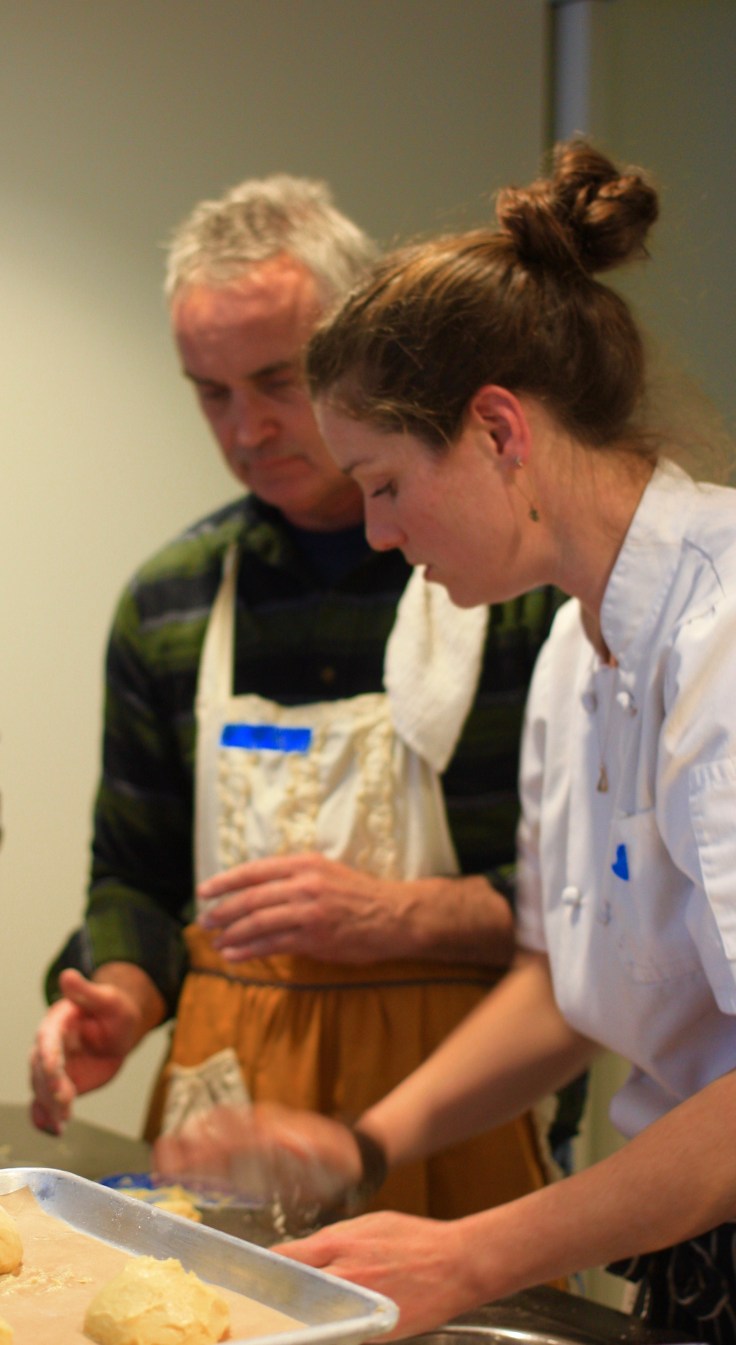
With ‘go big or go home’ thinking the first Naramata-Blend cooking class tackled the most delicious and some would argue, trickiest to make of the bread family – brioche. This rich, buttery egg French dough is versatile and Dana Ewart, Chef and Proprietor of Joy Road Catering helped our class of 20 make no less than five variations on this buttery theme including: herb with chives and tarragon, cocoa and dried cherry (CC Orchards cherries), plain, jelly donuts and the crowning achievement – Naramata Candied Chestnut and Dried Plum Loaf filled with local fruit and nuts.

Candied chestnuts

You can buy candied chestnuts or marrons glacé but what would be the fun in that? Making your own is easy but takes a few days as you wait for all the sugar to absorb into your lovely locally-sourced chestnuts. Here’s how: (This recipe makes twice as much as you will need for your Naramata Loaf but since it takes so long, you may as well make enough for two batches…)

1. Blanch 500g fresh chestnuts in boiling water for 4 minutes, drain, then peel while still warm.

2. Bring 300g sugar and 300ml water to the boil in a heavy-based pan to make a syrup. Simmer for 10 minutes, then add the chestnuts and simmer for 7-8 minutes.Take off the heat and leave to stand overnight in the syrup.

3. The next day, bring the chestnuts/syrup back to the boil, cook for 1 minute, then remove from the heat and cool. Repeat the boiling and cooling process 2 or 3 times over the next couple of days until all the syrup is absorbed.

4. Preheat the oven to around 150°F, spread the candied chestnuts on a tray covered with baking paper, then pop into the oven. Prop open the door and leave for 2 hours or until firm.


Brioche master recipe


Ingredient Amount Notes
PRE-FERMENT
Flour (white all purpose or bread flour) 188g
sugar 7g
Fresh yeast 30g
milk 137ml
MAIN DOUGH
Flour (white all purpose or bread flour) 563g Naramata Candied Chestnut and Dried Plum  Brioche
Eggs 10 whole Add 125g chestnuts & 125g prunes
sugar 70g
Fresh yeast 30g
salt 18g
Unsalted butter 454g/1lb Yield: 3-4 loaves

This recipe can be halved. Any left-over brioche dough can be frozen. Wrap tightly in plastic as the dough will continue to expand in your freezer. Your baked brioche can also be frozen if for some unknown reason you can’t eat it all in one or two days…

Method:

PRE-FERMENT

In a bowl or Tupperware that will hold about 3 cups, weigh the flour and sugar. Gently warm the milk until it is about body temperature or slightly warm to the touch. Crumble the fresh yeast and pour the warmed milk into the flour mixture. Mix & knead until all of the flour is hydrated and the dough is homogeneous.

Rest the pre-ferment a minimum of 4 hours out of the fridge or overnight in the fridge.

The following day, or 4 hours later- Pull the butter and eggs out of the fridge to temper.

Mix together by hand or in a kitchen aid with a dough hook attachment the flour, sugar, yeast and eggs. Mix until the flour is all hydrated- scraping down the sides of the bowl and underneath the hook occasionally to ensure that there are no lumps of dry flour.

When the dough is homogenous, stop the mixing and allow to rest for 15 minutes (this is called an autolyse).

Add the salt and the pre-ferment on top of the dough, pulled in to fist-sized chunks.

Mix again for a few minutes until the pre-ferment and the salt is mixed in. During this mix, plasticize the butter, by cutting it into pieces & beating it with a rolling pin inside a garbage bag or between layers of parchment paper.

Begin adding 1 tablespoon-sized pieces of the plasticized butter- in increments until all of the butter is incorporated. Now is the time to add the candied chestnuts and dried fruit.

Once the butter is incorporated, mist a tray or bin with neutral oil to put the dough in – cover & rest in the fridge. After 30 mins-1hr, fold the dough or punch it down. Rest for 4 hours- overnight in the fridge.

Punch down the dough, and lightly mist oil- or butter and flour your brioche pans. Weigh the dough into desired portions, shape & place in the molds or pans (making sure the dough fills only 1/3 of the pan) Proof in a warm draft- free area for approximately 40 minutes or until the dough has doubled in bulk. Brush with egg wash, and bake at 400 F for 10 minutes, then 375F for 15-20 minutes or until golden. Remove from the pan & cool on rack.

IMG_2847.jpg
We made him wear this apron. Good sport eh?

Dana’s brioche tips and tricks

Equipment

  • You can make brioche by hand but it’s super tricky to incorporate all that butter in without warming it too much with your hands. If you want to do serious baking you need to invest in a stand mixer. Christmas gift list item?
  • To take your baking to the next level, you will also need a scale. This relatively inexpensive purchase will allow you to be accurate and ensure more consistent results.
  • A dough scraper will cost a couple of bucks and is invaluable when you are working with this sticky dough.

Ingredients

  • Buy the best local ingredients you can find. The better the ingredients the more flavourful results. Shop your farmer’s markets, seek out local farmers…
  • Neutral oils include grapeseed, vegetable and canola oil.
  • Fresh yeast trumps dried yeast and it can be purchased at most grocery stores. Ask at the bakery counter. Fresh yeast can be frozen. If you do use dried yeast in the recipe above substitute the 30 grams of fresh for 15 grams of dried.

Brioche

  • Make sure you mix the brioche dough for the full 15 to 20 minutes. It needs to feel soft, smooth, warm and have good elasticity.


IMG_2866.jpg
Class member slamming some butter. He became the de-facto butter slammer. Plasticize –  Slam the heck out of the butter with a rolling pin to make your cold butter straight from the fridge more malleable. The idea is to make the butter easier to work into your brioche dough with warming it up too much. If you try to use “un-slammed” butter it will be too cold and will tear your dough.


IMG_2855.jpg
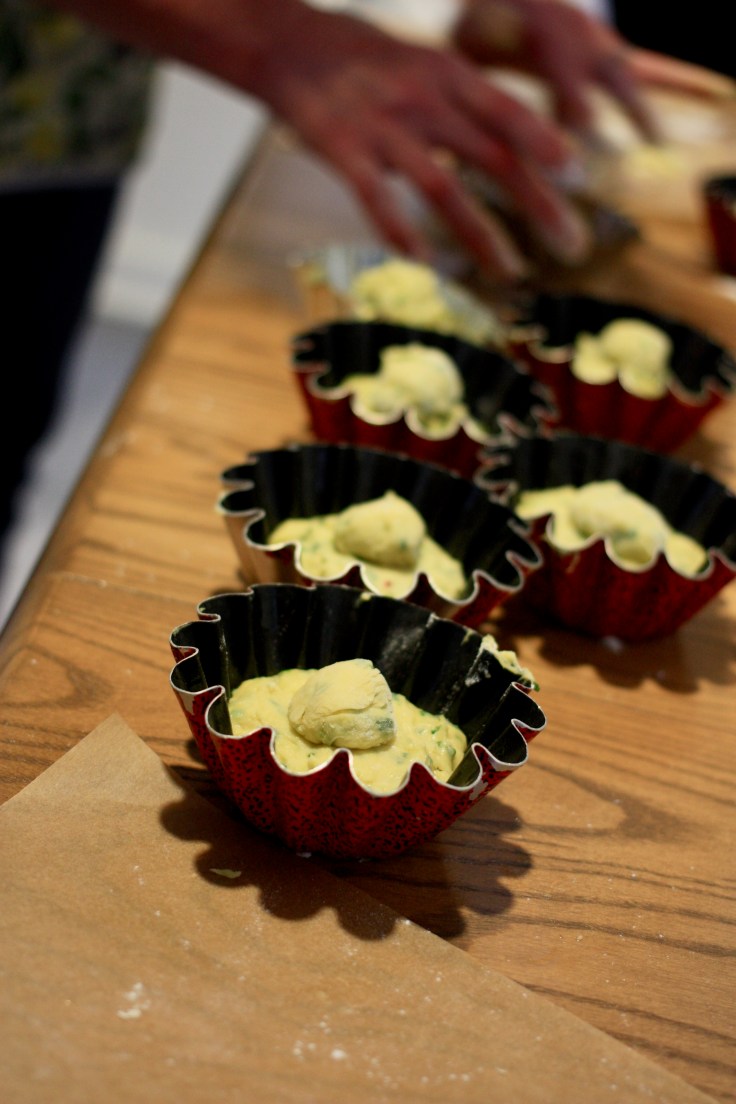
Savoury herbed brioche in molds ready to proofing.

General

  • Don’t be worried about over-working your dough. It’s not a cake batter but a bread dough.
  • Don’t skip the egg wash step. It helps keep a crust soft so it can continue to rise and “not be a prisoner in its own crust”. It also makes your brioche shine.
img_2925
Herbed brioche in a traditional boule shape.
IMG_2899 2.jpg
Two star pupils work with Dana to make the most decadent of all brioche creations…jelly-filled donuts.
IMG_2919.jpg
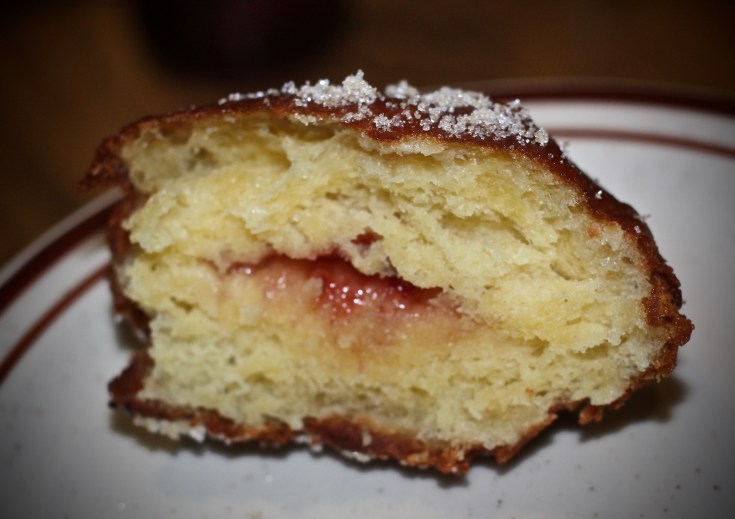
These were the bomb! Using the main brioche recipe, these jam-filled donuts were fried two-minutes per side in hot oil.
IMG_2917.jpg
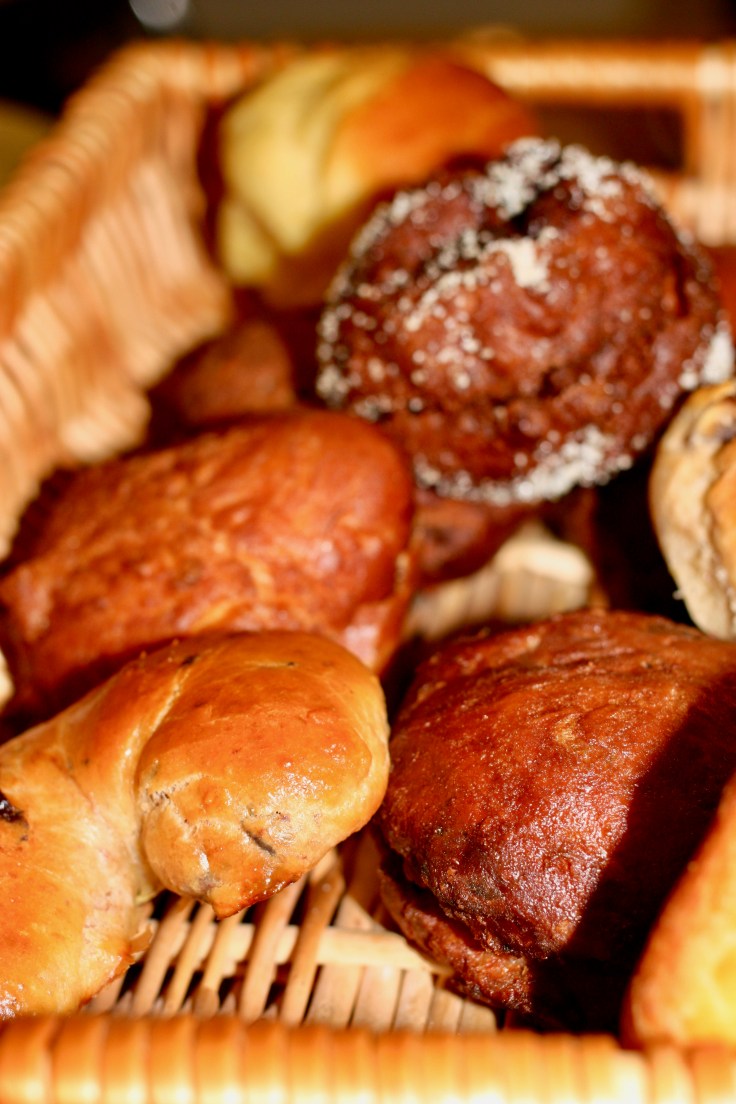
A variety of brioche made at the cooking class.
IMG_2844.jpg
Question…answered.
IMG_2867.jpg
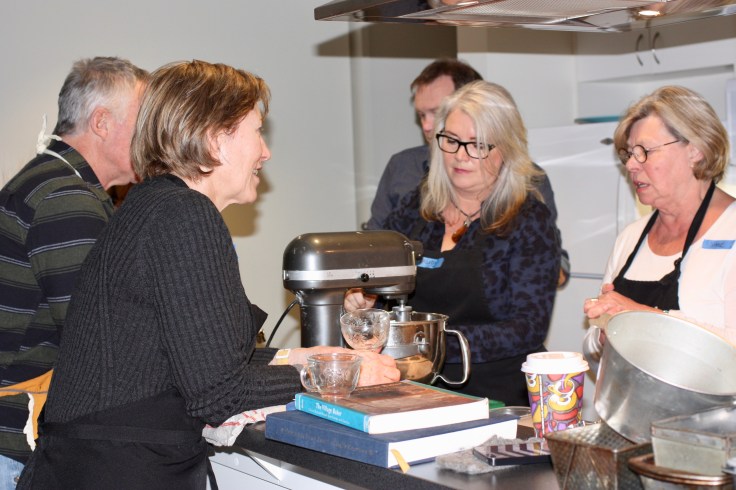
The room was full of laughter and good conversation as we worked on our creations. The Naramata Centre provided the perfect venue for the event. Some mulled wine made with Naramata Bench Winery Association represented winery Moraine helped with conviviality. 


IMG_2912.jpg
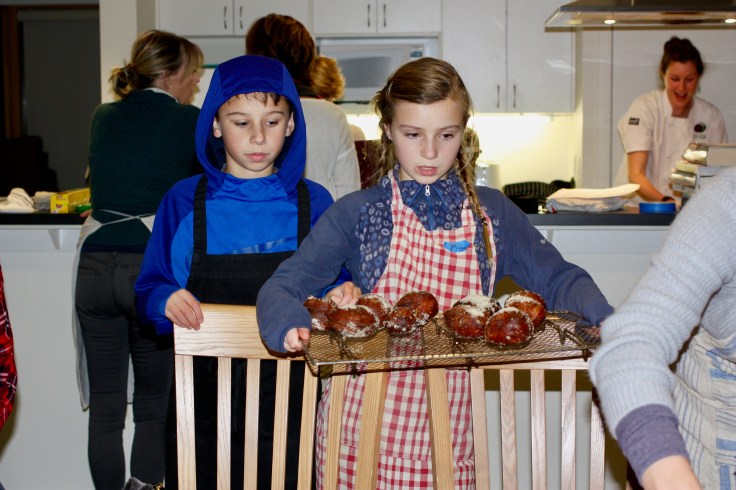
Ta da donuts.
IMG_2933.JPG
Ta da chocolate cherry brioche.


Cook together, eat together – no better way to Celebrate Terra Madre Day

img_1966
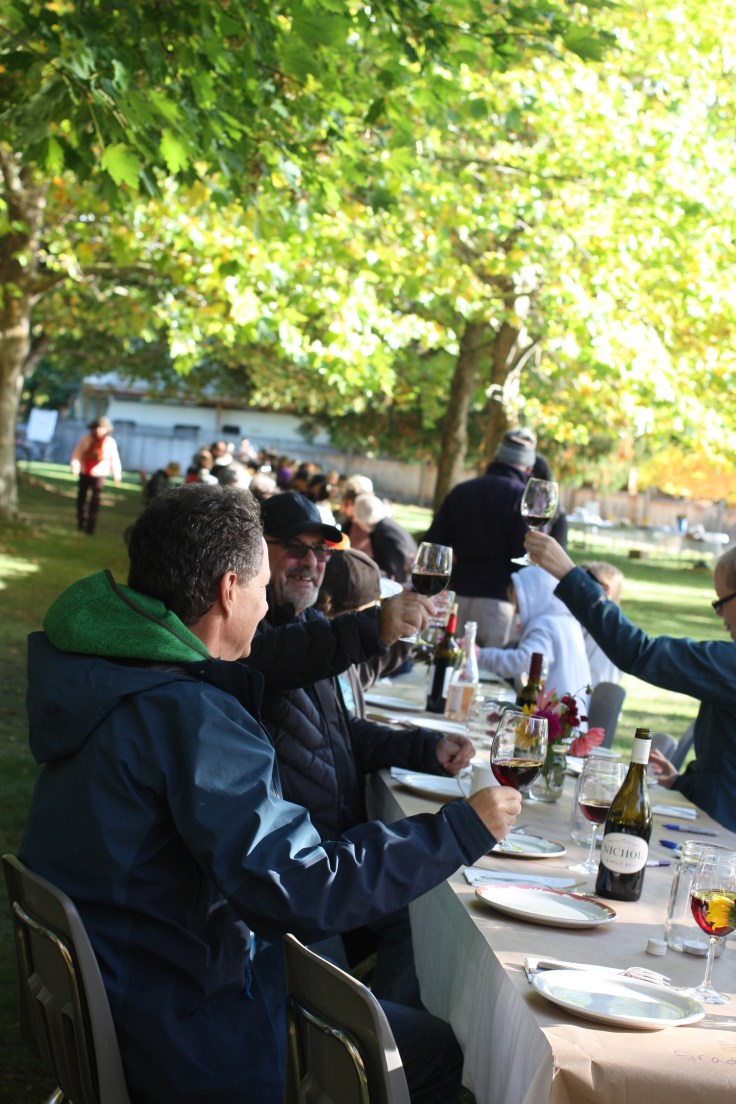
Naramataslow Thanksgiving dinner.

Terra Madre, slow food, Cittaslow … What’s the deal with all those names?

“It’s all about creating community, about why we all live here in this special place,” says chef and proprietor of Joy Road Catering Dana Ewart when asked to explain Terra Madre, the slow food movement and Naramata’s Cittaslow designation. “There are a lot of terms used to describe what we are all about and our philosophy around feeding people with great food but it can be much more approachable and less cerebral. It comes down to people sitting around a table enjoying themselves.

“For me personally, I get the most energy and joy out of creating beautiful food and sharing it with people,” says Dana and she has been doing this for more than 20 years.

IMG_8026.JPG
Dana at the Penticton Farmer’s Market.

Terra Madre

Saturday December 10 is Terra Madre Day. With its origins in Italy, the land where food is worshipped and quality of life vigorously defended, Terra Madre is a network of food communities of small-scale food producers committed to producing quality food in a responsible and sustainable way. Translated as Mother Earth, the slow food network has biennial conferences bringing together farmers, fishers, food producers and cooks. Dana and her partner Cam Smith have attended two of these conferences. “We have brought back so many ideas about how we can better share and showcase our regional cuisine.”

Terra Madre Day promotes the diversity of food traditions and production. It’s a day to show how our network is using its creativity and knowledge to express our love for the planet and defend the future for next generations. It’s a day to celebrate local eating, agricultural biodiversity and sustainable food production summed up as good, clean and fair food.

Naramataslow

As far at Terra Madre goes in Canada, Naramata gets it.

We get it so much that we are one of only three Canadian communities with a special status as a “slow city” bestowed on us by Cittaslow, an international organization formed in Orvieto Italy in 1999.  We join Cowichan Bay and Wolfville as places where the pace of life is a bit more human.

To quote from the charmingly translated Italian on the Cittaslow website, “A Cittaslow place is motivated by curious people of a recovered time, where man is still protagonist of the slow and healthy succession of seasons, respectful of citizens’ health, the authenticity of products and good food, rich of fascinating craft traditions, of valuable works of art, squares, theatres, shops, cafes and restaurants. These are places of the spirit and unspoiled landscapes characterized by spontaneity of religious rites and respect the traditions of the joy of slow and quiet living.”

IMG_1974.jpg

Terra Madre Day Cooking Class

Slow food or local food of high quality with connection to the local land made into traditional recipes where the community comes together is what it’s all about and this year we are marking Terra Madre day by hosting the first of a series of cooking class. The Naramata-Blend classes bring together Okanagan Valley chefs, local ingredients and people passionate about food who will cook together and eat together.

IMG_3572.JPG
Brioche!

The Terra Madre Day inaugural class lead by Chef Dana, will focus on brioche in its many wonderful forms including the unveiling of a new Naramata Loaf recipe (recipe will be shared in an upcoming post) featuring local dried fruits and nuts. Mulled wine made from Cliffhanger Red from Naramata Bench Winery Association featured member Moraine Winery and warm spiced apple and cherry juice from orchardists  Amanda Perez and CC Orchards will keep the slow food convivia fuelled as we learn to bake this special buttery egg bread.

“Ten years ago fewer restaurants in the Valley were using local produce in their restaurants,” says Dana. Now a lot of us are using are only using pretty much everything produced here. It takes a lot more effort but the quality of what we have here is amazing and the caliber of the producers and chefs is incredible.”

She says she has made it her mission to spread the word about the Terra Madre principals that were first ingrained at the Stratford Chef School where she learned her craft and to let other young people know that the Okanagan Valley is a great place to set up shop to produce and prepare amazing food.

“We (Dana and her partner Cam Smith and their business Joy Road Catering) have shown that its possible to have a successful business. Our community here is very supportive. We are a product of this great community coupled with our hard work.”

Dana is also passionate about trying to expand our way of thinking about the importance of food and those who produce and prepare it for us.

“Professionals with special skills are appreciated. For example, we hold our doctors, accountants and lawyers in regard and pay them well for our occasional visit or meeting. How often do we eat? Why not offer our farmers that same high regard?”

She has a point.

Thoughts over dessert

Some final thoughts about Terra Madre, slow food, Cittaslow…

Alice Waters, the famous Californian slow foodie, gives us this sweet slow food manifesto:

  • Eat locally and sustainably
  • Eat seasonally
  • Shop at farmer’s markets
  • Plant a garden
  • Conserve, compost and recycle
  • Cook together
  • Eat together
  • Remember food is precious
IMG_0617.JPG
Dessert is precious too.

Blog at WordPress.com.

Up ↑